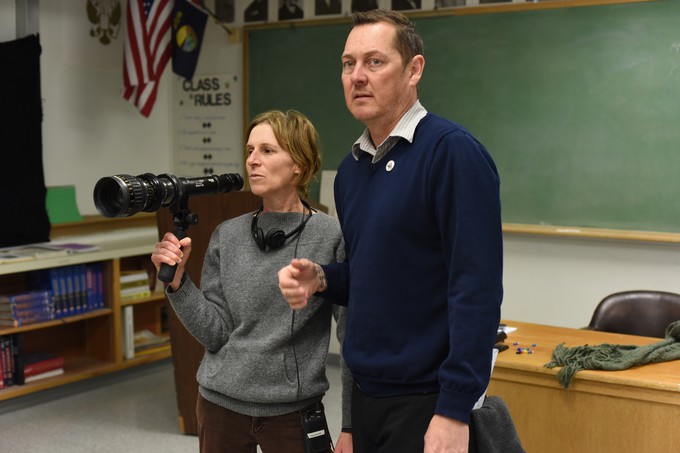
For more than 20 years, writer-director Kelly Reichardt has been at the forefront of American independent cinema, beginning with the recently restored and reissued RIVER OF GRASS from 1992, starring Reichardt’s constant producing partner, the omnipresent Larry Fessenden. Reichardt specializes in telling small stories that resonate big, often zeroing in on a specific type of women’s stories that never make it to the big screen. Although it was her decided male-centric 2006 work OLD JOY that got her noticed on a bigger stage when it premiered at Sundance.
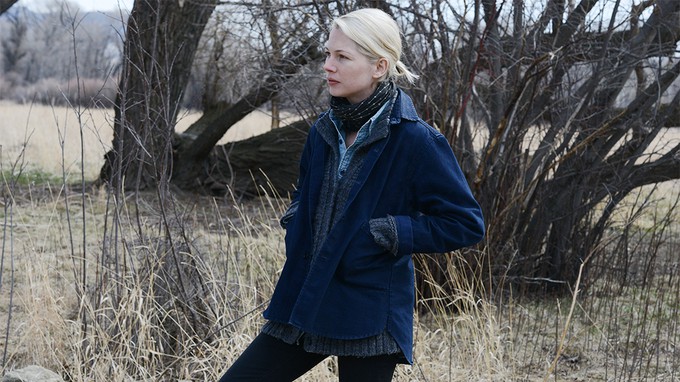
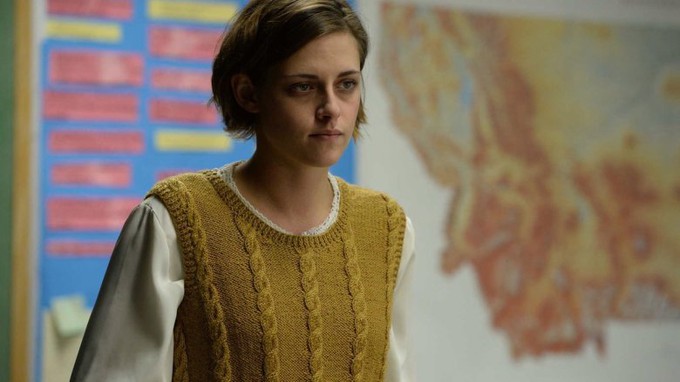
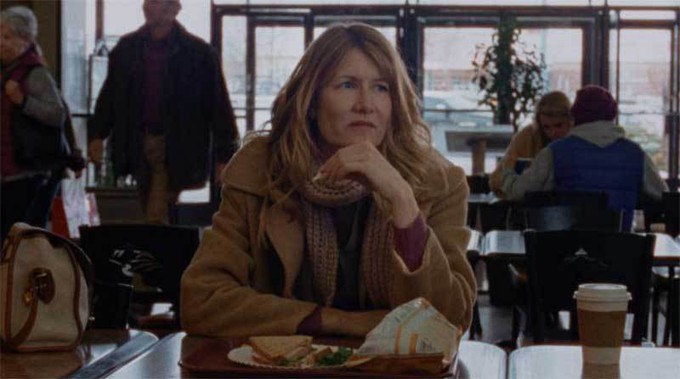
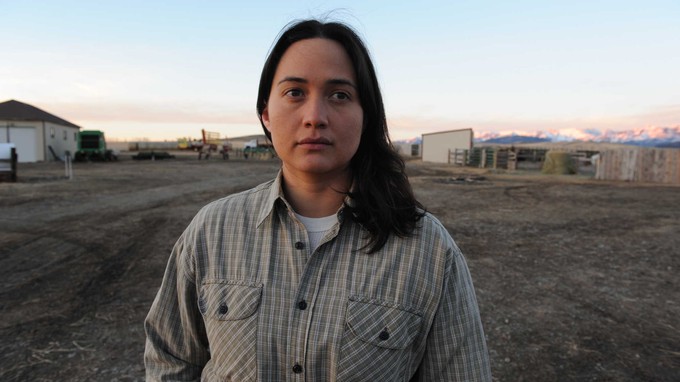
Since then, her popularity and acclaim has grown steadily with films such as WENDY AND LUCY, MEEK’S CUTOFF (both starring Michelle Williams), NIGHT MOVES, and her current release CERTAIN WOMEN, which is getting exceptional reviews and features four women (including Williams, as well as Laura Dern, Kristen Stewart and relative newcomer/consummate scene-stealer Lily Gladstone) in three separate but loosely interconnected stories about people in transition in their lives. Sometimes the transitions are small; some are life altering; and the entire experience is quite powerful. The stories are based on various short stories by writer Maile Meloy, which Reichardt adapted and joined delicately, and the result in one of the finest works in the filmmaker’s career and of the year.
I had the chance to speak with Reichardt recently, and it was wonderfully enlightening and enjoyable. Please enjoy my talk with the great Kelly Reichardt…
Capone: Hi, how are you?
Kelly Reichardt: I’m well. How are you?
Capone: Good, good. First of all, I just recently saw the beautiful restoration of RIVER OF GRASS. That looked really, really nice.
KR: I know. I had so nothing to do with it [laughs]. I’m really grateful that it all turned out so well. I should keep my hands off everything [laughs].
Capone: The less you’re involved the better it turns out, yes. I know for CERTAIN WOMEN, these three stories were based on these short stories, but I’m wondering were the shorts originally connected this way, or did you build that connective tissue among the stories?
KR: No, they’re actually from two story collections of Maile Meloy’s. They’re bent into shape for the sake of the movie.
Capone: What did you see as the connective tissue among these stories and among these characters then when you sort of read them. How did you first conceive of that?
KR: Well, I don’t know. I’d love for people to find their own way into that, so I won’t say anything too definitive. It’s nice to leave it open. They’re not heavily connected. They’re connected in a less pointed way, I think. Ask me another question [laughs].
Capone: I’ll back it up then. When you read these stories, what do you remember initially responding to about these characters and their searches and their struggles?
KR: Well, it was a long time ago that I read them. Certainly, the characters are the first thing that grabs you with their stories, and that they were all so tied into their environment, and they all seemed to have these continuing themes of having certain brief, real connective moments with strangers, then big misses of connection with the people that are standing right next to you in your lives. So I really like those questions of community and how we relate to each other outside our immediate circle, and that was in all of her stories. I was interested in shooting a new landscape. I’d been filming in Oregon for a while and I wanted to try a different place and hunker down somewhere and get to know a new place. So there was that. Also that there’s a lot of chores to be filmed, and I like filming chores. So yeah, those are all things that ran through it.
Capone: That was my next question actually, about changing up locations to Montana for this and asking you, what was different about Montana than, say, Oregon?
KR: Well, Maile’s stories were written for Montana. Everywhere we’ve shot in Oregon, it’s a super diverse state, so we shot in an old-growth forest and in a desert, and really far down south where it almost looks like California. So it’s really more the small stuff. When we first drove through Montana, I remember Neil Kopp, one of the producers, saying, “It doesn’t look that unlike Oregon to me.” And it’s not till you dig into a place that you start to realize all the differences. The area’s closed in by three giant mountain ranges, so just the difference of not being on a costal state has a really different feeling. Being surrounded by mountains has a different feeling, and impacts the kind of car you need to drive to get places.
How people interact at the place you get breakfast or where you buy your food or where you get laundry—all those things that are about how people are with each other in different places. Or how you live by the weather or by what’s happening with your hay or your water or whatever it is. Just getting into the minutia of the place is really what lets you figure out the fine details and differences of the way people live, or when people come from somewhere else and where they want to call something home, and what they bring to it or take from it. So it’s really just more about hunkering down and getting into the details of it all.
Capone: Based on what you just said, it wasn’t so much about how it looked—although you certainly take advantage of that—but the differences in this film are under the skin of the culture, the people. I’ve been to Montana a few times, and what I remember about it, especially in the winter, is the mind-numbingly cold wind. Did that wreak havoc on your sound recording?
KR: Yeah, for the sound guys, it would. I had the most amazing sound team. I was so fortunate in that, because the wind wreaks havoc on your body and your mind because it’s just so cold, but the sound team handled it somehow and made it a plus, which was so amazing, yeah. I’m really fortunate.
Capone: The idea that this is sort of three short films, loosely connected, did you stylistically and visually shoot them each a little differently, or did you want them to look like a cohesive piece?
KR: The filming strategy runs throughout the film as more of a uniter. I didn’t want this to have three different looks. We had to be loose and fast at the ranch sometimes because we were dealing with so many animals, but the idea was for there to be a cohesiveness to it all.
Capone: You were shooting on film, and Lily’s characters interacts with a dog, horeses, other animals. You only have so much film each time you shoot. Was there every a time when you might have regretted having so many animals in the film because of that?
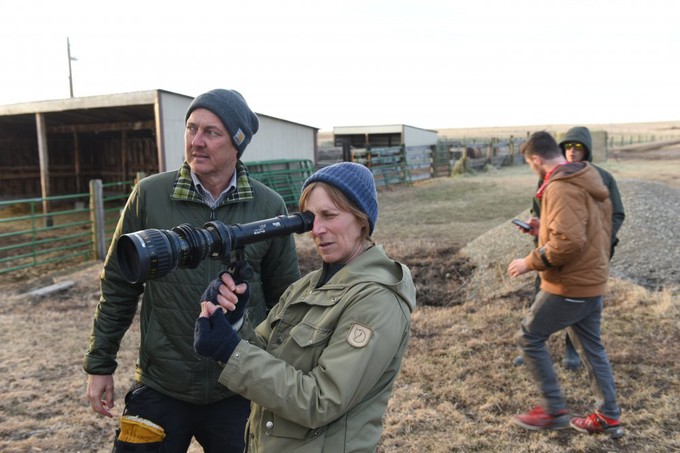
KR: [laughs] It is what it is. She’s working on a ranch so that was part of it, and it’s great being around animals. Shooting animals is another story, but when you get it, there’s great rewards. So as difficult as shooting the horses was we had our little dog that was always on cue, and you didn’t have to do anything to. He just did his thing all the time. So on the one hand, it’s so nice to be around animals. We got attached to all those horses. But yeah, it’s a super-big challenge. You just can’t be locked into the idea that everything’s going to go the way you planned it. And Chris Blauvelt is fortunately a great camera operator, and so he could improvise when needed.
Capone: The pacing on this film is so great, and I give the highest praise to the editor, which I know is you. You don’t explain everyone’s motivations. Everything is slowly revealed over the course of each story, and as a result, the emotional tension builds really gradually. Is that something that you are able to express in the writing, or does that come down to when you’re editing it and extracting the story from it during that process?
KR: You can only cut what you've shot, so first you have to make sure you’ve shot it, and then how you use it, you can mess around with during the editing stage of things. But the idea that it can all come together in the editing room—only if you’ve shot it [laughs]. And then you leave a lot of things behind that you end up not using. Our shooting is pretty economical, so there’s not a lot left on the editing room floor. It’s just a matter of finding the right way to…until you’re putting images together you don’t know exactly how it’s going to be done, so you go out with the full intention of making this film, and then you get into the editing room and you let that idea go and you fall into the film that’s actually at hand. And hopefully at some point, it resembles what you set out to do [laughs].
Capone: We were talking about tension before—the least tense I was was during the hostage situation, because that actually just made me laugh. We can’t help on a certain level to adore Fuller [played by Jared Harris]. He was so funny and sad, but that scene is weirdly funny. Was it fun to play with a hostage situation?
KR: Yeah. The biggest challenge of that section of the film is trying to hit the right tone for it. Something’s really at stake for that character, and there are things that are funny about it too. And the actors were a great help with this, of trying to hit this right balance where you could have some empathy and some tension, and also, in moments, there are points of levity at least before she gets in the building.
Capone: I’ve only seen Lily Gladstone in one other film—WINTER IN THE BLOOD—but she is your secret weapon. She’s phenomenal here. She says more without talking than most people do in long monologues. What stood out about her story the most to you?
KR: I like filming chores and people doing a routine, and I liked that she had so much of a routine. She’s also flawed and she makes some bad judgements. I liked her relationship with animals, and I can’t resist finding out someone’s daily tasks and spending time watching them carry them out. So that’s what first really drew me in. And the way she falls into a miscommunication and…yeah, I don’t know.
Capone: Part of the fun of watching someone’s routine is watching them break their routine, because that’s when life happens, and that’s what she learns.
KR: Fantastic!
Capone: Kelly, thank you so much for talking, and best of luck with the film.