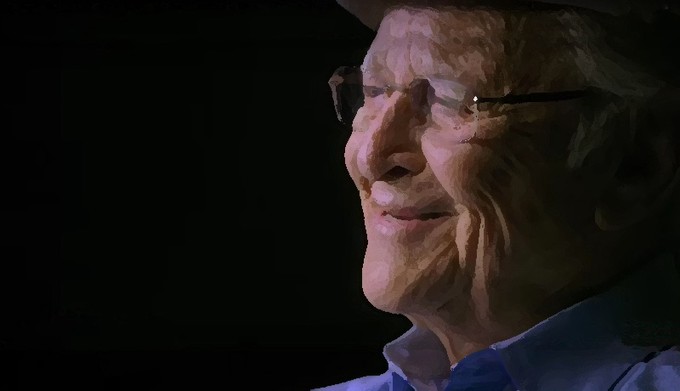
Few writers or producers in television have had as much of an influence on television than Norman Lear. After working his way up the writing food chain on shows like “The Colgate Comedy Hour,” “The Martha Raye Show,” and “The George Gobel Show,” Lear moved over to producing films like DIVORCE AMERICAN STYLE and START THE REVOLUTION WITHOUT ME. But in the early 1970s, Lear began writing, production and occasionally directing television series the likes of which the world had never seen. They tackled real issues in a funny way, and nearly all of them were huge hits.
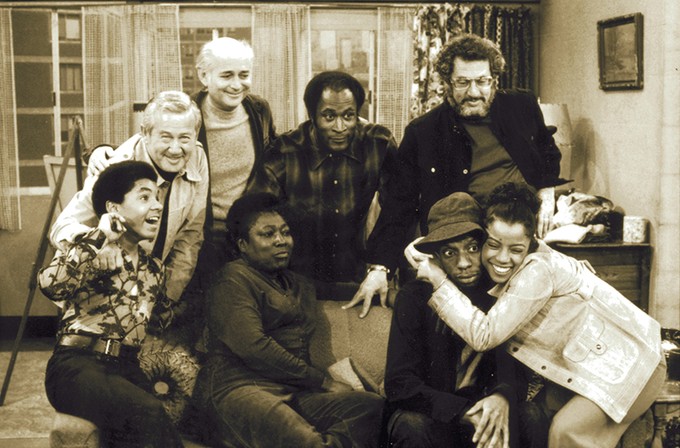
First there was “Maude,” followed by “Good Times,” “All in the Family,” “The Jeffersons,” “Sanford and Son,” and “Mary Hartman, Mary Hartman.” His made-for-TV American celebration special “I Love Liberty” was a massive success. His shows were massive hits, Lear worked all the time, and his personal life paid the price, as is chronicled in the new documentary NORMAN LEAR: JUST ANOTHER VERSION OF YOU, now in limited release and VOD, and directed by Heidi Ewing and Rachel Grady (JESUS CAMP, DETROPIA). This great new film is certainly a testament to the 94-year-old Lear’s achievements, but it’s also and honest look at the life of this entertainment creator who was often more famous than his works.
I got a chance to sit down with Lear in Chicago not long ago, and we bounced around his career a bit. Obviously, covering his entire career would take hours, but hit a few highlights. With that, please enjoy my all-too-brief chat with Norman Lear…
Capone: Pleasure to meet you, sir.
Norman Lear: Hi, good to see you.
Capone: I saw the film at Sundance for the first time, but I saw it again last night, just because I heard there were some small changes.
NL: You and I had the same experience, but it’s different in this way: When I saw it at Sundance, there were like 18 members of my family there. I was so involved in what they were laughing at, or what they were feeling or thinking, I didn’t see it really until last night. Emotionally, I saw it last night.
Capone: When you told the audience that last night, it made a huge difference. They really felt like they watched it with you for the first time. After spending so many years being the guy in control—and even when you’re writing your autobiography, you’re doing all the heavy lifting,—was it strange to turn over something about your life to somebody else, or was it a relief?
NL: It was something I’d been thinking about for years, because “American Masters” asked me 12 years ago, a number of times, to do it, and I guess I wasn’t ready. This wasn’t the conscious thing, but I did the book and then I felt better about doing a movie, and then they happened in my life. I had seen JESUS CAMP and thought it was just a knockout. So when they said they were interested and the way they expressed themselves about my work, I gave it to them. The understanding was I would have nothing to say. My understanding with them as a human being, and feeling them out as human beings, was that if something [about the final film] troubled me a great deal, I had somebody to talk to, and they would listen to me. But I had nothing to say about how it would be organized, what stories they were telling—I had nothing to say about that. There’s nothing, as it turns out, that troubled me. I thought I remembered that the George Bush quote wasn’t in the first cut and I wanted it, but my associate Brent Miller tells me no, it was in the first cut.
Capone: I remember growing up watching these shows with my parents, and as a kid, I’m not aware of who’s running what shows. Your name was on them, but it didn’t really register to me what that meant. Yet, I knew who you were because you were also very much in front of the camera on talkshows, which to me looking back seems unusual. Less so now, because show-runners are the stars sometimes, but back then, you and maybe Aaron Spelling were the two names that everybody knew, but he didn’t really do a lot of in front of the camera things the way you did. Why did you put yourself out there like that?
NL: I think it was unconscious but it was something that I deeply wished to do. It wasn’t in the film, but I flew 52 missions [in World War II], and when I could see the war was ending, assuming I could make it through the rest of the missions, I would be discharged, I wanted to be a press agent, as I said. I stood over an Italian printer and picked letter by letter and wrote a page that was announcing my discharge from the United States Army Air Force, and my desire to be a press agent and my brilliance at understanding the media. I remember clearly saying, “I want to be the guy of whom they say who is that with so-and-so? I want to present so-and-so to the world and I want to be the Who is that?” And my uncle Jack sent it out. I got one job offer from it before I even left Foggia, Italy. One job offer and one job meeting. It’s clear to me when you ask the question: I didn’t know that it was the other way around, and I never knew that until probably after I wrote the book. That was an insight I gathered in the writing the book.
Capone: With the book and this documentary, are you starting to think about more your legacy? What was the shift, and what has happened in that time since “American Masters” first approached you?
NL: I do not at all think in terms of legacy, but I think in terms of the moment over and next, what I said earlier about over and next. I think about that. I don’t think about what I’m leaving behind, I think about what I’m going to see of it tomorrow. You’re going to write a piece? It’s that I’m interested in, not what I said to get there.
Capone: You said you learned that lesson from Jean Stapleton? Is that what you said last night?
NL: Last night I said, when I was asked what is she like, she’s always where she is, and after I said it I realized “Jesus, what a statement that is.” But it’s so true of her.
Capone: You’ve always worked with great partners. Whether in life or your career, you’ve always had great partners to work with, which of course means you too are a partner to somebody else. What is the key to being a great collaborator?
NL: Listening. Talking, of course, expressing of course, but listening for the other guy’s expression.
Capone: Do you remember specifically learning that lesson or figuring that out and not always trying to be the one who’s running the show, but involving everyone else around you?
NL: Well, I was a kid who’s father went to prison, and nobody ever really paid attention to me. So I think listening started then.
Capone: In terms of applying that to your work life?
NL: No, I think from there on, I’ve been curious. I had a cousin here last night. He’s at the University of Chicago as a major in philosphy—young cousin. And he has a relationship with the Crow, and he was talking about the Crow Indians last night, and I just couldn’t have been more interested, so I listened for a long while.
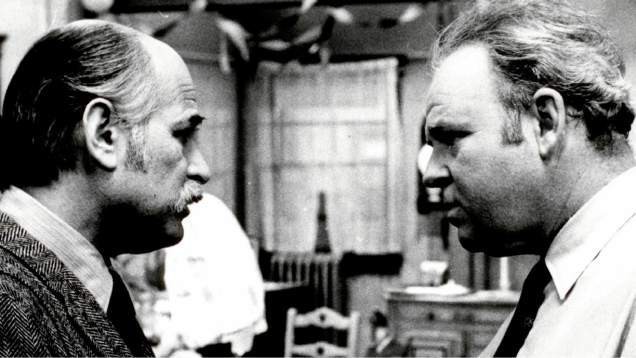
Capone: When I was younger watching “All in the Family,” the relationship that I always got the most out of was not between Archie and Edith; it was Archie and Michael. I knew men like Archie in the older generations of my family, and while you love them, you’re aware that you don’t think the same way that they do. Talk a little bit about that relationship and what you were trying to say through Archie and Michael’s conflicts.
NL: My father used to call me the laziest white kid he ever met, and I would often yell at him. “You’re putting down a whole race of people just to call me lazy.” “Well, that’s not what I’m doing. You’re the dumbest white kid I ever met.” So a piece of that I grew up with. The crazy thing was, he didn’t have it in for black people, but he saw them as distinctly different. I think Archie did that too. I think there’s a lot of that that exists today.
I remember when I was a kid—I speak of it a little bit in the film—slipping into 125th Street on a train, the tenements being like 30 feet away. It felt like you could touch them. Probably only black families in those tenements in those years. I remember seeing a woman shaking a rug at the fire escape and thinking “Somewhere in there, she had a bureau with a drawer and something precious in the corner, and I wonder what she was hanging that she loved. It was very romantic to me to be thinking about these people and what they were going through. And I wrote that into Edith’s character. Edith was shown a photograph of somebody who had just come from London. She’s looking at the photograph and she said, “That woman, they took this photograph, and it was over in an instant. Was she going to lunch? Was she going upstairs? Was she going to be yelling out the window for her child?
Capone: I have similar thoughts when I see old movies from the ’30s or ’40s, and you see one person with one line, and I think “that might have been that person’s crowning achievement as an actor.”
NL: I do the same thing. Or what did he do when they said “Break”?
Capone: One of the things I remember about “All in the Family,” and correct me if I’m wrong, but you had a character that was on a few episodes that was a transvestite? What I remember about that storyline was how it ended, and it sent Edith down a really dark path. Can you remember anything about creating that succession of episodes?
NL: Beverly LaSalle was the character’s name. She was on “All in the Family.” Could you think of anything funnier, knowing Archie Bunker, than the fact that he gives the woman artificial respiration, saves her life she feels, comes to thank him, and she turns out to be a transvestite. What could be funnier for Archie? That’s why and how we met, and I had seen her perform. So that occurred to me, and we brought her to LA. She lived and worked in San Francisco.
Now, a couple of years go by, and we’ve seen her in another show, I can’t remember the story. I wanted to know what would happen if Edith lost her faith, and the way we figured after some talk, the only thing I could think of was that there had to be a death that she found unimaginable. If Beverly La Salle were killed because she was Beverly LaSalle, that would cause Edith to lose her faith, so we had that. She’s slaughtered in the street by people who didn’t like her because she’s a transvestite. How does she regain her faith? That, as I remember, took months. Every other day, we would talk about Edith loosing her faith, and somebody innocently asked one day “What happens to Archie when she loses her faith?” Then I knew we had it, because Archie would go to pieces because her strength was his strength. That’s how all that came about.
Capone: I think they’re going to wrap me up here in a second, but as a long-time fan of “South Park,” I remember you did a voice. You did Ben Franklin on the 100th episode, which was a long time ago. did you like the style of satire that those like Trey and Matt are doing?
NL: I admire it more than I could say. I married Trey to his first wife. I flew to Honolulu and officiated at the wedding, because I’m a minister. Have you seen “The Book of Mormon”?
Capone: Yes
NL: It is one of the great gifts of sanity to the world.
Capone: You mentioned last night that you are reinventing “One Day at a Time” with a Cuban cast. Where did that idea come from?
NL: A young associate of mine here, Brent Miller. He was in conversation with somebody, and I don’t remember how, but I know he came to me. By then, they had talked to Netflix, so they were interested. “What do you think, Norman, of a Latino version of “One Day at a Time”?” That’s a great idea. I immediately thought of Rita Moreno, who I had met two weeks before in San Fransisco. So it started with that.
Capone: Great choice. So the first episode’s done?
NL: The first episode is done. Two audiences, one at 4, one at 7, seem to love it.
Capone: Mr. Lear, thank you so much. It was a real treat to meet you.