Ain't It Cool News (www.aintitcool.com)

Movie News

Capone talks about the grace of awkward behavior with HELLO, MY NAME IS DORIS writer-director Michael Showalter and stars Sally Field & Max Greenfield!!!

Hey everyone. Capone in Chicago here.

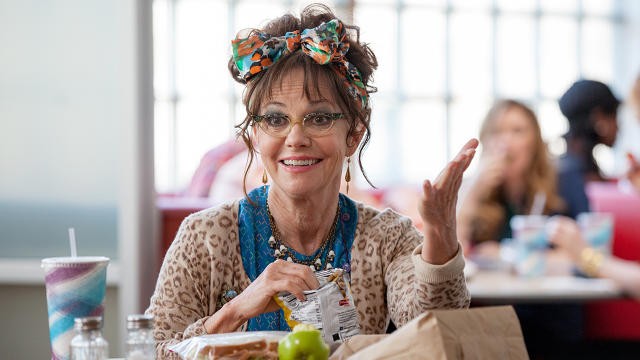
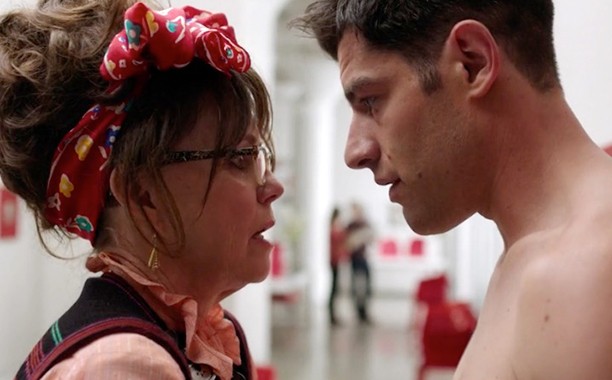
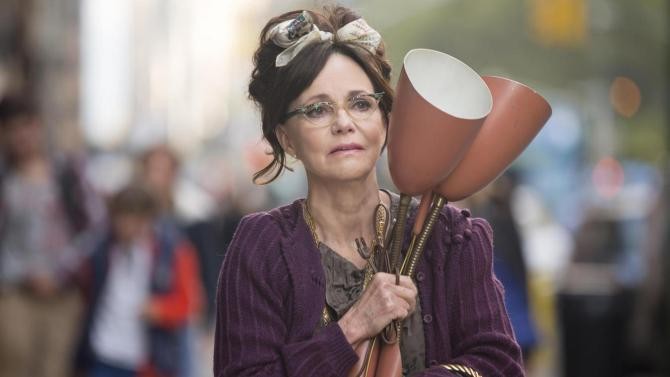
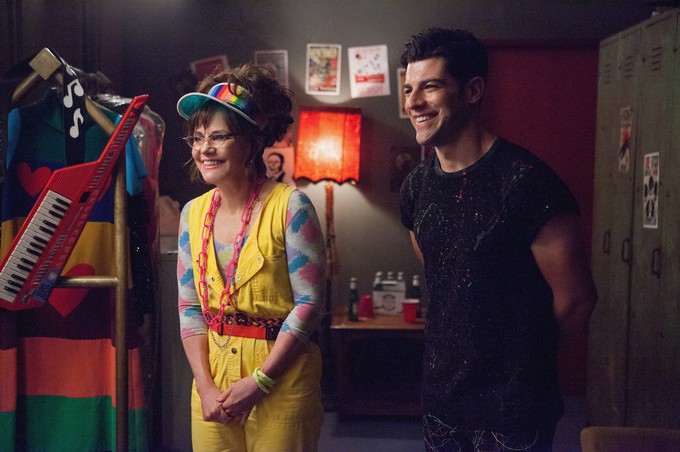
I first saw HELLO, MY NAME IS DORIS at the 2015 SXSW Film Festival and thought it was a terrific work that gently combined humor with a truly touching story about an older woman (played quite movingly by Sally Field) so desperate for companionship that she pursues a much younger co-worker (Max Greenfield, from “New Girl” and THE BIG SHORT). The film is odd, amusing and quite beautifully acted, especially by Field, and comes courtesy of director/co-writer Michael Showwalter (he co-wrote with Laura Terruso, who wrote the short on which the film is based).

I sat down with Showalter, Field and Greenfield last year at the festival in the Driskell Hotel bar in Austin, which was hopping, and we had a lovely, albeit brief chat, and I’d love to sit down again with Field and really dig into her career that includes the opportunity to play Dorris, her first leading role in a film since the 1990s (due in large part to her role on ABC’s long-running “Brothers and Sisters” series occupying most of her year). HELLO, MY NAME IS DORIS is finally in theaters now, and it’s well worth checking out. Please enjoy…


Capone: I’m a big fan of films about people who are uncomfortable in their own skin. Why is it fascinating to watch people like that?

MS: I’ll speak for myself. I can only speak for myself.

Sally Field: You can speak for me too.

MS: I think that grace and being graceful is a something that we all aspire too, and in society we are always aspiring to gracefulness and always falling short, and there is something so soul crushing about not being graceful and not being seen in that idealistic way that you would like to be seen. It’s a sort of self-consciousness, and some people don’t have it. Some people just live in a world of “I am me, hear me roar” kind of thing. I am not like that; I relate to the person that reaches for that and falls short. There’s so much humanity there, and so you watch it and you cringe, but you also cringe because you know what that feels like. You ache for that person, because you’ve been there.

Capone: What is the appeal of playing somebody like that, someone who feels that way about themselves?


SF: Well, there’s a whole lot of appeal because it’s a great story about a really interesting character that has a wonderful writer/director at the heart of it, and he created, he put together this spectacular cast of actors to be around. For me, to have the opportunity to play someone who is really pushing their own envelope is what it is. It’s what we all feel like sometimes in our lives, when you’re trying to get out of your way and inevitably you walk right smack dab into yourself. Everyone feels like that. I have felt like that all my life. And hiding it, pretending “Oh, god. I hope no one sees it.”

These men sitting here right now having spent the time that they have with me know full well that I constantly feel that way. Everybody feels that way. So when he made this character, and it’s such a grand scale of her trying to move on with her life, and yet she meets a character who’s also trying. So no matter what stage we’re in as far as age is concerned, we’re all humans that are all essentially trying to do the same thing, and that is to try to move on and take a bite out of life and keep on going.


MS: That is the thing about Doris, specifically, she swings really big, and it’s the strange meeting of two things, which is she is completely out of her element and knows it, but is taking enormous risks, and that’s another thing that I admire about her. She’s going for it, and most people don’t go for it like she does. She’s going for it. She’s putting her neck out. She’s wearing her heart on her sleeve. She’s really trying to push the envelope, and that’s not something that people do very often. It’s a combination of being so hidden, and yet swinging so big.

Capone: The whole idea of your character having these really interesting, very specific musical tastes almost makes me think that at some point in his life he might have been a little bit of an outcast, and he recognizes a bit of himself in Doris.


Max Greenfield: We talked about that in the beginning. He’s moving from Malibu to New York City, so he’s in a totally different environment and having moved myself, and anybody who moves and puts themselves in a new environment feels uncomfortable and feels isolated and feels different, and I think is looking for any connection and just happens to find one in Doris.

Capone: I’m a regular “New Girl” watcher, and watching you play Schmidt seems physically and mentally exhausting because there are so many words coming out of your mouth at such a rapid pace. Was it cool to dial it back a little bit and play this fairly normal guy?

MG: You have no idea. It was a lot of why I responded so much to the script, because it was that way, and having worked with Michael before and making THEY CAME TOGETHER, it was like I understood the rhythm of this guy and specifically that slower pace, and it was a real treat.

Capone: It took me awhile to get used to.

MG: Yeah, it took me a little bit to get used to too, but I loved doing it. It was a nice, much-needed turn.

Capone: In someone else’s hands, writer or director, Doris could have been played for laughs. We could have been making fun of her. The film is just absolutely drenched in compassion. We see that she’s out of her element, but she is resilient and trying so hard to enter this new phase of her life, and this is her first crack at that in decades. How do you not make it about making fun of someone?


MS: My answer is, a lot of it has to do with Sally’s performance and the choices Sally made in modulating those things so that she created a character. She created that character, so you would be able to answer that question. We talked in the beginning about the tone of the movie, and I think Sally had some questions about, “How are you going to do this? How are you going to match these two tones?”

SF: I was constantly bringing up the tones, because as an actor when you’re doing really serious, dramatic scenes, then some of the scenes are so highly physically comedic.

MG: Screwball comedy.

SF: Screwball. Way high comedy, and as an actor, you have to be aware that those two tones somehow may not blend. Usually when you’re in a highly comedic, screwball-ish film, even the emotional scenes have a comedic ring to them. But Michael kept saying, “Trust me. It will blend. It will blend.” I kept saying, “How are you going to blend this?” But to me, it just simply had to be that it was all real to her. It was never funny to her. She was just trying to get on with, whether it was the stuff in the club, or the photography stuff, or…

MS: The scene with the ball.

SF: All of it. It had to come from something real in her that she didn’t know how to do anything more savvy or sophisticated. To her, because she had been so locked away from life, this was as cool as it gets.

MS: I think too the funniest movies to me are when the main character doesn’t know they’re funny. They’re not trying to be funny. They just know who they are and it’s funny.

SF: But the actor playing it can never let it in their minds know that they know that this is funny. It has to not be anywhere in the scene. It has to be dead on.

Capone: Well, you’re not telling jokes.

SF: Right, it’s just dead on real.

Capone: Alright, everyone thank you so much. It was nice to meet all of you.


-- Steve Prokopy
"Capone"
capone@aintitcool.com
Follow Me On Twitter

Readers Talkback
comments powered by Disqus