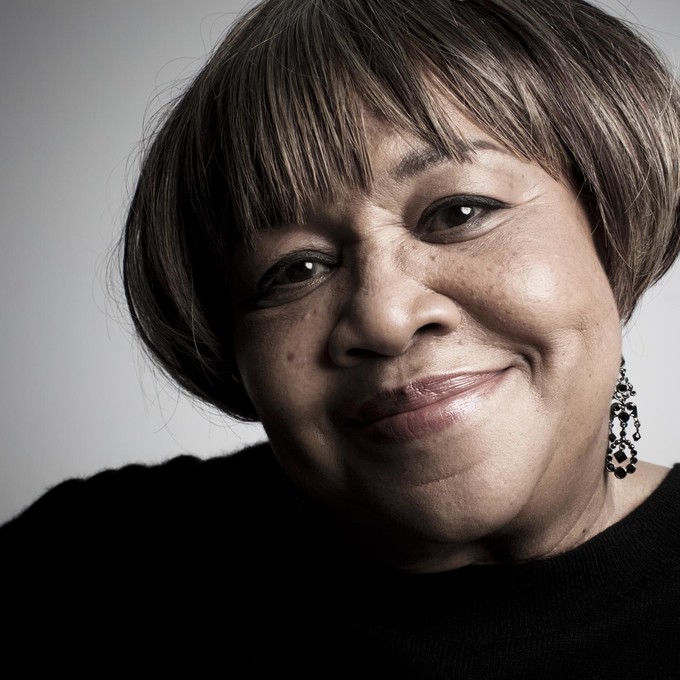
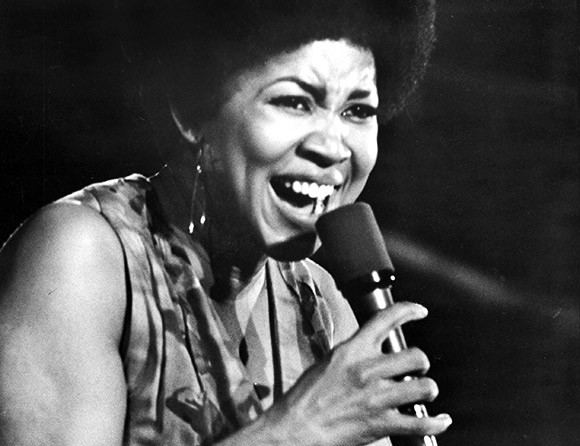
I’ve never seen one of the handful of documentary shorts directed by Jessica Edwards (two of which were in the running for Grand Jury Prizes at the SXSW Film Festival), but I have most definitely seen new film MAVIS!, her masterful look at the life and career of singer-activist Mavis Staples, whose music has taken her from meeting Dr. Martin Luther King Jr. to working alongside top-tear musicians like The Band, Prince, and Jeff Tweedy. The film premieres on HBO tonight, and you shouldn’t miss it.
I had a chance at last year’s SXSW, where the film had its world premiere, to chat with Edwards about her history and relationship with Mavis Staples, and I’ll admit, the conversation became a bit like two mega-fans geeking out over some great music. With that, please enjoy my chat with MAVIS! writer-director-producer Jessica Edwards…
Capone: How did you get involved in Mavis’s life in the first place?
JE: I saw her play. She tours relentlessly. She came to Brooklyn, where I live now, and I saw her play, and I knew about the Staples Singers. I knew who they were, but she blew my mind. She blew everybody’s mind. I wanted to know whatever I could about her immediately. So I went home and started looking for the documentary about her.
Capone: How long ago was that when you first saw her?
JE: About two years ago.
Capone: Maybe she’s given you some indication, but I’m guessing that she’s been asked at other points in her life to do something like this. What did you say to her? What was your pitch?
JE: I don’t know. What did she tell you?
Capone: It really sounded like it was good timing. She even said on stage something like “It’s time to do this.”
JE: Yeah. I mean, look, she toured her entire life, and she was famous her entire life, but it wasn’t until the last 10 years that she went out on her own. I don’t know why she said yes to us. I hope it’s because she felt we would be apathetic and that we would be able to tell her story. That’s what I hope. But I think she would tell you better than that.
Capone: When you’re sort of beginning the process, you could have made a six-hour documentary series on PBS about this. How do you pare down a life like this into 90 minutes? What are the first steps you take in sequencing her life and deciding how much time to devote to each thing?
JE: For me, it was a couple of things. Initially in the research process, part of it was like “How can you not talk about Prince? How can you not talk about Bob Dylan? How can you not talk about MLK?” Those are things that informed who she is, so that became part of it, but every time we started down he road of making a historical bio-doc, I started to get like itchy and I had to remember the first night I saw her play and the way that made me feel and the way I saw it making other people feel. That really informed the way we make the film. There’s no civil rights-era footage in the film. You hear MLK, but you don’t really see the EYES ON THE PRIZE-style film. Because for me, Mavis’s story is now. Even though we’re telling a historical story, this is not in the past. We tried really hard to keep it in the present. So we go to churches now and see people responding to the things she’s doing now. That was it. So when that became the way we made the film, the stuff that wasn’t contributing to that in the cut, it just disappears. It just goes away.
Capone: The one thing I noticed—and correct me if I’m wrong—we don’t even hear young Mavis speak anywhere in the footage, except for that one “Soul Train” question that she gets. When that happened I was like “Have we actually heard her voice yet? I don’t know what she sounds like at that age.”
JE: Unless she’s singing.
Capone: Right, right. Was that a deliberate thing?
JE: Oh yeah.
Capone: Granted, Pops was probably doing a lot of the talking for the group, but at the same time, she almost looked like a deer in the headlights at that moment, because I’m guessing there weren’t a lot of questions aimed directly at her.
JE: No, Pops was definitely was the man who did the talking. There’s actually a really sweet scene at the end that ended up on the cutting room floor that will be like a DVD extra where Mavis talks about how Pops did all the talking, and they would stand in the back and wait for him to finish. Then when she starts going on the road by herself, she started to have to really bring it, and she’s like “Now you can’t shut me up. I got good.” And she’s hilarious.
Capone: Her comic timing is incredible.
JE: Her comic timing is incredible, and you have comic timing and you have 75 years of insane stories, like that Sly and the Family Stone story where the bag pops, that’s just one tiny nugget. It goes back to this thing of, it needed to be contemporary. We needed to talk about MAVIS now.
Capone: When I see a music doc, one of two things happens: if it’s about a band or person or movement that I don’t know about, then the documentary has to justify that this is even something worth knowing about. But here, I know a lot about Mavis, so then I make a checklist in my mind of things that better get covered. And you hit like every one of them. I thought there were things you might not.
JE: Were you surprised by anything? You’re who I’m most worried about [laughs]. We talk a lot about the balance in making the film between the people who don’t know anything, and maybe heard “I’ll Take You There” on an oldies hits thing.
Capone: I don’t think films like this should be made for fans. I think they should be made for people who don’t know her that well.
JE: Agreed. And my editor Amy Foote would say that all the time. And I was very adamant that we have some special moments for the music nerds, because that’s where I come from too. When you spend X amount of years making something about someone, you still want to be moved and surprised the 175th time you watch it. We did a lot of rough-cut screenings, and I brought in my music nerd friends, and I was very nervous when they came in. They know everything on Stax, they knew everything about this gospel thing. For me, I needed it to be special for them too.
Capone: I had known they aligned themselves with Martin Luther King. I didn't realize it was from his earliest days as a radio preacher, from the beginning. I knew all the Prince stuff. I actually own both of those albums. Mavis said nobody has them, but I have them on cassette.
JE: Oh yeah! I have them on vinyl.
Capone: I didn’t realize they were so rare.
JE: We couldn’t find them anywhere. You can barely Torrent them.
Capone: I didn’t realize she had abandoned a solo career after one album, and I didn’t realize that Prince pulled her out into the solo idea. I’ve actually seen some of that footage of them in the studio and the concert material with the two of them. But there were definitely still surprises. I didn’t know the backstory about how they were in THE LAST WALTZ, but that’s the first thing I ever saw her in. That’s the first time I laid eyes on the Staples Singers, because I saw that movie in college.
JE: Me too. Our generation was reintroduced to her through THE LAST WALTZ. THE LAST WALTZ is such beautiful footage. Obviously, Scorsese shot it.
Capone: I said to Mavis, “That’s the best you all have ever looked. You all look so beautiful in that footage.” They’re glowing.
JE: So beautiful.
Capone: It’s not part of the concert.
JE: Yeah, they did it after. They waited for them. That’s the sort of thing that I think is really interesting is, there’s like a certain level of music fan and performer , and they want to honor her. They want to honor people like her and like her family, and they know that they’re the shit. There’s a certain level of people who get it and know that they deserve all of the accolades that come to them, because they never left what they believed in, and that was the thing. You can be inspired by movies all the time, but my feeling is that if they had crossed over in the way that someone like Sam Cooke had or Aretha Franklin did, I think that they may have had a different path, but that’s not what Pops is about. There’s something really important in that for all of us—just be who you are, and everything’s going to be fine.
Capone: It’s weird to see any story about someone who is doing what they are best at and love it. I thought it was funny when Pops said, “Okay, Mavis. Now that you’re done with school, we can do this full time.” And I thought, “Wait. Did anyone have anything to say about that?” She’s like, “Wait, I want to be a nurse.”
JE: Nope! Did she say the singing nurse signs? Yeah, she would be a singing nurse. So that was actually going to be our opening for the film, because that’s Mavis. She’s a singing nurse. She’ll cure what ails you. I think there are a lot of messages in what they did, and a lot of them are based in equality and civil rights, but some of them are just like humanity. There’s something that never made it into the film that Bonnie Raitt says about “Respect Yourself.” It’s not really a political song; it’s like a song about human rights and who we are as humans. That’s what attracted me so much to her story—she made me feel like it was going to be okay. That’s how we wanted the film to make people feel. “It’s going to be cool. You’re going to get through it, and we’re going to make it.” That’s our ending song.
Capone: Even when they’re singing about struggle, it’s still joyous. It’s meant to be inspirational because it’s letting you know that there are other people that feel this way and going through what you’re going through. It’s not just you. Their music is like grabbing someone’s hand. Mavis and I were talking about Prince before and how the thing that confuses people about him is that he does all these “Sunday songs,” these spiritual songs, and he gave a bunch of them to her for that second album in particular, and it is a great record.
JE: I know. It’s such a great record, right? It’s so funny, because it’s so of the time. When you think about like the music industry in the ’80s and how weird it was. I mean, the music industry is always weird, but like it was weird.
Capone: The first time I ever saw her play in person she was promoting one of those two records in Chicago, and then not long after that, I was lucky enough to see the Staples Singers play at the House of Blues. She remembers that, because it was rare that Pops came out.
JE: That Pops came out, yeah. I will say one of my greatest, not disappointment—I don’t know what the right word for it is—but the thing that I wished that could happen the most is that we could have talked to Pops. As we started making the film, obviously the film is about Mavis, it’s called MAVIS!, how can you avoid it? But for me, Pops became an incredibly important character in the documentary, because he was such an important part of her life.
Capone: The last two records I bought before I came here were his record and the “Freedom Highway” reissue.
JE: The Freedom Highway. Yeah.
Capone: I don’t cry in movies, but that scene where Mavis hears those songs again almost pushed me over the edge. I suspected that that was the first time she heard the track finished by Jeff and Spencer Tweedy. You can tell. You can tell it was the first time she was hearing it. I didn’t think that moment was going to be in there, because it’s so recent. How old is the newest footage?
JE: That stuff actually was a couple of months ago, maybe two or three months ago. We went out and we did a little bit extra with Mavis in New Jersey. She played New Jersey like maybe two weeks or three weeks ago. Me and Gary and our daughter drove through a snow storm. It was one for the ages, you know? We drove through a snowstorm, two-and-a-half hours, should have taken us 45 minutes, drove like crazy, and we filmed with her for the 20 minutes we needed to get what we needed, and drove home, and it was like freezing rain. “I’ll put this in your baby book, kid.”
Capone: Some of that’s in the movie though?
JE: Yeah, some of the backstage stuff. But the Pops stuff, when we filmed in The Loft, I knew that was a turning point in our narrative.
Capone: Maybe more than anything else in the last 20 years, her involvement with Jeff Tweedy has introduced her to people in such a big way. I just saw him and Spencer play in Chicago last week.
JE: Oh yeah. They played two shows there, right? We saw them when they played at BAM in Brooklyn, because they just went out on the road again, but they did another smallish tour. And Lucius came out and performed, because Lucius is based in Brooklyn—the glittery backup singers. They are on that “Sukierae.” And ironically, there’s a song on “Sukierae" called “Hazel,” which is our daughters name, so I was very like, “Okay, everything’s going to be fine. This is all working,” when that album came out.
Jeff Tweedy has got all this other side stuff too; he must write every day—he has to. I’m a big Wilco fan; I have been for years. There was something very important to me about his collaboration with Mavis, because sometimes younger, white artists will find people who aren’t…you know, Jack White has done it a couple of times—collaborate with older artists, and it’s like, “Okay, I’m here and I’m going to do this for you.” And that’s not what their relationship is and that’s not what their collaboration is, and I think it’s really like solidified on [Pops album] “Don’t Lose This,” because Mavis had a real vision for that record that Jeff was able to realize for her, and the reason she sat on it for so long, which I’m sure she talked to you about, was because it wasn’t right yet. She probably could have put it out pretty quickly if she wanted to, but she was looking for the right collaborator.
Capone: It sounds brand new, too. I don’t know how he recorded it.
JE: It does. It sounds so good.
Capone: It sounds ridiculously good.
JE: I know. And their friendship is so of their thing, you know?
Capone: It’s fun to see them together. They’re actually very good together.
JE: They’re family. Mavis’s sisters have passed away, Pops has passed away, Levon is still there, Yvonne is still there, but Mavis is still going. She’s going, and the way I look at it, Tweedy and Spencer, those are her family too. He’s a real comedian too on stage. He’s hilarious.
Capone: He’s great.
JE: When we filmed with him, he was so open and warm and super welcoming. We’ve seen him a number of times, but when he plays with Wilco, it’s a little bit different. I mean, he’s still funny. But with Tweedy and when he does his solo stuff, he’s hilarious.
Capone: The Bob Dylan interview, did you do that, or was that picked up from somewhere else?
JE: That was shot 10 years ago. Chicago Public Television, WTTW, which you know, after Pops passed had done a very short film for “Chicago Stories.” I don’t know if you know that. They did a 30-minute thing on him, and Mavis wrote Bob a letter and asked him to sit of the interview, which he did.
Capone: I know she was on that gospel album that he curated.
JE: Yep. They sang “Gotta Serve Somebody.” So we talked to Bob’s camp for a very long time, and they were super interested in doing something, and the way it worked out timing wise because of his new albums that we were basically able to get this interview that had been done in 2002.
Capone: Jessica, you’ve done a remarkable job. Congratulation and thank you.