Like a lot of people who do jobs similar to mine, I have a wish list of people I’d love to interview at some point before I stop doing this for a living. I don’t have it written down anywhere, and it’s always changing; hell, sometimes I don’t even know someone is on my list until I hear they might be available to talk to. Not all of the names are those of filmmakers or actor or anyone involved with film directly, but most of them are. But if at any point in the last 30 years you’d asked me to put a list together of folks I’d love to sit down with for an extended chat, somewhere near the top of list would have been Mavis Staples, a fellow Chicagoan and my entry point into a world of R&B, gospel, activism and showmanship.
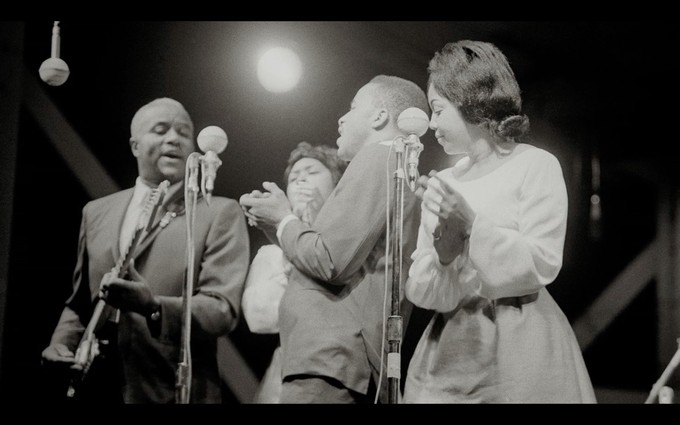
The first time I ever laid eyes on Mavis Staples was in college, when I first saw The Band’s concert documentary, THE LAST WALTZ, directed by Martin Scorsese. Her group The Staple Singers (led by her father, Pops Staples) took part in a rousing rendition of “The Weight,” and I was hooked. I found a few of the Staples key albums, and in the back of my head, I wondered what had become of them as a group. Then, another one of my musical interests led me back to Mavis. I’m a Prince fan from way back, and when I found out that he was producing and writing many of the songs for a new Mavis Staples album, I nearly lost my mind. When all was said and done, Prince produced two albums for Mavis, one in 1989 and another in 1993, but it was when she was out touring for the second album, “The Voice,” that I got to see her in concert for the first time in a small club in Chicago.
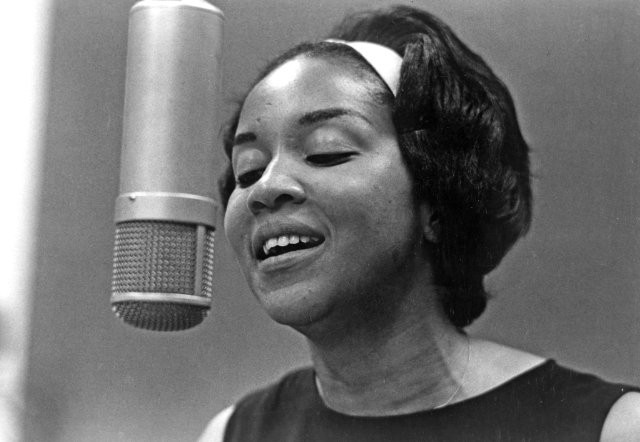
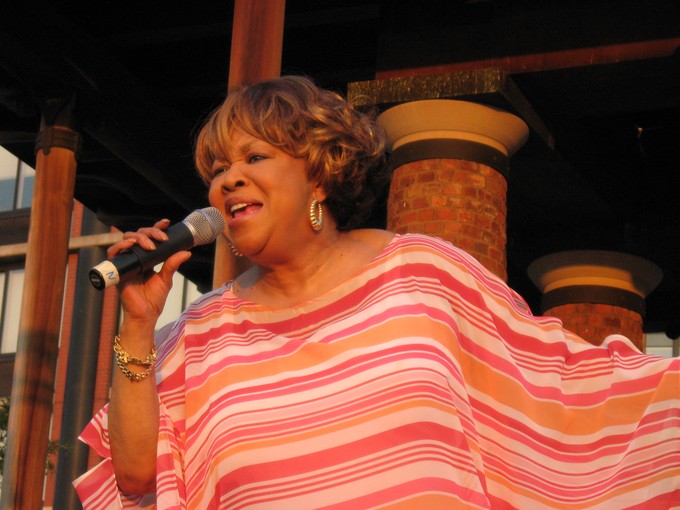
Over the years, I’ve seen Mavis perform several times, including once with the Staple Singers in the late 1990s, and although we live in the same city, our paths have never crossed outside of a concert venue. And why would they? But leading up to last year’s SXSW Film Festival, I found out that a documentary about her life, MAVIS!, was playing, and I immediately asked for a sit down with one of the queens of music, in my estimation. I had an incredible time chatting with Mavis, as well as the film’s director, Jessica Edwards (I’ll have that interview for you tomorrow), and I’m happy to report that MAVIS! is finally seeing the light of day courtesy of HBO, where it will premiere on leap day (which seems appropriate), tonight, Monday, Feb. 29 at 9pm/8pm CST, and it’s a terrific, all-encompassing look at Mavis’s life and career. You’d be a fool to miss it. In the mean time, please enjoy my talk with the living legend, Mavis Staples…
Capone: Why was this the right time for you to let someone into your life like this to film you and tell your story? Jessica couldn’t have been the first time someone has asked you to take part in something like this.
Mavis Staples: Right, it wasn’t. Actually, I think it was the right time. I had been putting people off for so long. Even with writing the book [“I'll Take You There: Mavis Staples, the Staple Singers, and the Music That Shaped the Civil Rights Era” by Chicago Tribune music writer Greg Kot]. I had been putting off so many of my friends who I knew were capable of doing that book, and they wanted to, and I put it off. When Greg called and asked me, I said well, I might as well do it and get it documented. Then when Jessica came to City Winery in New York, my manager Dave [Bartlett] said they wanted to do a documentary on me, I said, “Dave, I’ve done so many of those things.”
Capone: I’ve seen you in a lot of documentaries. I saw TAKE ME TO THE RIVER here a couple of years ago, which I thought was wonderful.
MS: Yeah, and I did one in Chicago with [Chicago Sun-Times reporter] Dave Hoekstra, but I thought about it. I’m getting older. I’m not planning on retiring, but I know one day I’m going to have to stop. I said, maybe we’ll go on and get this done. It was fun. Watching it today was awesome.
Capone: I didn’t realize this was the first time you had seen it. What was that feeling like, watching your whole life put on display? Were you thinking “All these people are watching my life right now.”?
MS: Right. It was unbelievable, just unbelievable. At certain times, they would just clap at certain things they saw, and I said, “Oh lord, we have really, really put ourselves on the map—my family.” And I thought about when Pops started us singing—and we weren’t singing for a career, we were just singing around on the floor to amuse ourselves, and one night my Aunt Katie said, “I believe I want you all to sing at my church.”
And from that, Vivian Carter was in the audience, she had Vee-Jay Records, she called Pops and said, “Staples, you and them children need to be on a record.” And Pops said, “Vivian, I don’t want my children on no record, because I don’t know nothing about them records.” And years went on, and he learned the record business and he called her and let her know, “We can make a record now.” I was about 12 or 13 years old then. But watching this, I was watching these scenes and my mind was taking me there. Oh man, some of them I just had to laugh, some I had to cry. I ain’t cried so much watching a movie since IMITATION OF LIFE. I mean, just so many moments just brought me down, but they were moments that I was glad to see.
Capone: They brought you down?
MS: They hit me, and I had to cry, yeah. They didn’t bring me down in a bad way, but I had to cry. And they were happy tears; some of them were sad tears, because seeing Pops and seeing him with his full pork-chop [sideburns] [laughs]. And so many men copied Pops. My sister Cleotha, she was dating this guy, and I’d be doggone if he didn’t have the hair and the pork chops, and one night, she came in, and her security guard said, “Ms. Staples. Hello, Pops.” She said, “This is not Pops!”
Capone: I was fortunate enough back in the mid- or late ’90s to see The Staples Singers play at the House of Blues in Chicago.
MS: Yes, yes.
Capone: I didn’t realize at the time how rare that was, to see Pops. So I actually got to see him play. That was a really special show to me. I felt like I’d been to church that night.
MS: It was. And see that was the thing, House of Blues, those shows, we were singing gospel soul, and it was so pounded into me. I was a Christian girl, and sister Mahalia Jackson was my favorite, she was my idol. So when they started calling us to go to these clubs, I told daddy,“Daddy, I’m not going in that club.” He said, “Baby, what are you talking about?” I said, “Sister Mahalia Jackson won’t go in no club, so I’m not going.” He said, “Mavis, baby, come here. I’m your father. I’m not going to take you some place where you don’t need to be going. But look, we have to sing in the club, because the people in the club won’t go to church, so we have to take the church to them.” And he always had something to make me change my mind about something. He could talk to me in a way, man. I didn’t want to sing. I wanted to go to college. I wanted to be a nurse. When I graduated in high school, Pops said, “Well Mavis, we can go full time now. We can go full time.” I said, “Daddy, I don’t want to go full time. I wanna be a nurse.”
Capone: I wondered about that, because it’s a bit glossed over in the film that he said that.
MS: It sure did [laughs]. They didn’t finish it. I was surprised at that.
Capone: I thought, “Wow, he just told them what to do, didn’t he?”
MS: Right. I said, “Daddy, I want to be a nurse.” And he goes, “Come on baby, sit down. Mavis, you are already a nurse. You are healing people. You see how happy you make people with your songs? You walk around the pulpit, and they put money in your hand. They’re grateful. They’re crying. You make them feel good.” So I said, “Okay, I’ll sing then. I am a nurse.”
Capone: The first time I ever saw you was in college. I watched THE LAST WALTZ. First of all, seeing it again in that clip tonight, all of you look the best you’ve ever looked. Scorsese filmed you, and you are all glowing. When I first say you all, I said “What was that?” That’s the best version of any song I’ve ever heard.
MS: Oh, man. That really was.
Capone: I knew the Staples Singers, and I picked up some of your older records after seeing THE LAST WALTZ, but I’m also a life-long Prince fan, so when you two came together, it blew my mind. I had not realized before this movie that you had not done any solo recording after that one album until he convinced you to come back. That Prince footage is fascinating to me. I do have both of those albums.
MS: Do you? Do you? I am so mad that they stopped making “The Voice.”
Capone: I didn’t realize they were that rare.
MS: Yeah, man. Plus, he wrote those songs for me.
Capone: I have bootlegs of some of the demos he wrote for you.
MS: Is that right? See, the first album, people got on his case, saying he was trying to make Mavis a female Prince.
Capone: One of his proteges.
MS: Right! So he had to come on and start writing songs for me—message songs. That was the best album. And he was so happy. It hurt me so bad that Warner Bros. stopped that.
Capone: But I got it. I bought anything he produced. I didn’t realize it was so rare.
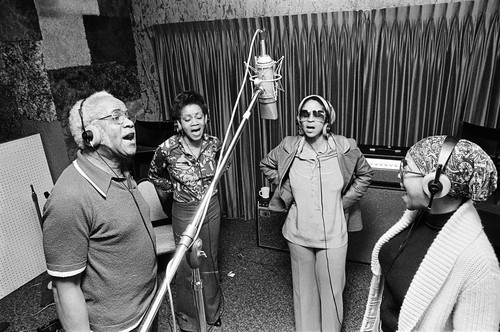
MS: See, that film they had in the documenary, that was when I first got with him. That was the first thing we did,“God Is Alive.” And we were in that studio, and he was telling me how to read what I had sing, because he didn’t have any words to it. He had two words to it, and he had the title, “God Is Alive.” So I just started coming with stuff. I don’t even have “God Is Alive.” I don’t have it, because it wasn’t pressed on a record. I don’t think it was.
Capone: I have that demo. I didn’t realize that was you, because he had a couple women playing for him in his band at the time. I thought it was one of them.
MS: Bonnie Boyer.
Capone: Bonnie Boyer, exactly. I thought it was her. Unless that’s a demo that she made for you. But I think I’ve got that. I think I have a copy of that.
MS: You’ve got it.
Capone: I’ll send it to you.
MS: Okay, cool. “God is Alive.” Yes indeed. And Prince, I’ll tell you, that was the best time. He had me opening for him in Wembley. Oh man. Everybody was saying, “You going to work with him?” I said, “Music is for everybody.” “You’re a miss match. You don’t fit. And what you doing?” One guy came in to interview me, and he was mad. He was angry. First thing he told me, “I’m an Atheist.” I said, “Okay.” I was in Europe.
Capone: That’s a strange way to make friends with somebody, but alright.
MS: But I tell you, when he left that room, he was converted because I laid it on him. I just let him know how I felt and how I felt about Prince. People talk bad about this kid because he won’t give interviews, and so they make things up and talk bad about him. But he is one of the sweetest people in the world.
Capone: I’ve met him before. I’ve been to Paisley Park.
MS: Oh man, he treated me like royalty. He did. He did. I still email him today. He’s a Jehovah’s Witness now. I kinda hated that. I did. [laughs]
Capone: But even when you were working with him, I think it really confused people that he was very spiritual, but he was still at the time doing these very graphic songs sometimes. I think that really baffled people. I don’t think they quite understood how spiritual he was.
MS: Yeah, the Bible is his favorite book. But when he became a Jehovah’s Witness, he stopped singing songs like that. But he is one sweet kid. In all of my interviews, I would let them know Prince is about the most humble person I’ve ever met. Beautiful. But this guy, he comes in and, “I’m an Atheist.” “Okay. Be what you want to be.”
Capone: I’ve seen other concert films featuring the Staples Singers as well, like WATTSTAX and SOUL TO SOUL. Again, it was great to just get glimpses of you in that era. When that was happening, it sounds like Pops and you and everybody in the group made a decision to be a part of the movements that were going on at the time, especially the Civil Rights Movement. You had this audience and you were going to deliver this message to that audience since they were in the palm of your hand. That’s a really bold thing, because that could blow up in your face if it doesn’t work right.
MS: Right. But we didn’t think like that. Pops didn’t think like that. He said in the movie, “You’re singing truth. Whatever the Staples Singers are going to sing, it’s going to be truth. And truth is gospel.” We decided to start singing protest songs because we went to Dr. King’s church, and Pops had been listening to them on the radio. The movement hadn’t started yet. He had a radio program, and Pops had been hearing him. He said, “We’re in Montgomery, and this man Martin is here. I wanna go to his 11 o’clock service. Do you all wan to go?” We said, “Yeah, Daddy.”
So someone ushered us into the church, seated us, someone let Dr. King know we were there, and he acknowledged us. He said, “We have Pops Staples and his daughters here this morning.” And back then, I didn’t know Dr. King was going to be who he is, because like I said, the movement hadn’t really started. Pops was aware of him and listened to him on the radio. He liked his message then. So when Pops said, “This man, I like his message and I think if he can preach it, we can sing it.” And that was about writing freedom songs. We’re trying to help our brothers and sisters. Gospel songs are trying to help somebody. We can sing the gospel song like, “Help me Jesus. Help me, Jesus,” and somebody always thinks we’re singing directly to them, because they can’t pay their rent, they need help.
We knew most of our songs on Vee-Jay were biggest in the South. We would travel to the South. My sisters and I, we were in Jackson, Mississippi, and we were going shopping. Pops told us, “Alright now. Y’all go down there and shop, but don’t start nothing.” And in the next breath he said, “Don’t take nothing neither.” My sister Cleedy, we went in the store, and we saw these shoes in one. We wanted to sing in these shoes. They were silver pumps, and they would go with anything. So we went in and asked the lady, and we told her what we wanted, and we told her our three different sizes. And she brought the shoes out. She said, “Alright, I have them here.” She thought we were just going to take them and go., but my sister said, “No, we better try these on.” And she come with, “Oh hon, if you want to try them on, you have to go behind that curtain there.” That curtain was an old raggedy sack, and Cleedy said, “Oh, no. We won’t take these.”
And when you say something like that, the first thing she said was, “Y’all ain’t from here, are you?” And Cleedy said, “Yes, we’re from here. We’ve been living here all our life. We’re on Church Street,” because that’s where we were staying at in a home with these people because we couldn’t stay in a hotel. Mr. and Mrs. Lee opened up their rooming house to the gospel singers who came through Jackson, Mississippi. That’s why Cleedy said, “We live on Church Street.”, because there were homes on Church Street. She looked at us real weird, and we walked out. So it was so many things like that that happened to us. We had been hurt.
We went to jail in West Memphis, Arkansas, because Pops had to beat this white boy up, beat him down. He called me the N-word. I was driving, I was driving, and we stopped there. I was going to drive 200 more miles., because I was the night driver. I pulled into this station in Memphis, Tennessee. The boy came up, young guy, tall and skinny. So after he gave me the gas, he came for his money. I said, “Would you wipe the windshield? There’s bugs on it.” He took a rag and messed around, then he wanted money again, and I asked him for a cash receipt. He looked at me a long time and said, “You want a cash receipt, you come over to the office, N-word.” And Pops said, “Mavis, pull over there.” I went over there, Pops went in there. He was shaking his finger in Daddy’s face, and when he did that, that’s when Pops clocked him.
He thought there were just two ladies in the car and an old man. He thought Pops was old because he had grey hair. But my brother was in the car sleeping under some coats, because he was going to drive next. They followed him over into the grease pit where they fixed cars. He got there, Daddy had on his slippers and he slipped down. When he started to get this crowbar, that’s when my sister Cleedy jumped out of the car. She was beating him. He got away from her and ran in his office, and went to the drawer. And I said, “Pervis, get out of the car,” because I knew he was going for a gun, and he came out of those coats like Superman coming out of that telephone booth. He went up in the air, because this guy was tall.
They got back in the car, and they were huffing and puffing, and Daddy said, “Drive, Mavis!” I said, “Pops, I can’t drive no more.” He said, “Drive, Mavis.” I started back to driving, and all of a sudden I see white lights behind me. I said, “Daddy, there’s three white lights behind me.” He said, “Well just keep going. Get across the bridge.” That was the bridge that divided Memphis and West Memphis. I got across that bridge, man, these three cars were they, and they jumped out with shotguns, dogs were barking. Scared me too. I just knew I wasn’t going to see my mother again. I just knew. And they jumped out, had us standing on the highway with our hands over our heads, and they put us in three different cars. I thought they were taking us out in the woods to lynch us. I’ve never been so glad to see a police station.
They took us to jail, divided us all up and handcuffed my father behind his back, and one of them called Daddy a boy. He said, “This boy look like he want to run.” First, they handcuffed him to the car handle. They were mean. Daddy told him, “We’re gospel singers, sir. These are my children. We just left Jackson, Mississippi.” See, the people of Jackson, Mississippi, had paid us in a cigar box.” This boy had told them we robbed them. They saw the money and said, “This is what we’re looking for.” Pops said, “This is our money, officers.” They said, “Where’d you get this kind of money?” He said, “We sang tonight in Jackson, Mississippi.” “Well, I gotta hear what kind of singing you do to make this kind of money.” Oh, man, I never will forget it; I remember everything.
We got in that police station, all of us walking in handcuffed behind our back. The first black man in there was mopping the floor, and he looked up and said, “Pops Staples? What you doing here?” Then we came in behind Daddy, and he said, “And your children?” And man, we laughed about that later. But we got in there, and this chief said, “Who’s going to tell me what happened?” Pops said, “I’ll tell you what happened if you take me to another room.” Pops still didn’t want me to hear what this guy was saying about me when he hit him. Pops told the chief it started because we asked for a receipt, and he said, “Cleedy, go look for this receipt.” She comes back in with it, because he told them we didn’t pay for our gas and we robbed him, so that proved to the chief we paid our gas. So he said, “Get them handcuffs off these people.” He said, “We trying to clean this mess up down here, and these youngsters are keeping it going.”
Man, next time we got to Memphis, we looked over to the right, and all these police officers all dressed up are there with the chief. Pops looked over there and said, “Well chief, it’s mighty nice of you to come and see us, but who’s minding the town? Did you leave anybody over there?” That was one scary moment. So us singing protest songs, we felt like that’s what we were supposed to be doing.
Capone: Just before I came down here, the two most recent records I bought were the new “Freedom Highway” reissues with the extra songs, and Pops’ album that we see you listening to in the movie.
MS: “Freedom Highway” is from the New Nazareth Church [in Chicago].
Capone: Sure. And Pops record…I don’t cry much in movies, but that moment that got me. Was that the first time you had heard Jeff Tweddy’s reworking of it?
MS: That was the first time I had heard what Tweedy and them did. That’s how you take it. “Friendship,” that’s a good song. Homer Banks wrote that song; he’s from Memphis. He had written it and sent it to dad a long time ago. I had kept the record for 15 years. Man, I tell you. I’ve had a wonderful life, but I’ve seen some days that still made up my life. All those bad people in the South, you know? Pops, just like I said, these young kids…we were in a Cadillac, and they’d drive over into us, and Pops would drive right back. He said, “I ain’t taking this mess no more. I took enough of this when I was a boy.”
Capone: You have had this very interesting way of being re-introduced into the world, sometimes with the help of people like Tweedy or Prince or whoever else. At your shows, you can see it in the crowd, there are people bringing their kids and grandkids. What does that mean to you?
MS: Oh, man. That is the best part of now. I’m still out there and I’m seeing these young generations. I’ve been through six or seven generations, and I’m seeing them come, and they love us. They want to hear the Staples Singers, you know? You know Terri Hemmert from WXRT [in Chicago]?
Capone: Of course.
MS: Terri said her class, these young kids, she said, “Mavis, they love you.” She plays stuff for them all the time, videos and everything. But it makes me feel so good that our audience is still 8 to 80. It’s always been that. I’ve got so many people naming their babies Mavis. I even got a kitty the other day. Somebody named their kitty Mavis. They said, “I named it after Mavis Staples because it’s got this big voice.” I got a koala bear in Australia named Mavis.
And in every color in the rainbow. Love comes in all colors, just like the rainbow. They be waiting to see what I’m going to do. I’m just been so happy. I get back to the hotel, and I just feel so good. That’s the best part of this, that the young people…I’m still here to show them and teach them, because they don’t have black history in schools. I went to Montgomery for the 50th anniversary of the [Selma to Montgomery] march, I was right there with all of them. Julian Bond, everybody was there. And this little lady Nancy Pelosi, she was dancing to “I’ll Take You There.” It’s the best thing that I’m still here to carry on and give this message to young people. And I’m not going to stop. I’m going to keep on going. And if I do stop, I’ve got my movie now. That will tell them.
Capone: Mavis, it’s been the great pleasure to meet you finally. Thank you so much.
MS: Oh man, it was good to talk to you. I’m sure we’ll run into each other again in Chicago.