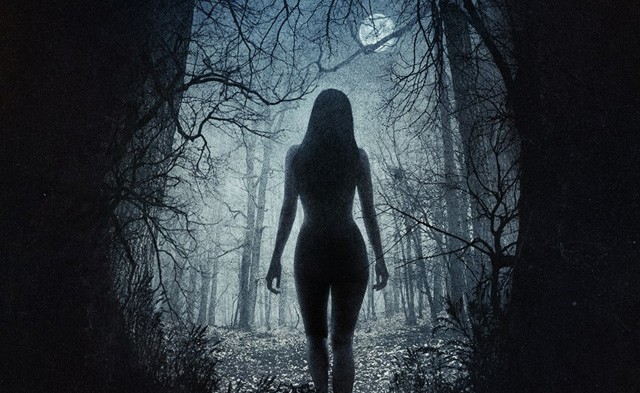
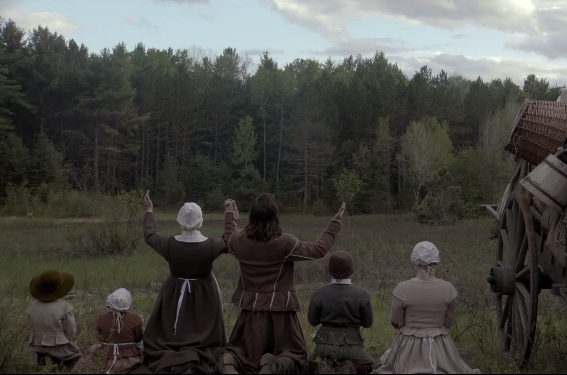
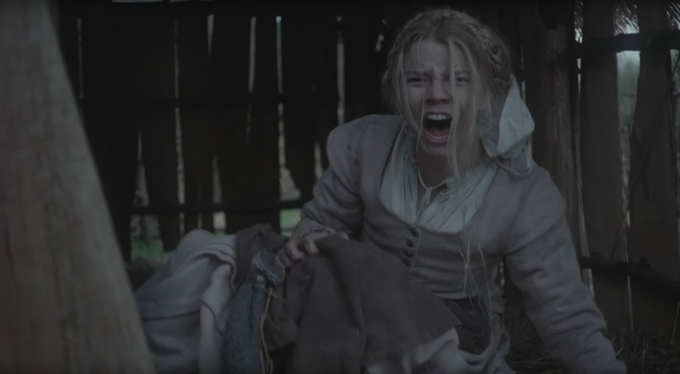
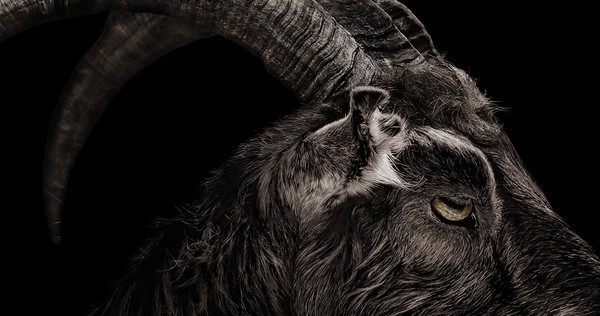
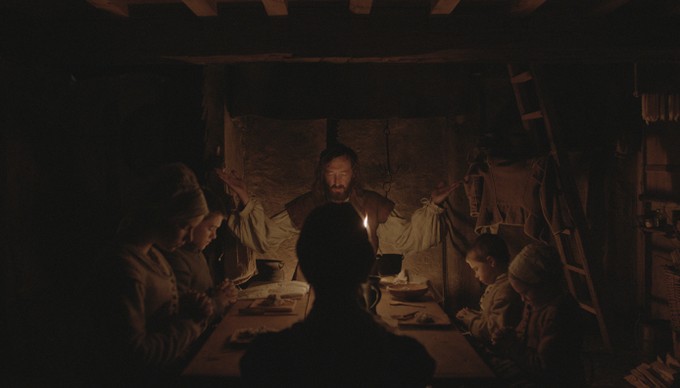
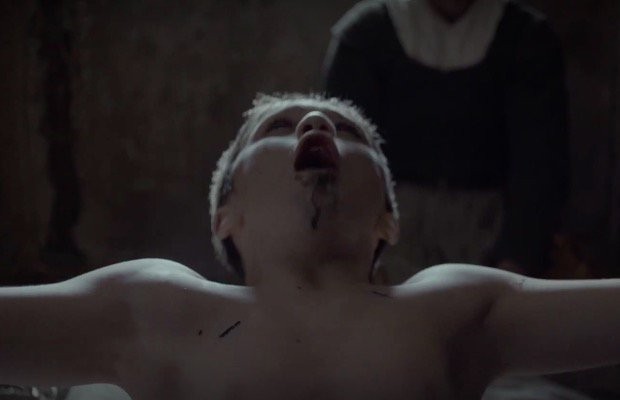
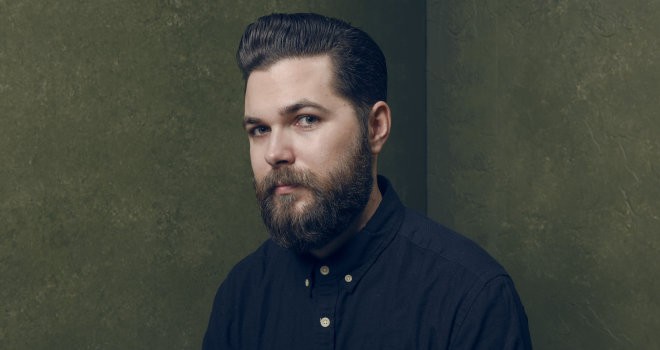
Writer-director Robert Eggers began his show business career as a production designer for both stage and screen, and his eye for detail permeates every frame of his first feature, THE WITCH, a period horror story about a Puritanical New England family living on an isolated farm circa the 1630s and who are plagued with the possibility that a witch living in the woods near their home has cursed them or at least set into motion something that threatens to tear the family apart. THE WITCH is an exercise in taking the entire movie to build to a truly terrifying feeling of dread and evil doing, but it’s also a successful family drama even outside the witchy part of the story.
Eggers surrounded his exquisite cast with sets that could only be built using materials available at the time, using only construction methods of the period. Even the film’s score was composed using instruments of the time. And all of these details that audiences would never really know make a huge difference in the way the actors play each scene and how audiences react. It’s a devastating work, which hopefully will spark a trend toward more story-centric horror and fewer films featuring cheap scares and cliche horror film techniques. I had a chance to sit down with Eggers in Chicago recently, the day after we did a Q&A screening of THE WITCH. Please enjoy…
Capone: Forgive me if we cover some of the same ground as we did last night.
Robert Eggers: That’s all I’m doing is a rehashing the same shit [laughs].
Capone: Yeah, someone told me you were on a two-week publicity sprint, and I said, “Yeah, after like a year of film festivals.” You must be excited that it’s finally coming out and you can stop talking about it and actually let people see it.
RE: Finally, I can get rid of it [laughs].
Capone:Honestly, you have places to go, things to do. For your first feature, why did you start with horror? Was that something that was a favorite genre of yours, or did you just see potential there?
RE: I like dark subject matter. I’m drawn to it, always has been, even if it’s a Shakespearean tragedy. I don’t tend to like a lot of light, frolicking things. I had finally made a shorter film that wasn’t like trash, and some people were interested in developing a feature with me, and I wrote a bunch of scripts that were all dark, weird fairytales—one of them even darker than THE WITCH—and people just didn’t really know what to make of them.
So I realized, as a lot of filmmakers do, in the climate right now, especially as an American filmmaker, if I want to get a film financed, it’s got to be in an identifiable genre, which is okay. That’s cool. So it’s like, how do I do that in a personal way where I’m not compromising myself and my ideals? How do I do that? So I just went back to my past. I’m from New England. I’ve always been interested in New England’s past. It’s been said in a silly, poetic fashion: the landscapes of my childhood seemed haunted by the past. But they did. I was always interested in witches, which were the archetypal New England spook, so it seemed like I might be able to do something really cool with this.
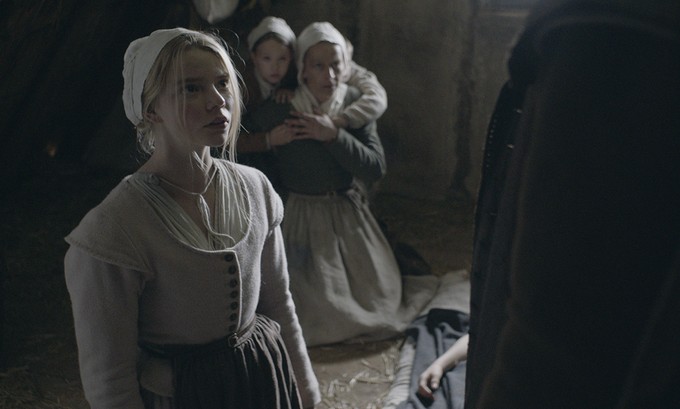
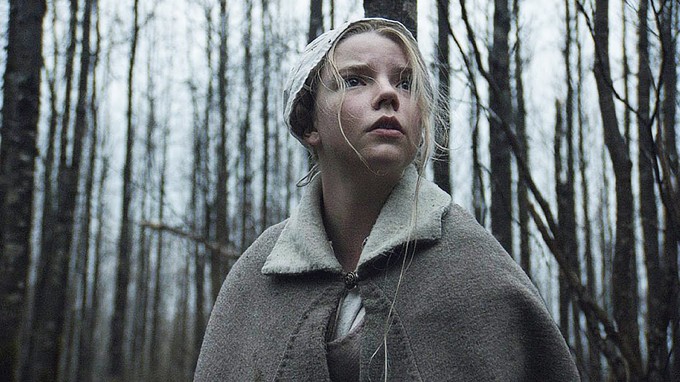
Capone: Some of the best horror films are ones where people are pulling from things they’ve been scared of or fascinated with since childhood, and this certainly has that feel. And all of your fear is on Thomasin’s face. Tell me about finding your Thomasin.
RE: We had a great UK casting director, Kharmel Cochrane. Anya Taylor-Joy was the first tape that I saw, and I was kinda like “This is too good to be true, and besides, she used to be a model. I don’t know about this.” So I looked at like a zillion young women, and frankly, these young women were incredible. There were very few that were not good. But it was clear that Anya was Thomasin in a way no one else was.
Originally I thought Thomasin was going to be a little more homely and awkward and weird, but something about Anya that I realized worked so well was that she couldn’t be a Puritan. She’s not a Puritan. It’s not going to happen. Yet she still had a timeless quality. You believe her in the past, you believe her on the farm, but you don’t believe her as a Puritan. I thought that was really great. She also had this really enigmatic quality that Thomasin needed where you’re totally drawn into her. She lets you in, but she doesn’t let you completely in. You want to know what she’s thinking, but you can’t quite figure it out, no matter if we stick that 32mm lens right up in hercface.
Capone: It’s funny that you say that, because you had three different people last night during the Q&A ask you in three different ways to explain the ending, so clearly they wanted inside her head, and I almost had to launch into my speech about “If a director leaves something open like that, it’s probably on purpose. Do you really want to know why she did what she did?” But you made them care about that character and what she was deciding to do.
I love that we don’t really know whether or not this is a witch doing any of this until the very end. Because all we see at the beginning is an old lady stealing a baby. That doesn’t have to be a witch thing. That could just be some crazy old lady, and there have certainly been plenty of film about the death of a child or the disappearance of a child and how that wrecks a family. This could be another one of those.
RE: It’s interesting, there are a lot of ways into the film. It’s funny, some people are like, “It’s a story about a witch, and it’s boring and it’s not very deep.” And it’s like alright, like that’s cool. I think that version is even fine. But there are a lot of ways in there, and even if you want to be super nerdy about it, the rot on the corn could be ergots [and not a witch’s curse]. But there’s a lot of stuff in there for witch nerds.
Capone: At the core of this, however you enter into it, is this family drama between the daughter and the mother, between the daughter and oldest boy. There’s a lot going on here that has nothing to do with witches.
RE: In my opinion, we’re always dealing with the family drama in all of our relationships for all of our lives. It’s the most interesting drama, and back to Shakespeare again for some reason, Hamlet and Lear are generally the best regarded of his plays because they’re family affairs. Also, fairytales are these stories of shifting, incomplete families, and exploring how the family structure can exist or implode, and to think about the fact that pre-Grimm—not always, sometimes the stepmother is a stepmother—very often the stepmother is the biological mother. That is rife for Freud to get excited.
Capone: According to the end credits, you shot this in Canada. Were there not places like this in New Hampshire? I realize there’s probably not a tax credit, either.
RE: To be honest, I was pretty heartbroken that we couldn’t shoot this in New England, and we wanted to. But we ended up shooting in Canada for financial reasons. It ended up being great. I love the location. The town we shot in was great. The film gets so much praise for Craig Lathrop’s design work and my annoying detail obsession, but the local carpenters up there had something real special. It took a long time to find something that could have the right forest system of white pines and hemlocks of a size that would look like New England, within the region of Northern Ontario where we had the tax credit. I would be furious, because I’d be driving all around Canada getting more and more photos from scouts, and they would just show up with these piddly little planted red pine forests. Then I would go home for Thanksgiving, drive around Nottingham, New Hampshire, and see these enormous white pines and be like, “Dammit! Dammit!” Finally we had to go way off the map to this really isolated place called Kiosk to find something suitable.
Capone: As much as you don’t want to get lost in the technical details of what you did, it lends to the authenticity, and it’s a fascinating story.
RE: Sure. I just really want to be clear that accuracy for accuracy’s sake just doesn't matter. The only thing that’s good about accuracy for accuracy’s sake is that it’s a really specific high bar, and all the departments know what it is, so everyone gets excited and unified to like achieve that. You know what the golden fish is that you’re fishing for. That’s nice, but really there are so many films that are not historically accurate that are period films that are great and well designed. The point of this is, in order for THE WITCH to real for audiences today and to be scary for audiences today, I have to transport them back to the 17th century where the witch was real. The witch was just a given. She was just as real as dirt and mud and shit and God. That’s the point.
But I was working with museums and historians and people in the living history community to really understand what was this going to be. I’m trying to read books about the 17th century, animal husbandry, and how farming was different in England versus New England, and what farmers faced when they came here, and their farming techniques back home didn’t work the same way. When I met Craig Lathrop, who is the production designer and is so uncompromising and incredible, he was the only guy who came in with some of the same research as me for the interview. When we did a field trip to Massachusetts in some of these museums we visited like he knew more than the curators. I was very, very pleased.
When I met Craig, I said, “I want to build these things for real.” And he was like, “Well, let me tell you, we’re going to be building this stuff in February and March, and it’s going to be in feet of snow, so we can’t. We can’t build them for real. But what we’ll do is, everything that’s going to be on camera will be the right materials. I’ll prefab stuff in the derelict lumber mill that became our set construction shop, but every single thing that’s on screen is going to be the right material.” So that meant very often having to use the authentic tools and techniques to make furniture and shutters for them to look right. The farm and outbuildings are covered with hand-riven oak [features] that no one in Canada knew how to make, at least not in that region of Canada.
I think Quebec has some of that in their architecture tradition, but not in Ontario, so we had to go find this guy Jesse in Massachusetts who makes first-period homes to make all that for us. So it was very demanding. And the costume were the same. Linda Muir, she was working with a 30-volume book set about the clothes of the common people from the early-Stewart England. We had authentic fabric swatches for what the hand-woven cloth would be. We couldn’t afford it all, because it’s so expensive, hand-woven cloth. But Linda found incredible matches. It looks good.
Capone: I have to imagine that just being surrounded by those things—the clothes and the sets—helps the actors immensely. They can just lose themselves in that, and there’s nothing fake about it.
RE: Yeah, exactly. I gave them all a heap of research before they came in, and then we spent time being a family on the farm, learning how to use the farm tools, milking goats, and all that. It was invaluable. Though I will say, their pockets, or their little pouches, we worked with props to have them filled with what they would actually be filled with, even through they wouldn’t be seen, just to have the extra character detail, but in the end they were all filled with their cigarettes.
Capone: Was there like a rehearsal time?
RE: Yeah, we had a rehearsal time, and it was totally crucial for many reasons. One is we had to be a family unit that loved and cared for each other, so we could then tear the family apart, but we had to get out of these dark places safely. I don’t like to torture actors. But additionally, it was almost cut in-camera, much to the editor’s despair. Not to say there was no coverage, but it certainly wasn’t traditional coverage. It was pretty close to cut in-camera, and in order on our tight schedule to get that precise photography, things needed to be well rehearsed.
Capone: Was there any issue with the financiers with having so many children be a part of this and the limitations that might have on your shooting schedule?
RE: I don’t know about the financiers who turned us down. The financiers who turned us down, I just think they didn’t want to spend as much money. I think if we could have done the same movie with half the budget—actually, we got offers right away to do that. I do know that it was difficult to cast the kids, not only because we needed kids who could do the language easily. We needed kids who could seem of a family. But also, a lot of kids’ parents wouldn’t let them be in a film with this kind of subject matter.
Capone: You said there are many ways into this film, and one of the ways is as a metaphor for the oppression of feminine power. Talk about that aspect of it. Was that really there when you were writing it?
RE: I tired to write the film—sounding like a typical director tool—without any judgement. But it’s true. Not judging. No agenda. I love these Puritans. Let me tell you, I would not be a hardcore, 17th century, English Calvinist—thank you very much— but like there is a way, and I’m going to regret saying this, but there’s a way I can respect it. Obviously, there are a lot of many horrible things about manifest destiny. It’s a terrible, horrible chapter of our past. But I grew to love this family. While there are many ways into this thing, the theme that just rises to the top and there are no question about it is feminism. It just does.
Capone: I love this family too, but they’re not very good Puritans. If they’re adhering to a certain set of Godly laws, they’re breaking them all the way through this movie, and then confessing it. Did that factor in?
RE: Yeah, I think that there may have been a time they were good, but we see them in a very…I realize I shouldn’t talk about despair so much, because it doesn’t get bums into seats, but “Despiar” was on a piece of paper written huge in gothic lettering, circled on my wall when I was writing this thing.
Capone: That’s what it is, though, snowballing despair. You’ve had a year or more to think about it. Do you know what you’re leaning toward doing next?
RE: I’m working on a medieval epic.
Capone: Oh, that’s still happening? I think at one point you referred to it as THE KNIGHT. Is that closer than it was?
RE: It’s closer than it’s ever been, but things take time.
Capone: Are you going for the authentic feel again?
RE: I don’t want to get too much into it, but I like what I like [laughs].
Capone: You’ve set the bar for yourself. Were there any films in particular that you used as a touchstone, in terms of the atmosphere and the aesthetics for THE WITCH?
RE: I really hate saying this, because he made entirely different films than I’m trying to do, but more than anything what I admire about Tarkovsky’s films is the atmosphere through the articulation of memory.
Capone: When we were talking about research before, you were talking mainly about the living conditions, but tell me about the research you did on witches. The title card at the end talks about diaries and courtroom transcripts. What do you remember drawing out of those?
RE: The main point was the real world and the fairytale world were same thing. Folk tales, fairytales, historical accounts, newspapers, tabloids, court records—the same stories. Women being accused of giving children poison apples: Fact. That was what was the most interesting thing to me. That’s what this film thrives on. If you’re not down for that concept, but I would say most of the historians from this period are because that’s the world view, then you’re not down [laughs].
Capone: That jump that the mother makes to “You’re a witch” is not really as much of a jump as it might seems to modern audiences. It’s just a part of the day-to-day belief system. But it’s jarring at first, then you realize it’s a part of her world.
RE: And when William [the father] is saying “There’s no witch,” it’s more of him saying, “Not at my house!”
Capone: That’s true. Best of luck with this. Thanks so much.