It’s almost impossible to sit through the recent Academy Award nominee for Best Foreign Language Film (from Hungary), SON OF SAUL, and believe that it comes from a first-time feature director. That’s because László Nemes’s bold, in-your-face take on the horrors of Auschwitz and the Holocaust displays such a confidence in filmmaking and a specific visual style—courtesy of the great cinematographer Mátyás Erdély (MISS BALA, JAMES WHITE)—that you might guess it was the product of one of the European masters.
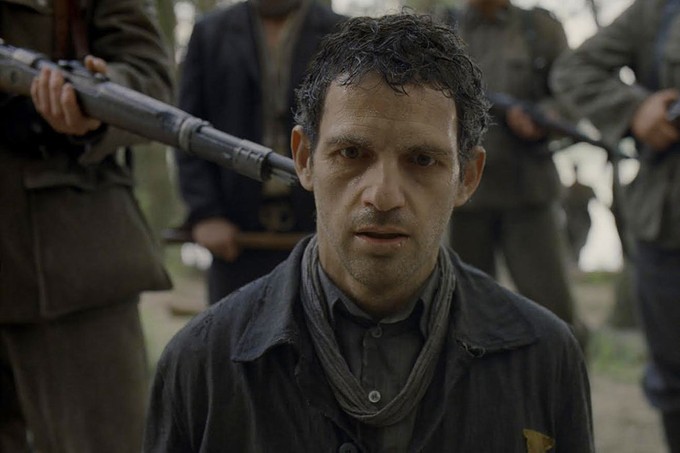
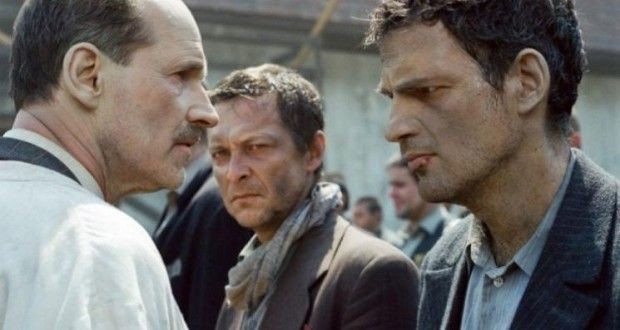
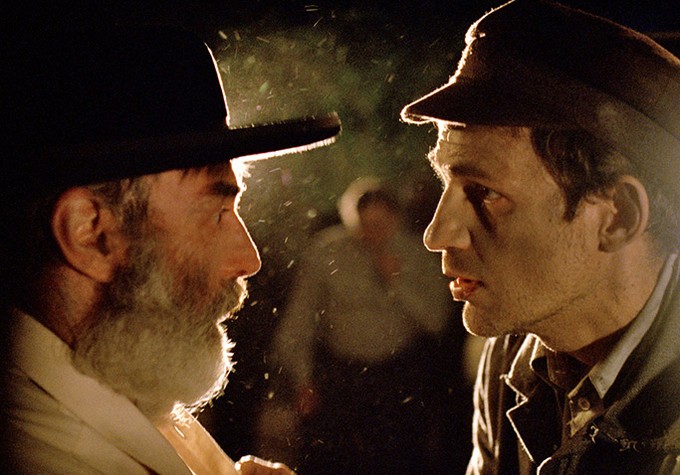
Nemes presents the haunting story of Saul Ausländer (Géza Röhrig), a Jewish prisoner and member of the camp’s Sonderkommando, Jews used by the Nazis to do the dirtiest of work in the gas chambers and ovens—moving bodies, collecting clothes, herding new arrivals to their death. Needless to say, the weight and guilt of being a part of this process takes its toll on Saul, and he sets out on a surely hopeless mission to bury the body of a young boy he believes is his son in a more civilized and properly Jewish way, if only to give one of these poor souls some dignity in death.
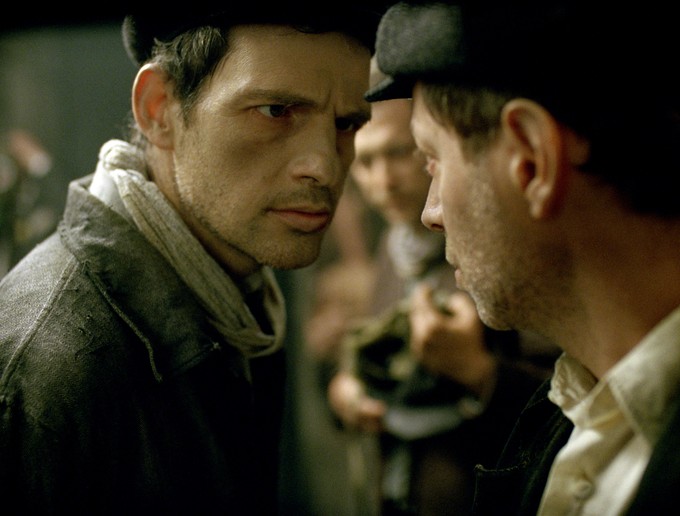
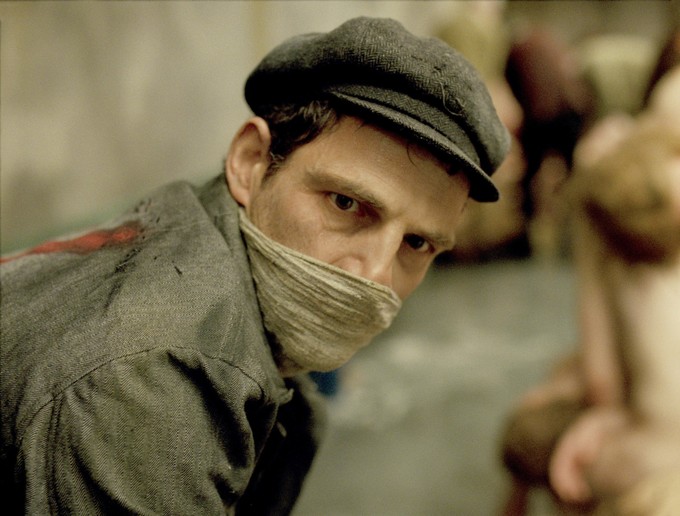
Also the winner of both the 2015 Cannes Film Festival’s Grand Prix and Best Foreign Language Film at the 2016 Golden Globes (and likely Oscar winner), SON OF SAUL is about as heavy a film as you will ever see, and Nemes's style of keeping close to Saul’s face, allowing us to see the most horrific things only as out-of-focus images in the background and in his peripheral vision. It’s an extraordinary display that is almost more horrifying by keeping things blurry, allowing our minds to fill in the details.
I had a chance to talk with Nemes about his decision to tell this story and how he built the environments for SON OF SAUL to be shot. It’s fascinating, almost inconceivable when you hear it. Our talk happened before the Oscar nominations were announced, but the film was already landing on many end-of-year lists from 2015 and winning critics awards in every corner of the country. Please enjoy my chat with László Nemes…
Capone: Hello. How are you?
László Nemes: I’m fine. You?
Capone: Good. First of all, congratulations. I know some of the film critics associations have started naming their winners, and your film has been mentioned among them, as well as the many other awards that you’ve won. Just to start, we’ve certainly seen films over the years about the horrifying realities of concentration camps. How did you come up with this initial idea of following this one man thought this experience in his life and telling a very personal vision—literally, we’re almost seeing it through his eyes, it feels like.
LN: Well, it’s based on the intimate conviction that you can not give a full representation of the Holocaust. Cinema has a tendency to try to illustrate and describe everything, but the more you do, the less you end up with because you give the impression that the audience can encompass it. So in a way, the Holocaust became something abstract, I think. In the consciousness of the people, it became something too remote or intellectual, with no visceral link to it. It’s not that far back in history, and it still has a great impact on this civilization’s present, in a way. I really wanted to give a face to that. The human face of one individual is the only thing you can represent with honesty of the horror. The whole idea came from that assessment, and that you have to trust the imagination of the viewer to have an intuition of what was going on and what the human situation and experience were like in the midst of the extermination machinery.
Capone: Do you feel like some of the other portrayals we’ve seen over the years have been too distancing?
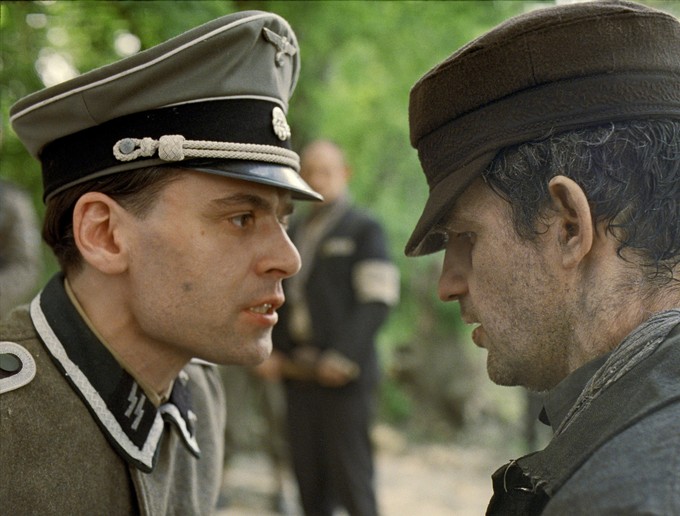
LN: Absolutely. You can see it in the way, usually in fiction films, first the people pick the Holocaust for its dramatic value and not trying to interrogate its essence and its nature and the nature of human suffering within it, so it becomes abstract and distant. You can see it in the choice of point of views. You can actually see that you have this establishing strategy. You know everything. You have high-angle shots. You have this god-like point of view. But with this film, the point of view can be identified as Geza’s point of view. But [with other films,] it’s always having this encompassing, wide perception of everything, a point of view that jumps from one place to another. It gives the audience a way to escape and be on the outside. I think that’s something problematic because you don’t really feel. You reduce it to a sterile reconstruction, and that’s problematic.
Capone: I think you just said that memory doesn’t work in wide shots.
LN: Yeah! Memory doesn’t work in wide shots. I will use that [laughs].
Capone: You can have it. I’ve seen the film twice now, and I was really able to appreciate the second time the specificity of the composition: you have Geza’s face in the foreground, but there’s always something happening behind him, something terrible that you deliberately leave blurry. The only way he could handle being a part is by blurring his own vision of what’s going on around him. Between you and your cinematographer [Mátyás Erdély], how did you come up with that idea?
LN: That’s one of the basic strategies. Looking is not a part of the human experience in this situation. Thinking and looking come after the war. That’s something at the core of our thinking. These people do not look, and the Sonderkommandos do not look because, in a way, they are used to this terrible present and they are traumatized. so we do not look either. Everything becomes blurred. So the audiences will have to construct something in their minds rather than through open imagery.
Capone: You have these very long shots, in some cases. How much choreography and rehearsal of movement did you have to go through to make sure that you had the foreground and the background lined up? Very often, it feels like he’s walking into something that’s already happening.
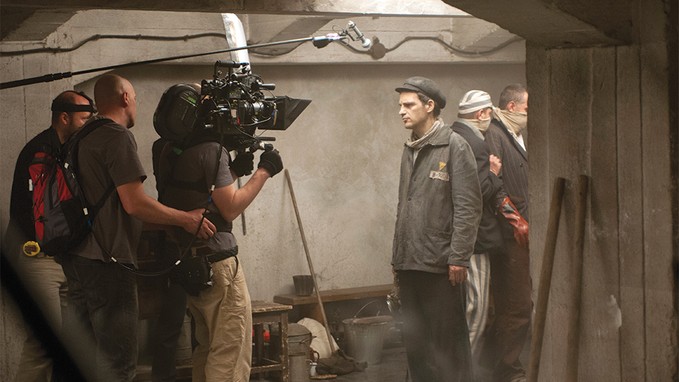
LN: Absolutely. Actually, that stems from the idea that the camp was a mixture of chaos and organization. That’s something you loose in films. You only see the organization, but you don’t see the chaos. That’s something we wanted in a very conscious way. So what we did is, first, everything was prepared in advance, obviously, but we first put the background in place, then we inserted the foreground, the main action, exactly the inverse of what you would do in cinema. In our film, the background is the framework of what the main character can do. He has to be integrated into this situation. So the way we did it, it allowed us to have a constant fluctuation between foreground and background, and you can not really control 100 percent, although you prepare. So it always gives latitude to unexpected things in the frame. Athough we want to control, we cannot control entirely. So that gives this conflict between chaos and organization to the picture.
Capone: One of the things that is most upsetting is the very dispassionate, factory environment to it. Capturing that seemed important to you.
LN: Very important, and that’s something we also did in a conscious way. It’s a factory of death, but it is a factory, so it has its rules, it has its work processes, and we didn’t want to make a myth out of it. We also wanted to say, this is the present. This can be the present; this is not happening on another planet. It can happen here and now. That’s something we try to bring it back to the present, to give the audience a sense of being there. So we absolutely wanted to keep it raw and keep it real.
Capone: I noticed in some of the longer takes, when Saul is going indoor to outdoor or outdoor to indoor, you rarely edit. We always see that movement of him going from place to place.
LN: Yeah, we actually wanted the set to be continuous, from inside to outside, and interconnected as far as the inside levels of the crematorium are concerned. We wanted the feeling of continuity or continuing existence, so we didn’t have to cut if we went outside. We wanted to immerse the viewer as much as possible in the surreal situation and in real places. That also helped the shooting quite a lot, because everybody on the set had the feeling of being in a real place. A lot of lighting was integrated into the set. It was practical lighting. We’re not trying to make it beautiful; it was very functional.
I think it’s important to have this organic feeling. There’s no escape, in a way. There’s no way out. All the sets, all the levels had to be very realistic, but in a way, with this camera work and strategy, the audience cannot have a full picture of the entire complex of the crematorium, so it has to become a mental labyrinth. So it was important to have a very realistic and raw approach, but at the same time, it leaves the audience with an obligation to have a mental image of everything that’s going on.
Capone: The second time watching it I realized how often Saul is putting other people in danger. He’s not a hero here. He’s not doing something that’s going to save lives. What he’s doing is perhaps noble, but it’s certainly not heroic. It’s bold putting a character like that at the center of a story like this.
LN: Absolutely. It was at the center of our writing that we didn’t want to make a hero out of this guy. He is an ordinary man, but still through his actions that are guided by something primitive or primal, he becomes almost a saint in the process. His actions are questionable. But what is morality inside a camp? I think I wanted to leave the audience to decide if his actions actually make sense from a moral standpoint. It’s not an obvious choice. We didn’t want to make it obvious. We wanted to make it hard for the audience to decide.
Capone: I hope people notice your use of sound here, and the sound design you come up with—the voices and the noises we’re hearing as part of this experience. Talk about constructing that.
LN: Many people have notice. That took some time. We knew from the start that 50 percent of the film would be sound. That’s what I said. That’s the first sentence I told my sound designer—we worked on three short films together so I know him—and he still didn’t believe it. We worked five months in post-production on sound, and it was a very painful and long process, and we needed more human voices so we had to add, and we had to make it very organic and very multi layered. It had to reflect the babel of languages, the frenzy, and give a constant reference point to the viewer of the enormity of what’s going on.
The sound gives throughout the film much more than the image. The sound is in conflict in a way with the image, with the picture. So actually, we did it in a very intuitive way. I think also the sound participates in the immersive feeling of the audience and the fact that there are things that can not be explained. I think that that’s something that’s very true about the experience of the individual in the camp. You can not have access to the keys of this universe. You become someone extremely reduced. That’s something that’s very important.
Capone: Speaking of language, it was nice to hear Yiddish featured so prominently in this film.
LN: Yes. Absolutely. We had a Yiddish coach from Israel, and we wanted to re-create a Yiddish from the camps. So we had different Yiddish versions from Yiddish backgrounds of the film. Obviously, very few people would have access to the keys of that, but we wanted to have these versions, and at the same time having the Yiddish of the camp, which is a separate Yiddish. So that was also a very interesting and long process to work with the dialogue coach and re-create that as truthfully as possible this babel.
Capone: Looking back at the experience of making what is your first feature film, do you wonder why you made it something that was so difficult, both from a technical and emotional level?
LN: It seems a little out of reach, and the ambition seems a little too much, but I think also that you have to as a filmmaker set goals that are a little out of reach, but at the same time can be reached. I think that’s something that accompanied me throughout this film—try to be at the level of my ambition, and it’s been a long, difficult process.
Capone: There’s nothing wrong with being a little ambitious.
LN: Yes, I think that’s very important in filmmaking, and I think we’re loosing that more and more. I encourage filmmakers to be more ambitious.
Capone: Why are you driven to tell this story today? What do you want a modern audience to take away from this?
LN: People tend to see history as something that is frozen, as if it was remote from our world. But actually, it’s not too far away. We might end up in historical context really soon. I think it’s important also to communicate in a visceral way, not necessarily in an intellectual way, but in a visceral way with the plight of people throughout history and time. Something might remain with the people while watching this film, because it has to become very personal because it leaves room for the audience. I think the sense of empathy is something I’m really interested in promoting. It’s something that cinema can do but seldom does. I wanted this to be something that the audience feels under its skin.
Capone: Congratulations again, and thanks for taking the time to talk.
LN: Thank you. You have very good questions, actually. You have great insight.