
Nordling here.
INSIDE OUT is one of Pixar’s very best movies, but that’s like comparing Faberge eggs at this point – they’re all things of beauty, even the lesser efforts. It’s not a competition, although our incessant need to rank these movies makes it seem so. Call it a bias if you want, but when I sit down to a Pixar, I expect something special, and far more often than not, those high standards are met. Pixar will never make gritty, dark, adult films – that’s simply not what they’re about. They make artistic endeavors, films that families can enjoy together and yet also manage to tap into universal truths and emotions in strikingly original ways. The best of them toss off ideas like confetti at a parade, and even Pixar’s lesser efforts are, at the very least, enjoyable and fun to watch. Disney may be peddling plastic trinkets, but the movies never feel like two-hour commercials. Let the marketing department figure out how to sell these films to the public; it is Pixar’s job to create magic, and with INSIDE OUT, they have built something beautiful, poignant, and true.
Pete Docter is three for three at this point, but INSIDE OUT is the best of them. The wonderful ideas that Docter imagines aren’t easily categorized, and thank goodness. There’s a remarkable skill to how Docter builds his worlds, given how meticulous Pixar is about story, but everything feels so easy and confident. John Lasseter once said in an interview, “Every Pixar film at one point in time or another was the worst motion picture ever made.” Even so, that’s difficult to believe, when you see the fearlessness and grace displayed in INSIDE OUT.
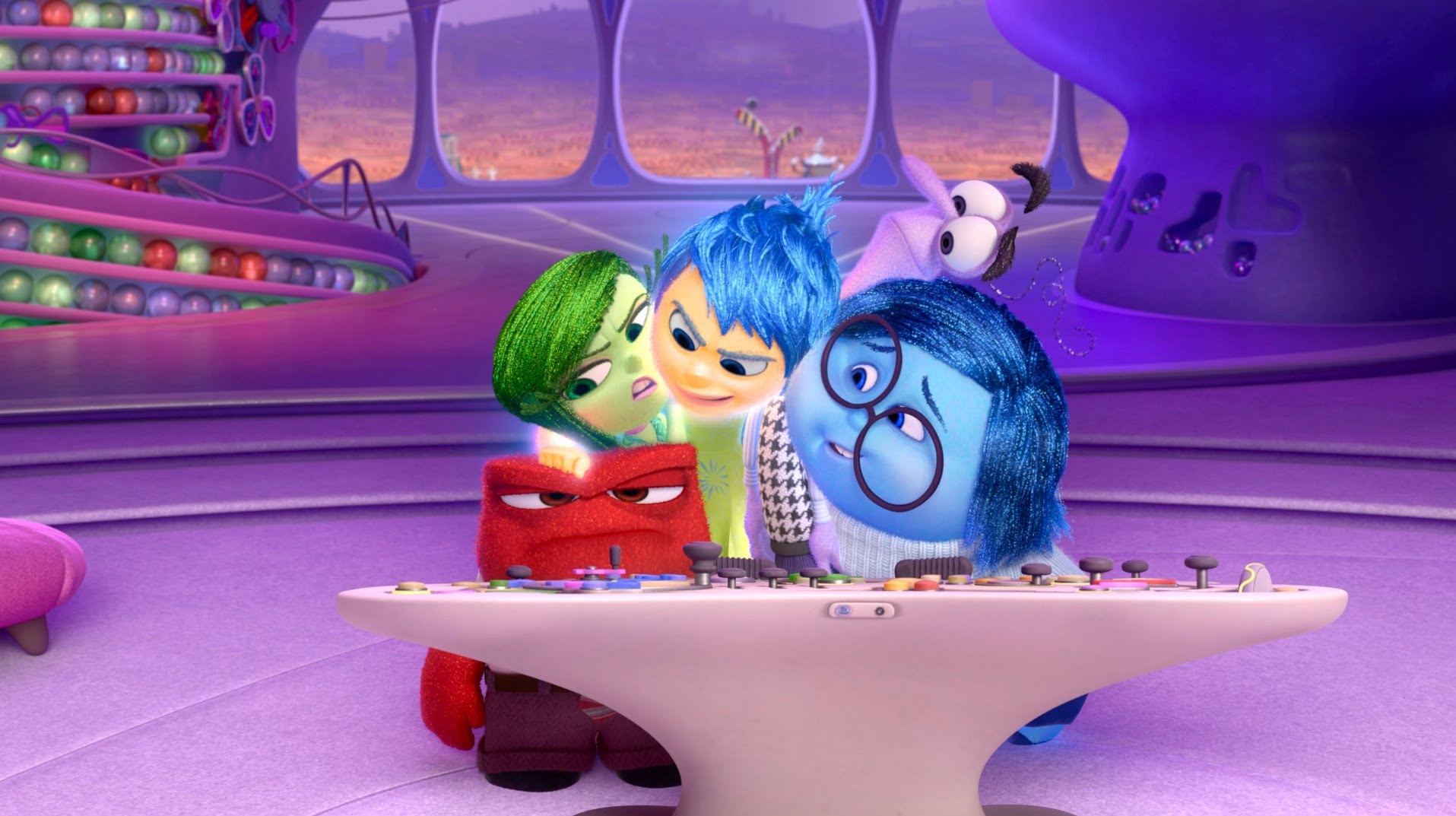
Pete Docter stacks metaphor on top of metaphor, but he imbues it all with such emotion and wonder that no matter how complex INSIDE OUT gets (and there are moments that would give psychology students something to write dissertations about for years) it’s that common ground of empathy and beauty that helps the audience navigate through some fairly deep ideas. He also finds humor in how we process our lives, and again, there are so many ideas flying around all at once that INSIDE OUT benefits from multiple viewings just to grasp all the concepts, never mind the jokes. I’m not sure how much research screenwriters Docter, Meg LaFauve, and Josh Cooley did to make the world of INSIDE OUT work, but it never weighs down the story. The ideas drive the plot, but the warm, elegantly created characters keep the audience invested emotionally.
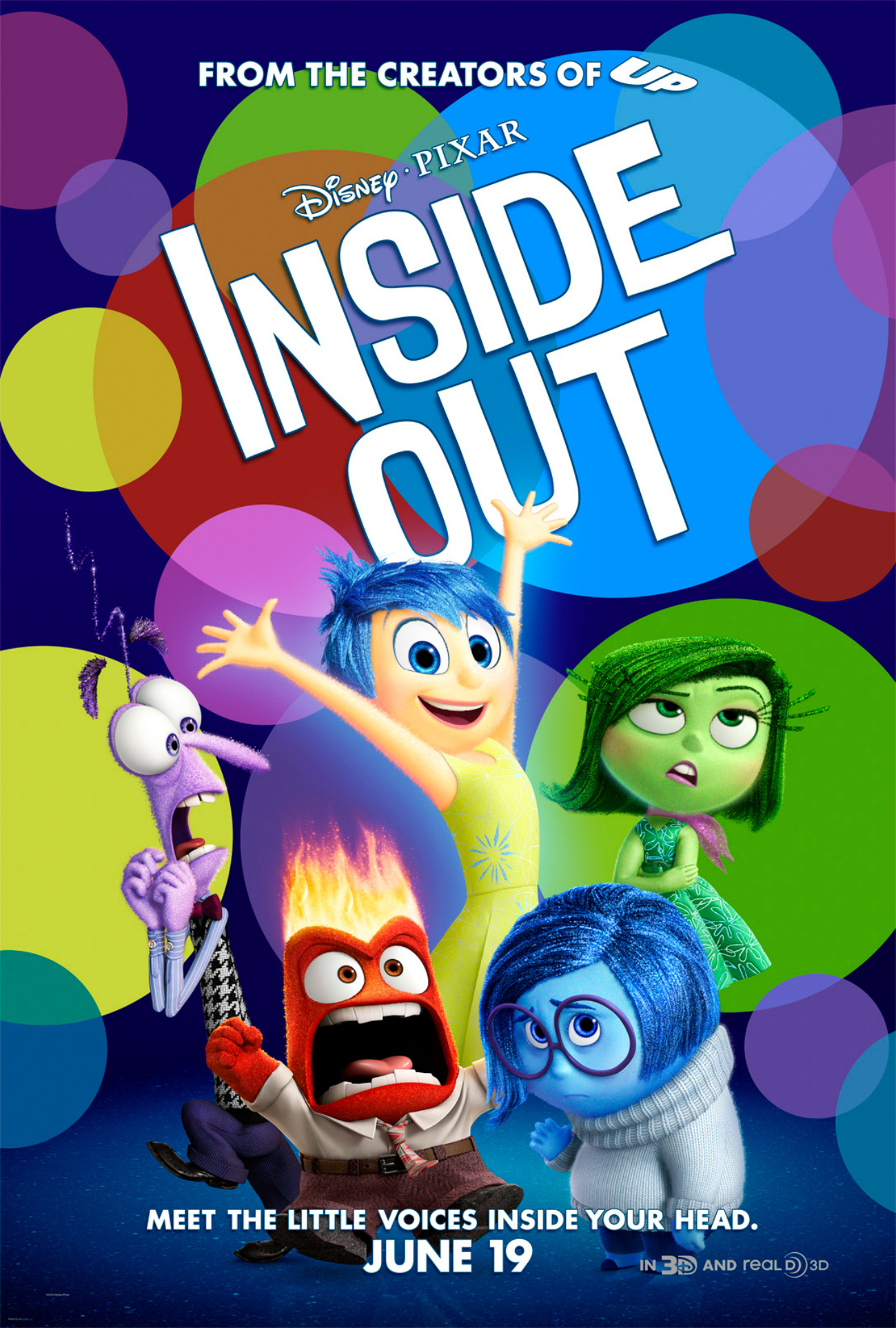
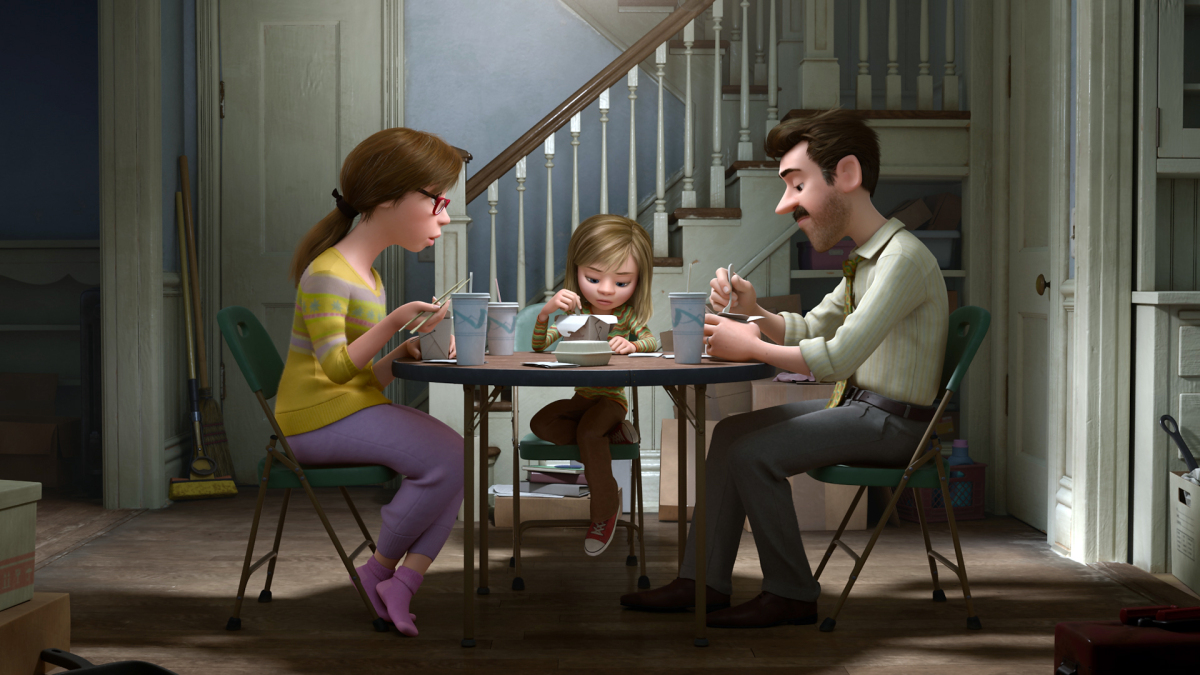
Young Riley’s (Kaitlyn Dias) family moves from Minnesota, as Dad (Kyle MacLachlan) and Mom (Diane Lane) have found new jobs and hope for a new start in San Francisco. Riley is without her safety net, her friends, and she is confused, lost, and hurt with all the changes in her life. This causes something of a crisis inside the team of emotions that operate Riley’s brain Headquarters. Joy (Amy Poehler) wants Riley to be happy all the time, and to that end dominates the other members of Riley’s brain trust – Fear (Bill Hader), Disgust (Mindy Kaling), Anger (Lewis Black), and especially Sadness (Phyllis Smith). But when Sadness and Joy accidentally get thrown out of Headquarters, Anger, Fear, and Disgust are forced to operate Riley’s brain, which puts Riley into a mode of distress. Joy and Sadness must make their way back to Headquarters to make everything right again, but if they don’t make it back soon, everything that Riley loves could be lost.
INSIDE OUT is full of actors that should have been in a Pixar movie well before now. Yes, Lewis Black may be a perfectly obvious choice as Anger, and he does great work here, but Docter and Black never turn Anger into an antagonist, full of inarticulate rage. For all the bluster that Black gives Anger, he has Riley’s (Kaitlyn Dias) best interests at heart, wishing to get Riley to a better place, without the capacity or the knowledge on how to do that. I was most surprised with the sweetness and heart that Black gives Anger. Bill Hader also doesn’t go the obvious route with Fear – Fear feels that he is essential in keeping Riley safe, and doesn’t play the role as clichéd. Mindy Kaling’s Disgust isn’t clichéd either – Disgust, like Fear, brings Riley to a better place by keeping certain experiences and foods away from her, and Kaling brings a lot of humor to the role.
Amy Poehler fills Joy with a happiness that is never cloying, but she is also capable of a deeper understanding of her place in Riley’s life – that the best moments aren’t necessarily the happiest moments. Phyllis Smith’s Sadness wants desperately to be a part of Riley’s life, needing to know her place, and Smith gives Sadness longing and depth, while also being strikingly funny. Together Poehler and Smith are a terrific duo, playful yet touching.
The work that Richard Kind does as Bing Bong, Riley’s once-imaginary friend, is tremendous. Kind is another of those voices that is perfect for animation, but the story of Bing Bong is so rich with emotion and power that it will likely cause quite a few sniffles and tears in the audience. He’s also hilarious, getting some of INSIDE OUT’s best jokes – and it’s really difficult not to talk about how funny the film is. One particular joke is done so well that it had me laughing for several minutes, and it’s basically an aside. There are moments in INSIDE OUT where we visit other people’s heads and each of those brought the house down. Docter uses those moments like deadly weapons, never letting them distract from the story and the ideas that fill INSIDE OUT with so much thematic significance.

That’s why INSIDE OUT benefits from multiple viewings – not only do the jokes come fast, but the ideas and concepts behind them can sidetrack you for hours. There’s a lot to play with in INSIDE OUT, which makes it such a pleasure to watch. There are concepts that I found myself returning to days later, tossing around in my mind. INSIDE OUT is one of those rare summer movies that gives you a lot more than amazing visuals and laughs – it backs up those images and jokes with real intelligence and emotional weight.
But the very best stuff of INSIDE OUT is best discovered in the theater – the joys of family, how both the sweet triumphs and the bitter failures are equally important, and that the more we allow ourselves to experience all the emotions of life, taking stock in times of bliss and despair, the more resonant and richer our lives are for it. Full of metaphor, nuance, and verisimilitude, INSIDE OUT is stuffed with power and meaning. I am astonished at how accomplished a piece of art this film is. Perhaps it doesn’t have the easier, more digestible nature of films like FINDING NEMO or TOY STORY, films that are wonderful and beautiful, but never attempt the level of sophistication that INSIDE OUT does. INSIDE OUT never dumbs down, never takes the audience for granted, and never takes the easier road. Pete Docter and Pixar have created a treasure that will be revisited again and again for years to come. INSIDE OUT is a masterpiece, and I feel privileged that with this and MAD MAX: FURY ROAD, we have a movie summer for the ages.
Nordling, out.
