Hey guys! Horrorella here...
Welcome back to Celluloid Nightmares! Every week throughout October, I am looking back at an old, perhaps under-appreciated classic horror filmfrom the silver screen era. It's a fun way to vary the horror viewing and perhaps discover (or re-discover) some new favorites. This week's selection is DRACULA'S DAUGHTER - a film that I have been curious about for quite awhile, and was thrilled to have an excuse to watch.
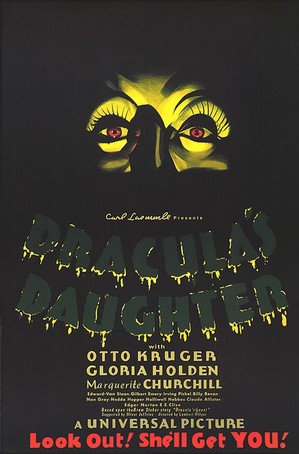
DRACULA'S DAUGHTER is a fascinating, though often overlooked entry into Universal’s collection of horror titles, and one that is absolutely worth a watch. Written by Garrett Fort and directed by Lambert Hillyer, the film is a direct sequel to the 1931 DRACULA (though, it does inexplicably take place in contemporary London, rather than in the late 1800’s). It picks up moments after the first story ends, with two police officers arresting Dr. Von Helsing (Edward Van Sloan, reprising is role, and yes, for whatever reason, the names switches from “Van Helsing”) for the murder of Count Dracula. Von Helsing enlists the help of friend and noted psychiatrist Dr. Jeffrey Garth (Otto Kruger) to help corroborate his story by proving the existence of vampires.
Enter Dracula’s Daughter, Countess Marya Zaleska (Gloria Holden). Having recently arrived in London, she steals the Count’s body and disposes of it in a ritualistic burning. It is her hope that through this, she will free herself from the hold that his dark powers have had over her for years, allowing her to finally be able to lead a normal life.
When this approach fails, she turns to Garth for aid, hoping that his mastery of psychiatry can break Dracula's influence and finally grant her the freedom that she has longed for. This film handles vampirism both as a supernatural force and as being subject to the rules of psychiatric medicine. Zaleska is as much a monster as Dracula was before her – but when burning the Count’s body fails, she and Garth approach the problem as one would the breaking of a compulsion. That will can win out over desire and put one back in control of one’s own actions.
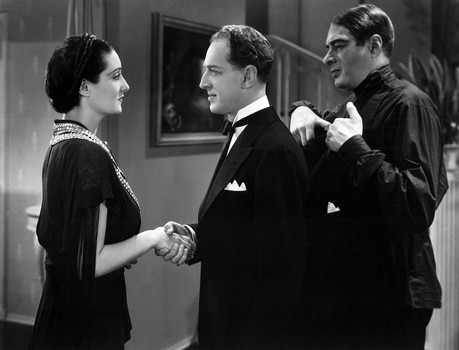
Through seeking a cure, DRACULA'S DAUGHTER marks the emergence of the remorseful vampire in horror fiction; the monster that regrets its actions and mourns the nature of itself, longing for a return to its former state. It’s an important trope that would become a cornerstone of vampire stories for years to come.
Also interesting is the way the film embraces psychiatry, particularly given the timeframe of its release. Psychiatric medicine has unfortunately undergone much ebb and flow in the minds of the populace over the decades, and this changing perspective is very often reflected in cinema of the day. What was once fascinating and worthy of examination (if not rather morbidly curious) in films like THE BAD SEED or THE THREE FACES OF EVE was later played off as little more than a last, desperate resort in THE EXORCIST. It is a tool that has very much been in flux over the years, and to see it embraced here in a film from 1936 is quite interesting.
More importantly, DRACULA'S DAUGHTER is also an noteworthy entry into Queer Cinema, as is reflected in the lesbian undertones to Countess Zaleska’s character. This is displayed most memorably in the fantastic scene where the Countess lures a beautiful young girl named Lili (Nan Grey) to her studio under the auspices of sitting for an art study. In true Dracula fashion, the Countess bids her welcome, and before long, hypnotizes her and drinks her blood.
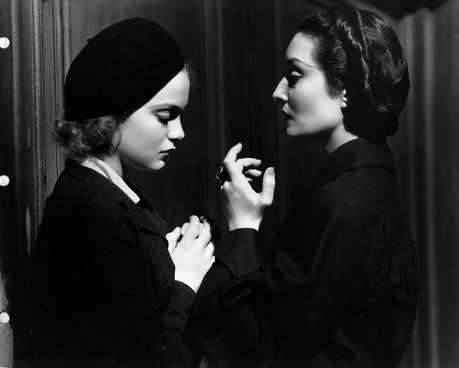
It is a brilliant scene, laced with eroticism and seduction, and Hoden gives a fantastic performance. Zaleska is predatory, certainly, but there is also a distinct air of sexual assertiveness. And as Lili begins to fall under the spell of the Countess, it's difficult for the audience to resist her as well. We are just as mesmerized by her presence as the poor girl. Holden plays the role beautifully, injecting Zaleska with equal amounts of seduction and danger, and the scene is rife with suspense as the audience anticipates Lili’s fate.
Universal’s approach to the sexualized subtext was rather fractured. It was definitely something that they were aware of and wanted to approach with caution, not wanting the film to suffer as a result of being too explicit. The Production Code Administration was very involved in the process, making sure Lili was never too undressed, and requiring the next scene show her in the hospital, in order to confirm a vampire attack and to counterbalance the sexual tones of the scene.
On the flip side, the studio was more than happy to exploit the lesbian undercurrent on the advertising materials for the film. The content could be lurid if it was going to bring people into the theater, but if they were going to stay, it had to be on the tame side.
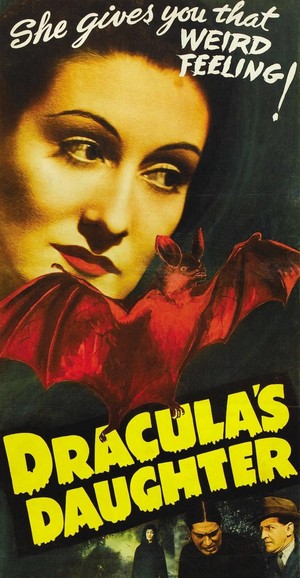
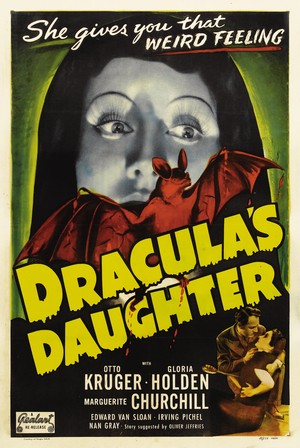
DRACULA’S DAUGHTER marks the first time the seductive lesbian vampire trope was seen in cinema. The film and this scene in particular were incredibly influential as the subgenre progressed, inspiring writers for years to come, including Anne Rice, as she worked on The Vampire Chronicles.
But the film is not merely fascinating for its cultural history – it is also a legitimately good piece of cinema. Granted, the contemporary London setting and some of the more comedic interactions between the characters change the tone quite a bit from the original DRACULA, but that is not necessarily a negative. Aside from a few throwback pieces, such as Von Helsing, this film is very much its own story and has no problem existing in its own space.
The characters are all interesting and well-realized, and though the film never gets terribly scary, all of the vampire scenes are very well executed. Countess Zaleska, in particular, is a riveting lead character – powerful, certainly, but also very human. You see her desire to break free from her vampiric curse and her longing to be a part of the world around her, rather than living in the shadows, and it is easy to empathize with her. She is more of a tragic figure than an animalistic monster. Her vampire is as much a hero for trying to escape the confines of her life as she is a villain for acting on what that life entails.
It's a trope that would go on to become a staple of vampire fiction, from Anne Rice to Kathryn Bigelow to Joss Whedon - vampires loathing what they are and seeking a cure to their dark curse is a common story element in the genre, and much of it began here, with DRACULA's DAUGHTER. It's difficult to argue against the cultural footprint that this film generated, and going back to examine where so much of it came from is a fascinating experience.
Check out the trailer below. This was a very interesting film to watch, and I highly recommend it if you haven't seen it before. See you back here next week!
