 Logo handmade by Bannister
Column by Scott Green
Logo handmade by Bannister
Column by Scott Green
If you can make it to New York, heads up! This week sees a highlight of the cinema year with the opening of the ninth New York Asian Film Festival, presented in association with the Film Society of Lincoln Center and Japan Society's Japan Cuts: Festival of New Japanese Film. I've been fortunate to be able to preview some of the programming, and wow, has it been a media lover’s dream come true. I don't think that there is a specific global movie hot spot at the moment, but, as NYAFF proves, if you look, a lot of interesting work is being produced in a lot of places. Everything I saw, I was glad to have seen. These are the types of movies that reward or ignite cinema love. There were plenty of talents that I had never seen before and now hope to see again. There were works that were marvelously topically or structurally distinct. The past was illuminated, especially with brilliant tributes to what's been loved about kung fu movies, but even then, informed by history, great, new things were being showcased. See these screenings if you can. If you can't, make sure to note the movies, because you'll want to be able to catch them if the opportunity later arises via DVD or other screenings.
Red Cliff (China 2008) Directed by John Woo
I don't think that I am betraying any sort of fear of China's ascent on the world stage when I say forget Tolkein, Middle Earth and Lord of the Rings, if you really want to be geek literate in the 21st century, learn Romance of the Three Kingdoms. Luo Guanzhong's enormous, 14th century historical novel concerning the end of the Han Dynasty and ensuing conflict between the Wei, Shu, and Wu Kingdoms is considered one of the Four Great Classical Novels of Chinese literature, along with Outlaws of the Marsh (aka Water Margin, All Men are Brothers, or, as fans of Japanese pop media would know it, Suikoden), Journey to the West - wellspring of the Monkey King story that inspired Dragon Ball among its many comic and video game progeny, and Dream of the Red Chamber - the one of the four that doesn't see many pop culture derivations. With my attention directed elsewhere, I missed out on the primary teacher of Romance of the Three Kingdoms to Americans... Koei video game franchises, including the like named (Sangokushi in Japanese) social/military management ones and Dynasty Warriors' tactical action warrior versus armies variety. I own a good translation, but Outlaws of the March is the classic that I've been slowly working through first. Most of the Three Kingdoms derivations that I've seen expound on a facet, start mid history or work with characters inspired by the personalities of Romance. I've been getting a chance to see plenty of these slivers. Between my main spheres of attention at AICN: Japanese anime and manga, and beyond that video games, and movies coming out of Hong Kong and mainland China, there's certainly a lot. The production is only accelerating. Attention to Romance of Three Kingdom's big picture is quickly becoming unavoidable for a fan of international, and Asian specific, pop media. I don't know the story that well, but here's my best thumbnail approximation. The corrupt, weakening Han Dynasty was crucially damaged when Taoist mystic Zhang Jiao led a peasant revolt in the Yellow Turban Rebellion. He Jin was able to suppress this uprising, but, in turn, court eunuchs came to fear He Jin's power and conspired to dispatch him. The ensuing power vacuum lead to a splintering into various warlord controlled domains, which turned their attention to consuming each other. The three kingdoms of the title were Wei - the domain of Imperial Chancellor Cao Cao, who waged a brutal campaign under the justification of putting down the warlords threatening the land; Shu, the domain of Liu Bei, a distant relative of the Han emperor, who with the help of men like strategist/inventor Zhuge Liang and generals Guan Yu and Zhang Fei, carved out a region of land; and Wu, the land taken by warlord Sun Quan then passed to his less ambitious brother Sun Ce. As you can see, there are a lot of names, lineages and dynamic alliances to contend with. Getting your head around this can be a challenge, especially in a work like John Woo's adaptation of key Romance episode, Red Cliff, which throws the book open to a middle page with Cao Cao sealing off court intrigue and Liu Bei forces mid-defeat. At the same time, you don't have to be a history buff to become captivated by the interplay of the huge roster of exceptional individuals. Red Cliff's who's who slowly coalesces into a relatively more comprehendible configuration with the help of identifiable motivation as Shu strategist Zhuges Liang builds a relationship with Wu's general Zhou Yu in order to persuade Sun Ce to shift from his kingdom's peaceful stance in favor of a unified front against Cao Cao. The armies maneuver themselves such that it becomes evident that a decisive battle will be launched across the Yangtze River, with Liu Bei and Sun Quan entrenched behind the titular Red Cliffs. Though it is two armies against one, what's instramental in defining the spirit of Red Cliff is that Cao Cao is not just ruthless, to the extent that he defiles the dead attempting to spread plague, it's that he's brought to bear an army many times the size of his combined adversaries'. Beyond its Woo trademark touches, many of the movie's distinctive and enthralling qualities can be attributed to its Three Kingdomismins. Given its position in the larger chronicle, it’s inexorably intertwined with the past. The orchestral swell of back story threads can be dizzying. Some elements, like Sun Ce contending with the legacy of his conqueror father and brother are well developed into narrative factors. Others, such as Liu Bei's infant son show as objects of the conflict, then go away. All along, at the same time, there's copious foreshadowing and nods to future history. Red Cliff is a very overt movie. It wants you to know that Cao Cao's charisma and notorious anger place him on a treacherous fault line between being deeply respected and abjectly feared. This is not just by virtue of his willingness to grant life changing rewards or life ending punishments, but by the titanic force of his personality. Alternatively, the movie also shows canny survivor Liu Bei resting his mind by weaving sandals, and what his subordinates do in their down time, such as Zhang Fei, a lion-esque man who leaps into battles fists firsts, practicing calligraphy. While far from subtle, these displays of character pay dividends. If you know Red Cliff, it's the thrill of seeing the Three Kingdoms roster invade the screen. If the epic is new, it helps to see the differences between the camps effectively spelled out like this... Cao Cao's familiarity with victory and Liu Bei's familiarity with defeat, Sun Ce's youth and the effect of the peace his kingdom recently enjoyed. These diverse perspectives are unified in the certainty that a decisive battle is about to be fought, and that shared determination sells the importance of the movie. There's a notion that I picked up from Podcast on Fire that posits that where once kung fu movies (I'm stretching definitions a bit here) were churned out in mass, the business evolved to the point where it instead focused on a few, grand productions... and there's are few grander than Red Cliff. In my regular, AICN domain, anime, there's been some industry sideline debate as to whether this is the right corrective route for that medium. Anime production counts exploded over the 00's to where annual anime output peak in 2006, but remained over 200 series. Yet as all these works focused on a smaller, more niche audience, they made less money The thought is rather than the xyz +1 anime series about cute, pastel shaded girls for adult guys, address the fact that the industry is narrowing in on smaller and smaller niches by going big and broad. Or, in the case of Red Cliff, make a period martial conflict movie so big, that it's unignorable. John Woo fans will find the Woo-isms that they're expecting. The birds manage a place in the story. Trademark Woo-ian stand-offs are significant to the climax. But, beyond what was seen in his shoot-out classics, there are real, new proclamations of scale here. Though there are plenty of displays of personal, physical talent, the movie is essentially a duel of army wielding strategists. With well applied, if sometimes a bit excessively extravagant CGI, the size and effect of these forces is spelled out. Rivers clog up with armadas. Massive formations probe and encircle each other. Cutting between the soldiers and weapons of war and the large movements, the significance of the battles registers on screen. Fielding his own momentous campaign, Woo even has to bring the elements to bear in capturing the conflict. In a sense, much of the story of Red Cliff hinges on luck. Shifts in weather specifically. Yet, Red Cliff succeeds because it never escapes the reins of those Three Kingdom personalities. Men like Cao Cao and Zhuge Liang are arranging the armadas, planning the formations, building their strategies around the weather. As it all comes to a head, you'll come away from Red Cliff with an appreciation for how well John Woo can handle a grand epic and an appreciation for the source material itself.
Yatterman (Japan, 2009) Directed by Takashi Miike
Imagine Brian De Palma's Scoobie Doo (I know he did a Mission Impossible, but work with me here). Takashi Miike's adaptation of Ryu Murakami's novel Audition, concerning what befalls a widower who works with a film producer to cast himself a new wife, is one of only a handful of movies to have made me physically ill. Miike burst onto the international scene like a splatter of cg awful with Ichi the Killer, the infamous showdown between a weeping, lethal legged sadist and a mutilated, masochistic yakuza lieutenant. (Based on a manga by Hideo Yamamoto, whose Homunculus is the only manga that followed the Audition path of actually causing my stomach to lurch). Once thought of as a yakuza movie director, Miike's straigh(er) work like Bodyguard Kiba and Dead or Alive have long been key entries in the library of fans of that genre, generally, the crazier, gorier, more transgressive a Miike work is, the more North American attention it commands. Look back at how much talk he generated when his abortion themed entry into the Masters of Horror series was pulled from TV airing. Still, Miike is a prolific, versatile director. It shouldn't surprise anyone who is aware of his career that he has a number of family/children's movies on his filmgraphy, such as tokusatsu/super-hero Zebraman and encounter with the supernatural Great Yokai War. This time, the notoriously unrestrained Miike is tackling a pre-existing franchise. Presumably because the people who grew up loving the toys are now in significant corporate roles, it's a, maybe "classic" is the wrong word, that has been enjoying a bit a of revival. Miike's subject, Yatterman is Science Ninja Team Gatchaman's (aka Battle of the Planets or G-Force) zanier cousin. These days, you might know it from the Tatsunoko versus Capcom fighting game. The template for this, and many of production house Tatsunoko's anime was to fuse colorful, transforming hereso with other genres. Gatchman was a superhoro serial with the vehicles and mysteries of Speed Racer. Tekkamn/Technoman was a sci-fi super hero. Their 40th anniversary work, Karas was a horror superhero, along the lines of Spawn or Devilman, with the yokai spirit world mythology attached. Yatterman was a toy/gadget associated super-hero work. Though silly and innocuous, it was sometimes weirdly sexual, as when its villainess lost her clothes or appeared naked. Its antagonists, slinky, vain Doronjo, weasely techie Boyacky and cowardly strongman Tonzura were a key step on the evolution towards Pokemon's amusingly inept antagonists Team Rocket, and when these guys would get sent packing in a puff of smoke, the immodestly dressed Doronjo would occasionally lose even more of her black attire. In other words something that mischievous provocateur Miike could work with. The heroes of Yatterman are tinkerers Gan, aka Yatterman No. 1 - the son of a toymaker/inventor who uses the Japanese equivalent of a cup and ball toy as his weapon, and Ai, aka Yatterman No. 2, the daughter of an electronics shopkeeper who uses an extending "Electric Stick." As might be expected from a show of its type, Yatterman was formulic. Gan and Ai, with the aid of an animal shaped robot/vehicle, often the police/rescue dog Yatter-Wan, would sortie out to thwart the mecha enabled scams of Doronjo and company. When the conflict got to a point where the Yatters would need assistance, Gan would feed Yatter-Wan a bone shaped Mecha-Tonic, causing the giant anime to fire up an internal assembly line producing toy and/or animal based mini-robots to solve the problem. At least from a modern/adult perspective, the mini-robot making giant robot is kindof cool, but Gan and Ai aren't nearly as fun to watch as their adversaries. Probably a sign of how beloved they've always been, it’s the villains whose original voice actors make a cameo in the movie. Someone, I think it was Grady Hendrix on his Kaiju Shakedown blog, commented that Miike habitually puts s&my women in his children's movies. Given this history, that might be appropriate in this case. When Yatterman hit Japanese TV in 1977, Go Nagai had already begun serializing the adventures of Kekko Kamen, a heroine naked except for her mask and boots, in boys' manga anthology Monthly Shonen Jump. Yatterman is from a time inclined to a bit of light hearted naughtiness and that's the spirit with which Miike approaches the material. There are a lot of routines that Miike suceeds in bringing over from a cartoon world to a live action one. Scenes like the Yatters clinging onto Yatter-Wan as the metal dog tank drives across the globe are handled with affection for their gleeful absurdity and not just a knowing wink to revived antiquity. Of course, it's the Doronjo bits that are Miike's triumph. Here, he achieves the marvel of making a woman (Kamikaze Girl's Kyoko Fukada) parading around in leather corset look fun. As Doronjo and her lackeys engage in their song and dance numbers, Yatterman swells, free of real gravity or sense. At the same time, the movie could use the intrusion of some modernity. While there's nothing truly scandalous, the less said about the movie's gender politics, the better... except maybe to say, it's not really a movie to share with your daughter. The issue is less that there's anything scandalous and more along the lines of Doronjo's secret wish to be a pregnant house wife buying tofu for her working husband. Much of the movie feels liked it dropped out of a time warp. Gender attitudes apparently stowed along with the baggage. And, it could have benefited from some fresh thinking. Some extra Miike trangressiveness would have been nice if it had meant snapping the template for how to handle one of these animated series to movie adaptations. The spirit is right going into the climax. There's a perfect mecha on mecha smackdown between the Yatters and Doronjo's crew, with great mini robots and a great turn. But then, it's time for something more heartfelt and consequential, and there gets to be a bit too much pitched emotion with guest characters and not enough Yatterman. Still, even if Yatterman fails to stick the landing, it is still the rare example of children's cartoon to live action adaptation that makes observing the attempted leap pleasurable.
Storm Warriors (Hong Kong 2009) Directed by the Pang Brothers
It seems an obvious fit given wuxia's tendency toward excess, but before Storm Warriors, I never wondered what would happen in a Crouching Tiger, Hidden Dragon meets 300 venture. Well, I guess now I know what the results look like. The CTHD comparison is applicable, not just because they're two wuxia epics, but because like that film, this one jumps into a middle chapter. It finds Ekin Cheng and Aaron Kwok back as heroic swordsmen Wind and Cloud. These characters have been starring in Ma Wing-shing's Ming Dynasty set manhua comic, Fung Wan for approaching 600 issues, in a run commenced in 1989. In film, Cheng and Kwok previously brought the characters to the big screen under the direction of Andrew Lau, in 1998's Storm Riders. Yet, returning from a decade hiatus, this time, it's the Pang Brothers at the helm. Don't watch Storm Warriors on a sleep deprived late night. It is the antithesis of Red Cliff in that I can't imagine someone coming from the movie with a sense of what its deep world and dramatis personae are all about, curiosity to learn more about Fung Wan, or even the inspiration to piece together what the film actually spells out. Illustrative of its gears, there are three audio modes in the movie. Mode one: exposition sets the chess board with lots of laughable names. You'll know that these are comic characters right away. Japanese warlord Lord Godless (an unhappy looking Simon Yam) replaces Wind and Cloud's mentor/archvillian Lord Conqueror as the foe driving the action. He has set Cloud and Wind on their heels and captured the emperor on the way to locating a foundational relic known as the Dragon Bones. A further constellation of characters is laid out with people who have monikers like Nameless, Second Dream, the Piggy King and Lord Wicked. Here, I found myself zoning out rather than wondering about the mythology. Mode two: sound effect punctuated near silence. There are stretches that shift into a 300/video game canvas as wuxia demigods wave swords at each other, unleashing maelstroms of air, stone or even other swords. This isn't snappy, punchy action. Slowly, vectors tear through the screen, making almost nails on chalkboard noises. Mode Three: name calling of the "Tetsuo!!' variety. "If I turn, even kill me," is about the register of the interactions of a movie where a guy cut off his hands to stop himself from killing. It captures the pulp personalities at their full magnitude, and if there's a knowing wink, I couldn't discern it. Storm Warriors is neither quite as irritating nor as dull as I'm making it sound. Instead, it's a strangely non-movie-y exhibition of flash. In my regular column, I've made the point that the role of the fantasy genre has eroded in anime. Once, there were spectacles that anime would offer that were unobtainable in video games and prohibitively difficult in movies. With Storm Warriors, I'm beginning to wonder if movies have just about reached a similar half life. I remember about 12 years ago, Final Fantasy VII had not hit, Beyond the Beyond was THE name in next-gen RPGs, and Record of Lodoss Wars was the standard for fantasy anime. The anime was a fairly straight adaptation of pre-Advanced Dungeons and Dragons, with characters who were simply an "elf" or a "fighter" and highlights like an exquisitely drawn, but barely animated red dragon moving across the screen. Since then, the ability for a video game to create its own immersive, fantasy world has encroached on q domain that was exclusive to animation. Now, a big budget game is likely to have as wide a breath of design as a work of anime, if not wider, and look as good as a work of anime, if not better. Given the sort of virtual world that a current-gen video game can create, a fantasy anime that relies on the vicarious thrill of action has to distinguish itself by the depth of its characters and the artfulness of its direction. Film gets a bit more leeway than anime. Seeing something enormous or an imaginative break from reality still provokes a response. I think Storm Riders can thank this for its successes. In the scrum of screaming sword effects, it pushes itself just far enough over the line where if you're a movie thrill seeker, you'll be glad to have seen the spectacle.
Gallants (Hong Kong, 2010) Directed by Clement Sze-Kit Cheng and Chi-kin Kwok
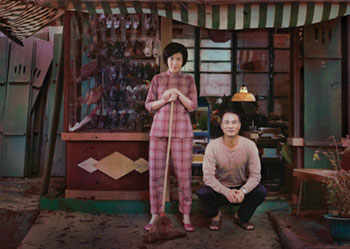
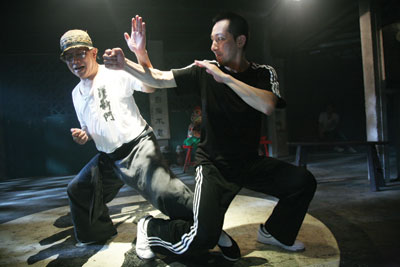
"If you don't want to lose, don't fight... but if you do fight, you must win!" Seen the brilliant trailer? If you're jazzed for a bit of the old kung fu magic, when you see Gallants commence with some nice video editting applied to a Bruce Lee-style scream accompanied traditional opening of forms being demonstrated in front a monochromic screen, the suspicion hits that you're not going to be disappointed. Since the new movie has probably blurred the perceived distinction between the relevant martial arts a bit, I feel entitled to say... Gallants is Karate Kid for adults. It does a few things a bit wrong and a lot of things very right. It's fortified with style and... maybe not substance, but something to embrace. When Cheung was young, he was special. He viewed himself as a hero, dueling against evil. Actually he was just dressing up in a Superman t-shirt and bullying his chubby friend Mang, but it apparently seemed righteous at the time. Anyway, those heady days set up Cheung to feel like a real failure when he grew up to be the bottom rung whipping boy of this real estate office. He's sent out to a small town to collect some property deeds, and, when he encounters a community of eccentrics, he drops into a template so generic as to be hilarious. Don't rom-coms generally start out this way? Though amusing, the odd townies are an odd fit for the movie. Not in terms of tone. There isn't the right amount of them. As funny as it is to observe the disparity of colorful and mundane elements, and as amusing as it is to watch Cheung bump into all these nicknamed martial artist/local folks, such as Jade Kirin from the merchant association, it feels as if scenes of these people were either over cut, or should be cut more. The glimpses provided stand as a tease. But, what's essential is once in this town, Cheung discovers the Gate of Law, the legendary academy of Master Law (short but charismatic Teddy Robin, an 80's star and performer with Teddy Robin and the Playboys. Robin also composed a sound track for this film that genre fan will be extremely keen to own). This school is home to Law's two disciples, heavy fisted Dragon (Shaw Brothers star Chen Kuan Tai, known from work in Chinese Boxer, Executioners from Shaolin and Crippled Avengers) and lethal legged Tiger (Bruce Leung,, star of post-Bruce Lee film, The Dragon Lives Again and The Beast in Fung Fu Hustle). Of course, the Gate of Law has seen better days (kindof like the traditional kung fu movie). 30 years ago, a duel put Master Law in a coma. Now, only a small circle loyally await his awakening, ready to greet him back with his two prize possessions: an oversized jade medallion and a smelly preserved duck. Dragon is barely keeping it together as the harried manager of a tea house opened on Law's training grounds. Tiger is drunk, lame and prone to causing trouble with street fights. Of course, there's a conflict with another martial arts school offering an opportunity for Cheung and the disciples of Law to redeem themselves. In this case, it's Master Pong (Shaw Brother's star Michael Chan Wai Man of Shaolin Hand Lock and Five Elements Ninjas) , announcing a tournament promoting his gym/school and the notion of kung fu has a venture for fitness... something that the old school Master Law wouldn't be able to abide by. Gallants trumpets its love for the old kung fu movies. Think Kung Fu Hustle, but rather than an emphasis on cartoonishness, a sliver of the moves and mindset of classics from Shaw Brothers and the like wedged into average, modern life. Like a Tarantino film, nostalgia and loving reference are key ingredients, but so are fresh updates. The animated effects that embellish Master Law's stories and abilities are more of reminiscent Tetsuya Nakashima's works in movies like Kamikaze Girls than anything from Gallants' own genre lineage. But, it's not just effects. Again, like Tarantino works, the movie throws a spotlight on veterans like Bruce Leung and showcases both charismatic acting and amazing fights with all the snap and thoroughness you could ask for. The modernization subtracts nothing from the old pleasure derived from the genre. At the same time, who wouldn't love seeing an old man breaking out the Bruce Lee kicks. The material is bound to transcend genre familiarity and allegiance, sweeping up any audience with the enthusiasm driving the film. Gallants builds a winning interplay between time warp characters and the bearers of modern angst. It launches into absolutely lovable exchanges in quotes, personalities and perspectives on the road to Cheung hardening himself smashing his limbs into wooden dummies. If you're the type of person inclined to pick up a martial art, this is the sort of movie that might push you over the edge. Yet, it has an interesting relationship with modern frustration. As laudable as it may be, that old heroism isn't presented immortal or ageless. One reason why I can't wait to get this on DVD, and why I can see myself watching it a couple times a year, especially when in a bad mood, is that it finds a compelling way to reconcile a heroic age with a modern one.
Bodyguards and Assassins (Hong Kong/China-2009) Directed by Teddy Chen
A fantastic part of the experience of going through NYAFF's programming is hitting the movies that offer a distinctive tone or pacing. The buzz I half caught on Bodyguards and Assassins seemed to point to slight disappointment, and as such, I went into it knowing what subject it addressed and expecting an action movie that didn't deliver quite enough action. That set me up to be blindsided. Watching it unfold, it set my head on a swivel. If you want to have the experience I had, know that this is historical fiction with a great structural high concept, and know little else. I'd like to think that Americans are well informed enough to know who Sun Yat-sen is. Yeah, I know that's an unrealistic expectation. "The Father of China", Sun was a medical doctor, turned revolutionary and political leader who played a key role in overthrowing China's last imperial dynasty, the Qing, and became the first provisional president of the Republic of China. Sun is more a historical force than a character in Bodyguards And Assassins. The movie's stage is set with a teacher instruction his students about the value and history of democracy. As he informs his audience that though they may achieve that end in their life time, he himself is unlikely to see the day, an assassin’s bullet strikes him down. The assassins of the title are the forces of Empress Dowager Cixi, lead by Yan Xiaoguo, assigned to kill Sun, then known as Sun Wen, as he travels to Hong Kong to meet with the Chinese United League. Li Yutang, a businessman funding the revolution and newspaper editor/active revolutionary Tony Leung Ka-fai (both historical figures) conspire to organize a protective screen for Sun, one that pulls in a host of fictional personalities... many of whom are martial artists, including a tragic heir turned beggar, a revenge seeking daughter, a giant shaolin outcast and a gambling prone police officer. The first half of the movie is set up. The assassins are an advancing threat, and as such, few of the zealous soldiers are humanized. In contrast, the movie explores what the bodyguards are putting on the line and why. The conceit is that these individuals (the fictional ones) are the people that aren't honored or even acknowledged by the history that they work to facilitate. It illustrates what they're contending with. Their romances, their motivations and their debates. For example, Li Yutang is found in for a penny, finically supporting the movement. He's had one son later in life, and though he acknowledges that others are putting their lives on the line and that he's working for the cause of equality, he's opposed to risking the life of his own son. The second half of the movie is a near real time confrontation. The assassins launch their assault into narrow alley ways as the bodyguards try to block the attack and misdirect it with feints within feints. The movie gets that sort of clausterphobic, limited visibility of urban warfare, which fans of modern war movies will appreciate. At the same time, I think genre fans will give the movie a lot more leeway than average movie goers. Serious politically intertwined suspense breaks into wushu with people like Donnie Yen as a troubled cop, basketball player Mengke Bateer as a Shaolin monk, Leon Lai as an iron fan wielding beggar, and Sanshou fighter Cung Le as an assassin taking the field. Fans of martial arts movies will accept and maybe embrace use of a bit of wire work and slightly superhuman ability to decide the conflict. But, I think a lot of North American audiences will find the action here distractingly unbound by physics. Teddy Chen has been trying to make Bodyguards and Assassins for over a decade. Among other woes, the project was complicated by SARS, 9/11, and the suicide of his friend/producer. This story is reiterated in documentary Development Hell. Lost in La Mancha immediately comes to mind and Development Hell does explicitly evoke the story of Terry Gilliam's notorious production. Unlike Lost in La Mancha, this movie about the movie wasn't planned. Reconstructing the story and adding voice overs, it has difficulty distinguishing itself from a making-of feature. Apart from the moving tribute to a lost friend and film enthusiast, while the story it's telling is exceptional, the documentary isn't. It laments the difficulties and is glad that the movie happened, but the voice overs and coverage come across as a rather straight promotion rather than story worth noting in and of itself. One exception is the interview scenes with Golden Harvest producer Andre Morgan (Bruce Lee's Game of Death), who comes off as really... interesting.
Golden Slumber (Japan, 2010) Directed by Yoshihiro Nakamura
Golden Slumber strikes me as a generation shifted version of Naoki Urasawa's Eisner nominated thriller 20th Century Boys. It's not a straight lineage. A second cousins to my eyes. For 20th Century Boys (named for the T-Rex song), supposed your CD collection, the comics that got thrown out, and secret plans that you sketched out with your friends in grade school were the clues to unraveling a conspiracy that threatened the future of humanity... It's High Fidelity meets It. A child of the 70's gave up his rock ambitions to run the family convenience store, and raise the child of his absent sister... except, people start getting killed and the pattern matches the plan for world domination imagined by his childhood friends. Golden Slumber is named for the "a way to get back homeward" Beatles song. Masaharu Aoyagi's been out of school for a while. He's a delivery truck driver, but managed to achieve some heroic status when he rescued a celebrity from a home invasion. He reconnects with a former associate from the Food Exploration Society, his group of college friends who gave their endeavor to try out all the local fast food offerings a nice name. Except, the meet-up was the desperate friend leveraged to put Masaharu in position to take the fall for the parade route assassination of a popular prime minister (think JFK). Identified as the culprit in the media, Masaharu quickly finds himself on the run. The man on the run is bound to provoke Hitchcockian comparisons. In its dash through a labyrinthine plot, these don't seem entirely inappropriate. As the title suggests, this is a media informed work that proclaims its inspiration in bold. And, there's recognition of its own touch points. There's an edge of acknowledgement that it’s getting a lot of momentum out of the safe assumption that just about any audience will be pulled along by concern for the fates of a reasonably likable lead, a mother and a young child, especially if they are caught up in lethal, explosive events seemingly beyond their control. With these guarantees of attention, it allows itself to riff a bit. While not aggressively illogical, it does wheedle in some leeway. Ultimately, the who and how of the manufactured crisis manufactured by the movie proves less engaging than the collage of characters . There's the other college associates, a serial killer, an old hospital patient, the authorities on the case and what stands out in the movie is its topsey turvey collision of people from different generations, who followed proscribed path or rejected them, followed college with success, followed it with failure, followed it with raising a family.... It develops into an interesting interplay between who the characters are, how the media within the movie depicts them, and how media in general depicts their types. If you watched the movie without knowing it was based on a novel, (North America is getting a translation of the novel via Kodansha International in 2011) then you were told after the fact, you'll immediately be able to retroactively spot the indentations left by the shift in medium. You can project out the threads that the novel developed more deeply. Still, the movie develops its characters, their behaviors and their circumstances will enough that manages to entangle in its suspense tapestry.
Little Big Soldier (China/Hong Kong 2010) Directed by Ding Sheng
This is the movie that Jackie Chan fans have been waiting for... one in which his charms complement a well defined, age appropriate character. Or in other words, he might not disappear into the role, but at least it's a memorable performance. There's an important scene in Red Cliff in which Cao Cao rallies his armies plummeting moral. He promises to fuse the splintered nation, freeing the land of warlords, so that those soldiers, their families and their children will not have to shed blood and the clash of kingdoms. Little Big Soldier is centuries before Red Cliff, on the other side of a dynasty, but that desperation to move on from a violent age likewise informs this work. It is the story of a veteran Warring States (before unification under the Qin) foot soldier, adept at playing dead, who stumbles onto a significant opportunity. In the aftermath of a bloodbath, a spearman, played by Chan, finds a young general, played by Wang Lee-Hom (Lust, Caution), alive. If the Big Soldier can bring the captive Little Soldier back to his captive alive he'll be rewarded a small plot of land and exemption from conscripted service. There's a bit of movie biz legend here, and frankly, I'm not sure how much credence to lend it. Age of the characters is essential to the movie, and supposedly this has been in the pipeline so long that Jackie Chan was going to be Little Soldier rather than Big. Presumably, the movie's configuration would have been different had Jackie been the young general. Unlike many earlier Jackie Chan characters, this one is not on the upper echelon of martial talent. He's a veteran with some knack for surviving. But, it's still unmistakably a Chan role. The Jackie Chan light touch comes from constant reiteration of folksy "my father always said" wisdom and the pantomime with which he plays dead. Here, it's less Chan's physical prowess than his portrayal of think small practicality that sells the character. What sticks out in the movie is the soldiers reaction to promises of greater wealth from the general and not scrambles and feats performed trying to extricate himself from danger. The extent of a favorable opinion towards this movie is dependent on fondness for Jackie Chan. Chan's character and performance are such that even if someone could take or leave his movies, I can't imagine anyone actively disliking Little Big Soldier. Yet, while a non-devotee is liable to find a lot to like in the movie, they're also liable to find it a bit messy. Even if it does ultimately cohere, when they first hit, some of the dream sequences and factions initially register as unconvincing excuses for action padding. It also teeters on being too Jackie for the material. a Jackie Chan blooper reel is perhaps not the best way to punctuate a heartfelt ending. If you're a Chan-file. If you've been watching his movies for a decade or two, Little Big Soldier is an absolute treat... a reward for loyal anticipation. It's the material catching up with the star. It's Jackie Chan's Unforgiven. He's slower, but that becomes part of his character's identity. It establishes the gravity of a character you can empathize with.
Power Kids (Thailand, 2009) Directed by Krissanapong Rachata
It's Ong Bak with child endangerment, and that's one of the reasons you'll want to have seen this movie once. It also features one of global cinema's best ugly Americans... a muscled blonde in Thailand to train Muay Thai who stumbles around in drunken belligerence. And, bonus points for having an incredible blonde English language news reader who either doesn't actually know English or is petrified to be in front of a camera. If you're a movie fan, especially if you're a martial arts movie fan, it's nice to have seen the movie in which Muay Thai trained children strapped metal pipes to their limbs and whacked the American lout before taking him down like an AT-AT. But, you're not going to get versatile, charismatic performances out of child martial artists/actors. Director Krissanapong Rachata, writer Napalee's (Chocolate and Tom Yum Goong/Protector), action choreography Panna Rittikra and producer Prachya Pinkaew's (“Ong-Bak”, “Tom-Young-Goong”) solution is to physically impede the child heroes' foes. So, when they endeavor to circumvent terrorists to get a heart transplant to their ailing friend, the fights take place in narrow hallways. The young actors are capable of some amazing mid-air attacks, performed with the sense something specific was perfected. As such, the action often looks like assembles of pieces. It's difficult not to mentally reserve engineer the scenes. The trick is apparent as the sleight of hand is being perform, but, maybe, it could have worked. What they don't figure out how to do is smooth the contrast in tone between a kids flick concerned with radio controlled cars and corporal punishment and an action movie conflict with terrorist reacting to slaughter with their own violent reprisals. The two sides work in cross purposes. It's not just that as an adult, you feel iffy about young kids in decidedly violence situations, it's that when the children aren't being exposed to danger, you have to deal with aggressively annoying kids' movie antics. At an hour, twelve minutes Power Kids is mercifully short. If you approach movies with a collectors mentality, get it on your "have seen" catalogue. It's not painful to sit through, just not terribly good. The reward of being able to say you've seen it is worth the minor effort.
Crazy Racer (China, 2009) Directed by Ning Hao
It feels a bit lazy to call Crazy Racer the mainland China version of a Guy Ritchie movie, but it works. If it wasn't for bad luck, Geng Hao (played by Huang Bo, who played in incompetent criminal in writer/director Hao Ning's prior Crazy Stone) would have no luck at all. An accident breaks the wrong way, robbing him of first place in a bike race. While he's still reeling, a sweaty weasel sets him up to promote a new energy drink with his silver metal. Except, the drink was tainted, and the ensuing drug test failure costs the cyclist his career. Years later, Geng Hao is driving a truck, trying to take care of his still disappointed trainer. When the old man dies, our hero finds that he has to scrape together the money to fund a proper burial for his mentor, leading to an entanglement with a host of people who are inept, unlucky or both, including, the man who scammed him, currently embroiled in a violent domestic dispute with his portly wife, a deadly Thai drug runner/assassin, a large, religious gangster, a pair of hired killers good at bushwacking people with wrenches, bad at finishing the job, harried cops and so on. Huang Bo, Hao Ning, these are talents you've probably never heard of, but will be glad you did after seeing Crazy Racer. Huang Bo excels in the role of this comically put upon Daffy Duck figure. While he's not entirely undeserving of the problems causing him acute frustration, wishing him well contends with the sadistic pleasure of seeing even more trouble heaped on. At the same time, the cartoonishness does not eclipse Huang Bo's charisma. His last straw facial tics are the perfect constant for this Lock, Stock/Snatch style character algebra, in which the cast transitions rush through a complicated dance of misfortune and happenstance. One difference between this and a Ritchie movie is that there's little cool bringing this collection of people together. Worapoj Thuantanon's Thai ass kick is quite the heavy, but Huang Bo's disheveled lead sets the standard for this bent group. It goes to show, in the 21st century, greed, ineptness and misfortune will continue to be unifying forces in the world.
Mutant Girl Squad (Japan, 2010) Directed by Tak Sakaguchi, Noburu Iguchi, Yoshihiro Nishimura
Mutant Girl Squad in a word... shameless. Like it or not, if you see mutant girl squad, you'll remember it. I'm not sure what it's going to take to get cutter Astro Boy/Girl out my head. And the silver painted electric man... I can't remember the last time I saw a movie so far beneath embarrassment. There is a scene in which a tandem martial artist/bread baker pair husband wife attack the heroin, with the husband spinning the wife around his torso. The heroin responds with her mutant claw, and as she splatters the wife across the room, the formerly human object she produces looks a lot like a baguette. This is preface to a town of people attacking the protagonist, hoping to kill her and mount her as the mascot for the local mall. For far longer than you imagine such a scene should go, they charge, and she sends pieces of their anatomy flying, along with streams of blood. Restraint isn't in the vocabulary here, either in the nature of the spectacle presented or in manner in which the spectacle is heaped onto the screen. This is after all a movie that opens with a man's head popping like a zit such that the burst of red lands on a white banner, painting the rising sun of` a Japanese flag. It's X-Men scrawled out by an adolescent boy... or Go Nagai. Despite being comely and the well adjusted daughter of a loving family, Yumi Sugimoto's Rin is bullied merciless at school. This is poke and the eye and pushed down a flight of stairs brutality. But, it gets worse. She returns to celebrate her birthday, and as her father tells her he loves her, he begins to reveal a secret. He opens his shirt and reveals the presence of weird volcano breasts. As he begins explaining his mutant heritage, a squad of men in black armor, outfitted with long, bullet fire tengu-noses burst in and kill mom and dad. On the run, Rin engages in the poliscide mentioned above. But then, she's found and taken in by a group of fellow freaks. Maybe not quite as odious as there human persecutors, these mutants aren't quite spotless themselves. Rin is outfitted with a metal mask until her powers fully manifest. Meanwhile she trains for the inevitable confrontation against the humans with the likes of a "cosplay nurse" whose body can turn tentacle-y, a girl who can sprout swords from her breast and another who has a chainsaw coming out of her posterior. It's self evident that Mutant Girl Squad is the next in a litany of Japanese shock effect movies. The arena is packed with RoboGeisha, Frankenstein Girl versus Vampire Girl, Gothic And Lolita Psycho and so on. What distinguishes Mutant Girl Squad from the others I've seen is that it's beyond transgressive. Tak Sakaguchi (Be a Man! Samurai School) , Noboru Iguchi (Robo-Geisha), and Yoshihiro Nishimura (Tokyo Gore Police) oversaw a work with a real sense of performance. Figuratively, there are finger prints all over this movie. It's not necessarily a good think to be thinking how stunts and effects were set up, but, in this case, everything is so shameless that being reminded of the people constructing the visual affront works in its favor. With its mindset to always take five steps past "enough", it's as if everyone in the production were egging each other on. Watch Mutant Girl Squad with a group of friends, because you'll want to be able to elbow the ribs of the guy next to you as yet another person is dispatch in an extravengently grisly manner.
Symbol (Japan, 2010) Directed by Hitoshi Matsumoto
Symbol is in fact not just a baby penis movie. Immediate responses to the movie prove weirdly relevant. It's quick to prompt the question "what's it all about?" By the time the movie is over, the question remains, only redirected. There are two narratives at work, both are absurd, and absurdly juxtaposed. The first to be introduced relates to a Mexican family. Mom is trying to maintain family discipline. Grandpa is spoiling the kids. Aunt is a nun with a serve road rage problem. And dad... he's a bit down. He's the perpetually masked luchadore wrestler Escargot Man. As his son points out, his brave, pure heart is supposed to see him victorious, but recently it hasn't worked out that way. The other subject is the film's writer/director Hitoshi Matsumoto (known in the US for kaiju send-up Big Man Japan, and in Japan as the funny man of manzai comedy duo Downtown). With mop top hair and just about the loudest pajamas in existence, he's immediately marked as an object of mirth. He wakes enclosed in a pure white room/box, featureless except for a strange protrusion. He takes a closer look and it begins to emerge from the wall, proving to be the penis of a porcelain cherubic baby. A choir of like infants emerge, then retreat, leaving behind more knobs on the wall. The man presses one and the room responds by emitting a high pitched noise, opening a gap and dropping down an object. The objects and the manner in which they are presented would suggest that the god of this microcosm has a slightly mean sense of humor. The man is given sushi, then given the soy sauce when he's done eating. Volume 6 of the manga he's reading ends in the cliff hanger. The room then gives him volume, 8, 9, 10 and so on. Eventually, the man finds an exit, but to pass through, he must complete a nesting doll of scream in aggravation rank trials. Symbol is not just weird. It throws open the doors, inviting strangers into the movie house. The Mexican set section is a strange deviation from mild comedy. As "been done" as luchdore have become, it remains a fresh provocation here. In part, that's because it feels alien to find the setting grafted into a Japanese movie. And, also because while well shot, there are some real unpracticed bits of it. In particular, there's a classroom scene in which Escargot Man's son defends his father to the other kids that sounds delightfully like a group of amateur kids overacting. The white room bit works as a sort of narrative prop comedy show. Hitoshi Matsumoto knows the form, and manages to make the audience party to his character's bewilderment and frustration. Brilliantly, the routine becomes an instrument of provocation. And, as wild as it appears to be, the sketch comedy doesn't spiral out of the performer's control or stay past its welcome. Ultimately, Symbol achieves transcend wackiness. It's all leading somewhere, and when it gets there, there is no denying that the movie arrived at its intended destination. The turn is certainly one reason to want to see the movie again. It is an appealing prospect to rewatch with the foreknowledge of how it’s going to culminate. But, the idea of re-experiencing the trip to get there is equally beckoning.
Merantau (Indonesia, 2009) Directed by Gareth Evans
Merantau is a star maker for silat practitioner Iko Uwais. There is another obvious comparison for this one. It's the Indonesian Ong Bak, featuring a martial art that an international audience may not know about, breathtakingly performed by an amazing, break out talent. I've dabbled in some martial arts over the years, and while light years from "expert," it's a subject on which I have some knowledge and experience. Yet, silat is one that I knew little of. Wikipedia describes it with the statement "There are hundreds of different styles but they tend to focus either on strikes, joint manipulation, bladed weapons, throws, animal-based techniques, or some combination thereof. " Merantau opens with several demonstrations of the art to provide some sense of how it works. The hero works through slashing techniques using a curved tomato harvesting knife. A pair of uniformed soldiers pass each other on their rounds and exchange a few monkey mimicking tussles. While its twists, redirects and strikes at vulnerable spots are not quite as bone smashing as muay thai's, the brutality is demonstrably there. Once the hero starts beating down toughs, calling Merantau's fight scenes attention commanding is an understatement. If like everyone else these days, you exchange links with a group of friends, at some point, someone is probably going to send you a link to a YouTubed clip of Merantau's awe inspiring roof top fight scene. You'll wince. Your jaw will drop. You'll want to see the movie. But, beyond solid action sequences, wow, does Merantau try hard to be a good movie. You know the martial arts films that end seconds after the final blow? This isn't one. Merantau takes its name from a Minangkabau rite of passage. Iko Uwais' Yuda leaves his family to travel to Jakarta to teach silat. On the bus, a man recognizes Yuda as a kindred spirit, and urges him to rethink his expectations and take his journey with a more realistic view. Finding a child stealing food and his wallet rather than work teaching silat is a quick reality check, but that doesn't slow his idealistic willingness to step in when he sees a man assaulting a young woman. Soon, Ada and a group of human traffickers are exchanging acts of brutality. Though ostensibly Indonesian, Merantau was written and directed by Welsh Gareth Evans, who made a nasty sounding film called Footsteps. His approach, like the movie's hero is earnest. Merantau slows down and concentrates. It tries to be rich and contemplative. As such, as jarringly good as the action scenes are, Merantau is not driven to crank its viewer's adrenaline. Unfortunately, it is undone a bit by familiarity. While the movie warrants credit for taking the cultural context of the martial arts seriously and credit for rethinking, not just deconstructing a martial arts story, it loses impact when the characters rest in familiar niches. As interesting as some of the motivations of the heroes and villains are to hear about, the depth doesn't manage to burrow the people out of roles familiar from driving countless other action movies. As such, the depth does not manage to elevate the characters or their interactions. A reason why these instances of these character types are determined to see the fight to the end is provided, but not the needed specificity.
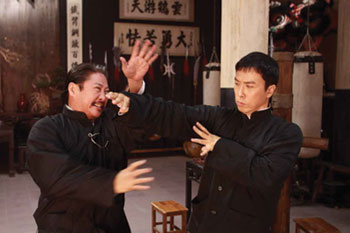
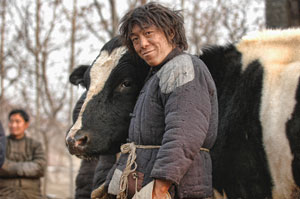
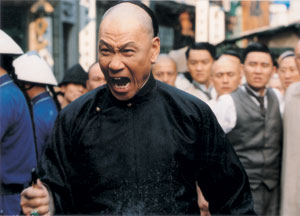
Official Opening Night Film IP MAN 2 (Hong Kong, 2010, North American Premiere) - Sammo Hung and Donnie Yen throw down in this lavish martial arts flick that blew the Hong Kong box office wide open and beat IRON MAN 2 like a redheaded stepchild. ***The movie's star and action choreographer, Sammo Hung, will be present.Centerpiece Presentation CONFESSIONS (Japan, 2010, International Premiere) - Tetsuya Nakashima (MEMORIES OF MATSUKO) returns to the NYAFF with his brand new movie about a school teacher convinced that her daughter was murdered by one of her own seventh-grade students. This was the most buzzed-about discovery in Cannes this year. Presented with Japan Cuts: Festival of New Japanese Film Official Closing Night Film BLADES OF BLOOD (Korea, 2010, International Premiere) - from the director of KING & CLOWN, the biggest hit in Korean box office history, comes this massive, posh swordplay flick about a hero leading a coup against the king and the blind swordsman who's out to stop him. ***Director Lee Joon-Ik will be at the screening. China COW (2009, North American Premiere) - hick farmer, Huang Bo, tries to survive WW II with his best buddy: a cow. By the time this movie is over you'll believe a cow can cry. *** Actor Huang Bo will be at the screening. CRAZY RACER (2009, New York Premiere) - Ning Hao (CRAZY STONE) has made a movie that's like a Warner Brothers cartoon on crystal meth. Huang Bo plays a disgraced Olympic bicyclist reduced to being a delivery man, and Ning Hao sends him chasing after his dignity in a modern-day China full of con men, creeps, hustlers, scam artists, assassins, gangsters, drug dealers, murder-for-hire morons and all the other joys of modern day capitalism. *** Actor Huang Bo will be present. SOPHIE'S REVENGE (2009, New York Premiere) - Zhang Ziyi produced and stars in this madcap romantic comedy that co-stars Mainland diva, Fan Bing-bing, and Korean stud muffin, So Ji-Sub. Want to see the face of modern China? It's not in any Jia Zhangke movies - it's here in this slick, funny rom com. TIAN AN MEN (2009, International Premiere) - one of the movies created for the 60th Anniversary of the Founding of the People's Republic of China, this is an earnest, unironic film about the struggles and sacrifices of the men and women who...cleaned up Tiananmen Square in 1949? A lavish special effects spectacle, it's like "Extreme Makeover: Home Edition" Communist style. Hong Kong BODYGUARDS AND ASSASSINS (2009, New York Premiere) - the story of a ragtag team of bodyguards who gave their lives to protect Dr. Sun Yat-sen on his trip to Hong Kong, it made a ton of loot at the box office, stars an all-star cast and was nominated for more Hong Kong Film Awards than any other movie in history. Plus, Donnie Yen fights a horse. ***Actor Simon Yam will introduce the screening. DEVELOPMENT HELL (2010, North American Premiere) - the uncut, uncensored documentary about the suicides, deaths and disease outbreaks that plagued BODYGUARDS & ASSASSINS, the most famous "cursed" Hong Kong film of all time. (Development Hell will screen in conjunction with BODYGUARDS & ASSASSINS) EASTERN CONDORS (1987) - a once-in-a-lifetime screening of Sammo Hung's Vietnam War blow-out. A true masterpiece. It will be screened on a 35mm print that was given to us by a private collector, and there will never be another chance to see it in theaters. ***Director, action choreographer and star Sammo Hung will be at the screening. It will be followed by an in-depth Q&A about his career. ECHOES OF THE RAINBOW (2010, North American Premiere) - a bittersweet eulogy to 1960's Hong Kong, it won a special prize in Berlin, earned Simon Yam his first "Best Actor" trophy at the Hong Kong Film Awards and it saved the street on which it was shot from demolition. ***Actor Simon Yam will be at the screening. GALLANTS (2010, North American Premiere) - like COCOON but with kung fu, this rocking action comedy features a cast of martial arts legends from the 70's, now in their 60's including Chen Kuan-tai, Bruce Leung and Teddy Robin. ***Actor Bruce Leung will be at the screening. IP MAN (2008) - starring Donnie Yen, it's the first movie about Bruce Lee's master and it sparked the current revival of old school Hong Kon