

What’s SHOOT THE MESSENGER?
Well, AICN COMICS: SHOOT THE MESSENGER is your weekly one stop shop for comic book news that’s dropped in the previous week. Thanks to Newsarama, CBR, Wizard, etc. for reporting it as it breaks. Click on the links for the original stories. This column cuts the crap to run down all the vital information for those of you who don’t follow it as it comes in, and serves it all up with that special ingredient of @$$y goodness. It’s also the place for interviews, previews, and special reports.
JOHN HOWE:
WANDERING FIRE/FORGING DRAGONS
CONTEST WINNERS!
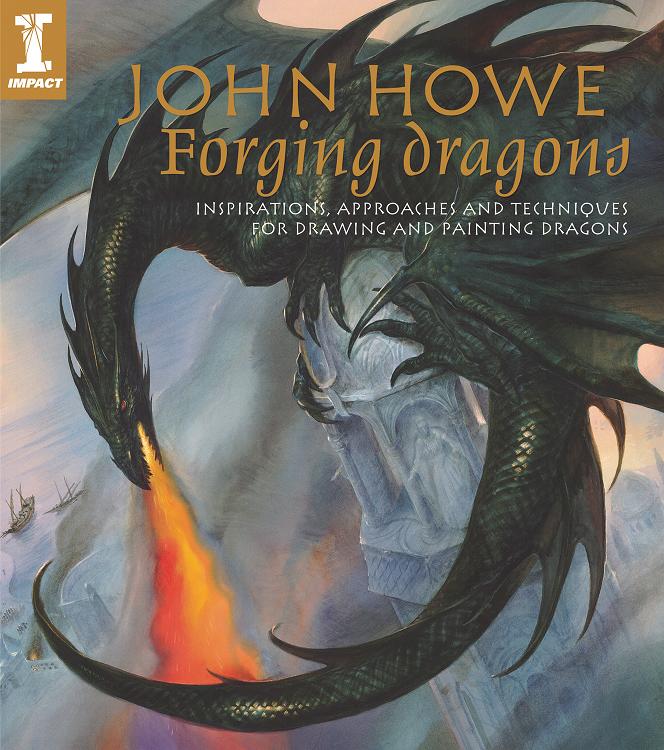
Hey folks, Ambush Bug here with the winners of the Hobbit Dreamcast Contest to commemorate the release of John Howe’s art instructional book JOHN HOWE: FORGING DRAGONS from Impact. I’ve found Impact’s comic book instructional manuals to be fascinating reads and this one seems like it will be more of the same. A trailer for the book can be found here.
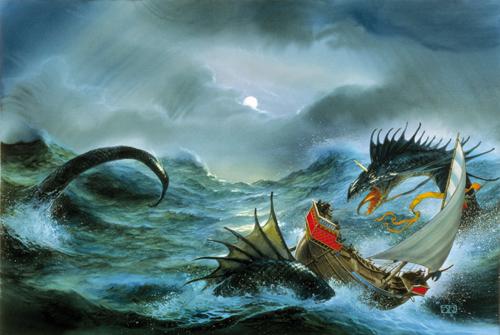 Let’s get on with the winners who not only get a copy of JOHN HOWE: FORGING DRAGONS, but also a rare WANDERING FIRE poster autographed and numbered by the artist that was only available at this year’s SDCC. Click the names to see each winner’s dream cast for the upcoming HOBBIT movie. Mr. Del Toro take note, some of these picks would make for a damn fine HOBBIT movie. Here are the winners…
Congrats to the winners. Expect a package from Impact in the mail soon. Thanks to all who participated in the contest and look for JOHN HOWE: FORGING DRAGONS at finer comic shops soon.

Ambush Bug talks with
THE UMBRELLA ACADEMY’s Gerard Way!

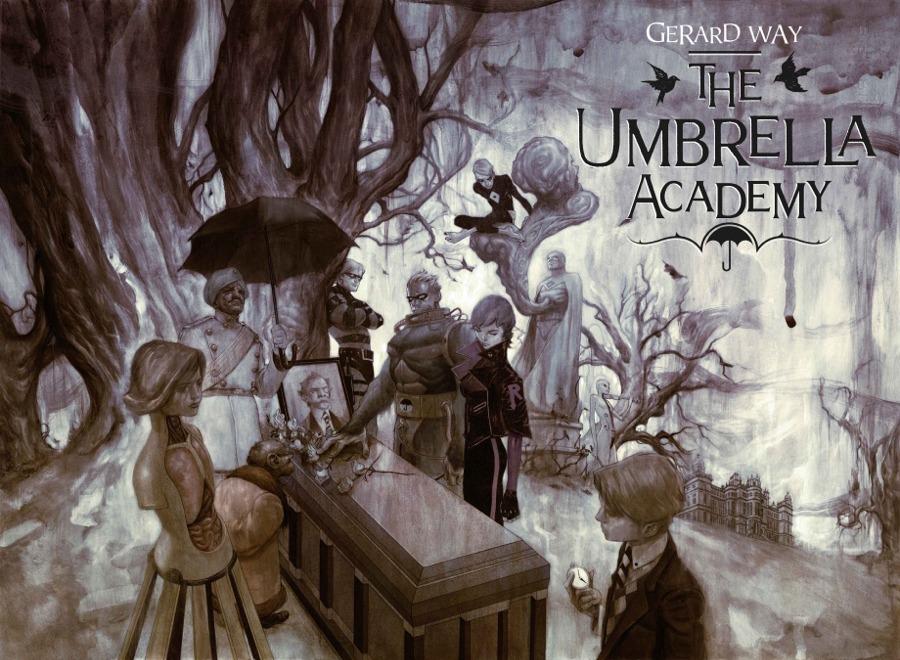
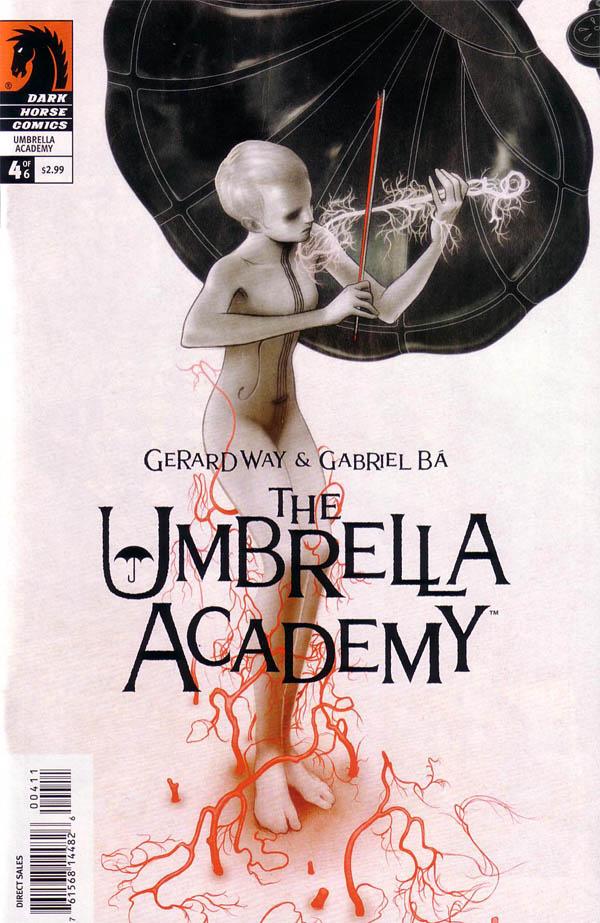
A. Bug here, back again with another Q&@ with one of comic bookdom’s up and coming stars. Not long ago, I was one of the first @$$Holes to see THE UMBRELLA ACADEMY: APOCALYPSE SUITE and touted it as something special. Soon, word traveled that a writer whose day job is being the front man from rock group MY CHEMICAL ROMANCE and an artist named Gabriel Ba had produced one of the more original and fun miniseries of the year. Now, the team that brought you that first miniseries is back with THE UMBRELLA ACADEMY: DALLAS. I had a chance to talk with Gerard Way about the new miniseries, the upcoming movie adaptation, and all of the craziness that goes into THE UMBRELLA ACADEMY. So let’s get to it, shall we?
AMBUSH BUG (BUG): I know you only have a few minutes, so let’s get right into the interview. I did get a chance to read the first issue of DALLAS. I really liked the first miniseries. It came right around the time when I was getting really worn out by the predictability of mainstream comics, and UA turned out to be something really new and refreshing. It was really a great miniseries.
GERARD WAY (GW): Thank you.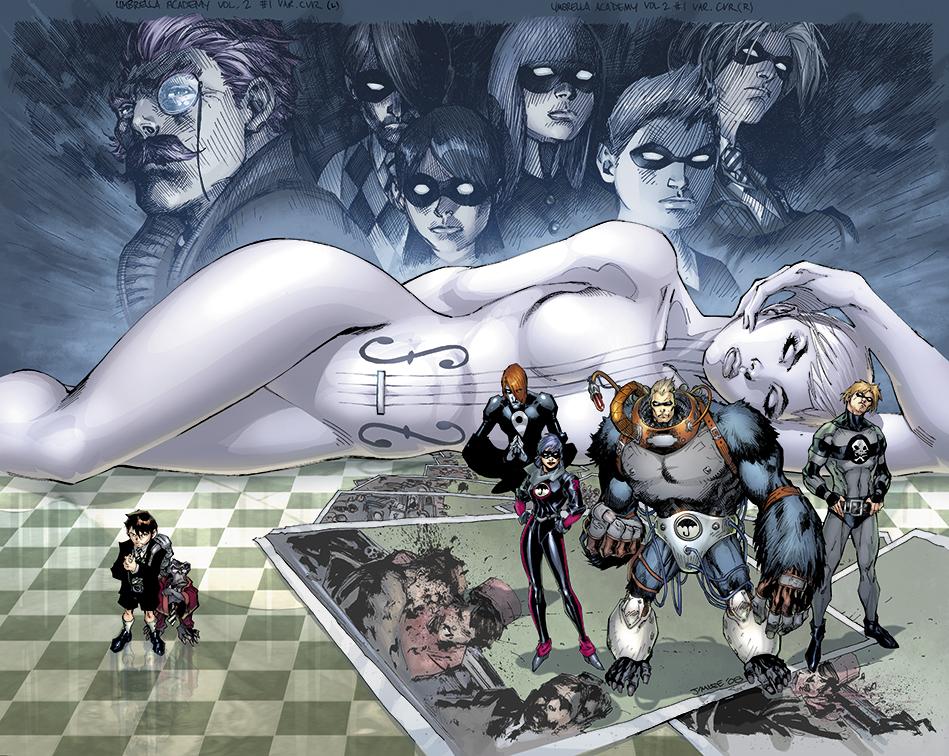
BUG: Just to catch people up, UMBRELLA ACADEMY: DALLAS takes place just after the events of the first miniseries, APOCALYPSE SUITE. What do new readers need to know going into this miniseries?
GW: Yeah, one of the things that I constantly say is that it’s kind of a difficult story to explain. Usually that would be a bad case, but I think it’s a good thing. Basically, this is one of those concepts if you tried to pitch to a studio to get made, it would never happen. The story was born out of exactly the same frustrations you described. There are a lot of comics I like and I take a lot of influence from modern art, but we wanted to create something refreshing. In a capsule, that’s the way I would describe it. It’s about a series of coincidences that occur at the exact same moment, one of which, possibly not even the most important, is that 43 individuals are born. Only seven of those children were found by a closeted space alien, who adopts them to “save the world” and raises them very poorly. And then when they get to be in their thirties, he dies of a heart attack. So, uhm…that’s the best way you can set it up.BUG: Yeah, it really is very original. One of the things that really stood out to me, aside from the artwork, which we’ll get to in a little bit, but it seems like you put a lot of thought and effort into the back-stories of the relationships of the family. All of these complex relationships.
 GW: Actually, it all started with drawings. So that was the first thing. And I’ve always been a fan of how Grant Morrison would piece together individuals to form a group. Some of my favorite books are Grant’s group books; everything from DOOM PATROL to INVISIBLES, where there are these odd individuals just jammed together. And they sort of balance each other. So I started with that. Who’s going to look really bizarre just hanging out in a room with one another? And who’s also going to look like a family? The coincidental births and family thing came last. The histories and issues between one another just came about naturally right onto the page. There’s a lot of winging it that goes along with the comic, in a good way. There isn’t an actual 40 years of history to draw upon. But you have to make it up as you go.
BUG: That leads into my next question. It really seems like you have the histories of these characters planned out. You may not have them on the page yet, but there seems to be a definite direction where this whole thing is going. Is that a fair assessment?
GW: Yeah, it’s like I know how things are going to end up, but I don’t know how it’s going to get there. I don’t know how it’s all going to play out, but I know certain things that are going to happen for sure.BUG: One of the things that I noticed and I don’t expect you to go through every character, but all of the characters are so distinct. Can you pick one or two of your favorites and tell us how they came to be?
 GW: Sure, Number Five is currently my favorite. He’s a really interesting mouthpiece and they’re all mouthpieces to a greater or lesser extent and that’s what great about them. I think a lot of people have heard of the term skin-suit. They think that’s the character I’m most like but it’s actually the character that I am the least like. He wears all black and is more gothic and whatever, which I don’t really do. I didn’t want simply a precocious child for Number Five. And I didn’t want him walking around chain-smoking like in ROGER RABBIT or something. But I wanted him to have a really dark past. So he shows up and he’s kind of not to be trusted and there’s not a lot of information about his return, so I really enjoyed him. I REALLY enjoyed writing Rumor. Between Number Five and the Rumor…they’re the closest to me. The cool thing is that I actually get to pair them off. There’s going to be a point in the comic where they’re together.
BUG: That’s cool. What about the Kraken? I like the way he’s always challenging Spaceboy to be the leader that he’s supposed to be.
GW: The Kraken is another really interesting balance again because you don’t want to get into this thing where you’re basically writing Wolverine. The challenging thing is important. And it’s not because he wants to be team leader, which is a real interesting thing about Kraken. In a weird way, he likes being in that number two spot and likes being able to give Spaceboy shit for what he’s doing.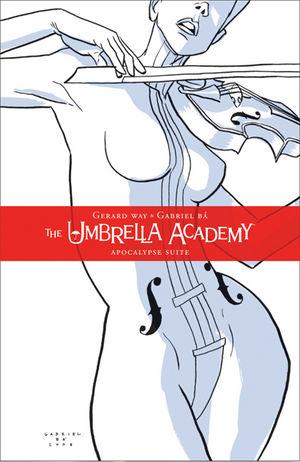 At the same time, I’m glad you picked up on that, he does want Spaceboy to be the leader he is supposed to be. I think Spaceboy has disappointed the Kraken more than the other way around. And that relationship went that way. The Kraken was like, “Ok, I have a leader, I’ll follow my leader.” And he’s especially frustrated with Spaceboy not living up to that role. But they’re all fun. Each character is their own completely distinct personality and I’m sure you noticed in issue one of the new miniseries that the tone is very different than the last miniseries.
 BUG: Definitely. The characters definitely seem much more lived in with DALLAS. If possible, the team is more fractured than ever going into this new miniseries. Will we ever see the Umbrella Academy actually getting along and wanting to work together or is it too fun to write them as this squabbling family?
GW: I think so. I think their way of getting along is never truly getting along. Y’know, they are more damaged than before. The way I saw it, though, is that they would stick together. I don’t think they’ll split off again. I think they realized how dysfunctional their family is and how much they kind of like that. And in a weird way how much they need that. It was like Hargreeve’s death and the near end of the world almost gave them an excuse to stick around with one another. That part of the relationship is really complex. They really are horrible for each other, but they can’t really get enough of each other at the same time. But they still all stuck together. They obviously have reasons, too, with the White Violin being in her condition at the beginning of the 2nd series and the fact that their childhood home has been destroyed. They’re all kind of lingering around like these ghosts in the attic.
BUG: It also seems like there's a theme of "you can pick your friends, but you can't pick your family" going on in UA. For better or worse, they're stuck with each other.
GW: They all have to deal with each other. The Kraken is suspicious of Number Five, but the Kraken is suspicious of everybody. One of the more fun things with him is really showing how paranoid he really is in the second miniseries.BUG: I’ve noticed that there seems to be a theme going on with national monuments attacking the team. In the first series, it was the Eiffel Tower. In this one it’s the Lincoln Memorial. Is that going to be a running gag for the series?
GW: It’s almost like an in-joke. That Lincoln Memorial scene had kind of been lingering around for a while. It was literally only there to set up things for a small flashback and not a whole lot of thought went into it. Then it kind of became an in-joke where we were asking, “Alright, how are we going to start this miniseries?” And then it was starting to be terrifying because we didn’t want to have the team starting to fight the same thing again. But it’s almost like you thought you were going to get the same thing with the second monument when the scene opens, then right away it goes into something different.BUG: It’s handled really well because it’s not like the characters break the fourth wall and have them talking with the audience, but they are self aware enough to notice the trend themselves in the scene.
 GW: Uh-huh. That’s how I made it work for Scott [Allie, Dark Horse Editor]. I told him I would have Kraken notice it himself and it’s almost like the writers or artists are being self aware of what’s going on as opposed to the characters. It’s something that Grant [Morrison] did all the time where he knew what was going on with the characters and he lets the audience notice these things, but the characters didn’t. They didn’t break that wall but these were conscious of their own world and how crazy it was.
One of the things I wanted to point out is that miniseries two (DALLAS) was initially supposed to be series five or six. The original second series ended up being so big in terms of what was going to happen that we felt that you didn’t really care enough about these characters yet to drop this really heavy stuff, so Scott said why don’t you do a couple more series before you drop all of this stuff. And he said, “What do you have?” And I said, “Well, there’s always this story I wanted to do about JFK.” And he said, “OK, let’s do that one right now.” And the way it works out is very good. This series gives the characters a lot of room to talk and interact with each other, so you can get to know them better.
BUG: Well, you mentioned Grant Morrison as one of your influences last time we talked. And early on, Grant Morrison came out as a supporter for UA. What is it like to get such a positive endorsement from one of the biggest names in comics?
 GW: It was really amazing because from knowing Grant in the two or so years that I’ve known him, that means a lot coming from him. He is like me. He’s got friends that are working on creative things and he’s almost hesitant to read it. You’re afraid to read it. You don’t want to tell them it’s really horrible. So when he heard I was going to do a comic, even he was skeptical as he said in the forward [of the UMBRELLA ACADEMY: APOCALYPSE Trade] and that’s a good thing. He shouldn’t just take it on my word. He heard that I had taken inspiration from DOOM PATROL, but he saw that it was a progression from what he had done in the nineties and not a knock-off. And that it was a completely different tone. But it was a huge honor to have Grant endorse and truly love the book and love what it did.
BUG: UA: APOCALYPSE SUITE had a huge critical success and won quite a few honors, not to mention adoration from fans. What was it like to get all of that love and attention all at once, this being your first stab at comics?
GW: That meant a lot. Honestly. I mean, it means people gave the book a fair shot. It already had some strikes against it. And I’m comfortable with that. I’m really in the public eye from what I do as a day job. And I’m also well aware of comic book vanity projects or when an actor starts a band. I’ve been aware of that stuff not working and people not taking to that stuff. It’s like whenever someone tries to do something outside of the realm for what they’re known for; they tend to fall on their face, at least reviews wise. And it means the work was bigger than the personality behind the work and that was the best compliment to get. To me, the Eisner is the Oscar. I’d rather win an Eisner than an Oscar or a Grammy.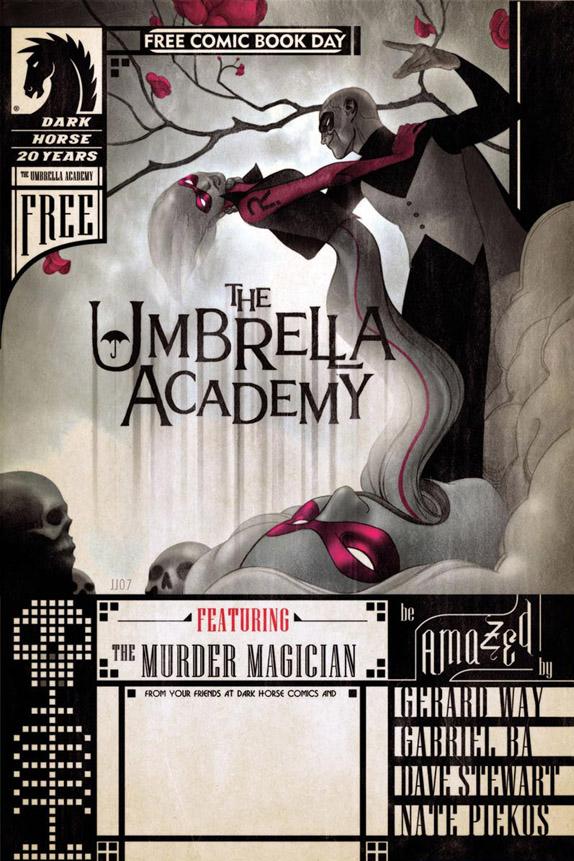
BUG: You’re right. It’s not like the themes from your MY CHEMICAL ROMANCE songs came through in the story. You wouldn’t read that story and think, “Oh, this is the lead singer of MCR writing this.” It’s its own individual project that stands on its own. I think a lot of other creators out there try to repeat that success that they have in movies or whatever medium they work with in comics and it more times than not falls flat or rings false to readers.
GW: I think, yeah, I think the themes that do come up in UA and MCR are the universal ones. Themes about family. About love and death and I think those universal themes that would be similar if you look at both projects under a microscope. How those themes are approached is extremely different. We actually turned down stuff like a BLACK PARADE [MCR’s last album] comic book so often in the past. It had nothing to do with me wanting to do my own comic, it was simply because I didn’t want to do something really cheesy. I mean, who wants to sit and read a comic about a band? I don’t. I never really have.BUG: I know your last album was a concept album, so it would seem that it would lend itself more to the comic book medium with the themes running from one song to the next.
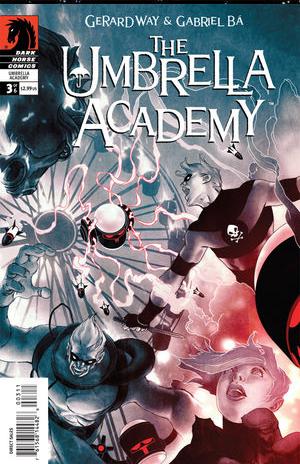 GW: Well, the band has always made concept records. I’ve always wanted to tell stories. That’s all I really know how to do. My art has always been in this weird place, in between mainstream and European. So it wasn’t really suited for mainstream and it was borderline suited for indie, but I guess more so suited for them. I was trying to get a job, trying to draw Superman and Spider-Man and it just wouldn’t work. This desire to tell stories was still there and when we started the band that desire sort of carried over into that and I started telling stories there. BLACK PARADE is just another story, but the presentation was slightly comic booky. James Jean even did the cover artwork for the record. I guess it wasn’t a big shock that I would try to write a comic.
BUG: Gabriel Ba [the artist for UMBRELLA ACADEMY] is amazing. But did you ever consider using your own artwork for the series?
GW: I don’t think so. I’ve talked with Scott about this. I think eventually I will do an original graphic novel that I get to draw. Y’know, Frank Miller style, where you say, “I’m going to write and draw the whole thing.” That’s appealing to me. I guess when I get a little older and have a little more time. But I’ve talked with Gabriel many times and he gets the UA world better than me. He has this presence in the book and I couldn’t ever see anyone else drawing it. He’s so talented as a writer himself.BUG: His work reminds me of Gorey a little bit. He reminds me of Mignola. There are so many artists that he reminds me of, but he’s also so distinct.
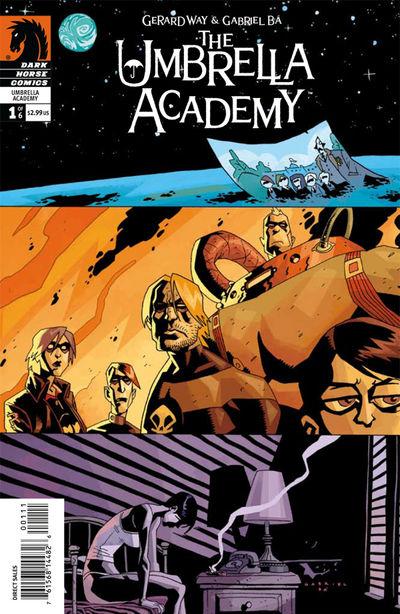 GR: I couldn’t see anyone drawing it besides Gabriel. He’s got a very special gift. He’s disciplined. None of it is phoned in. Every panel has special attention to it. He will sit there and chain himself to a desk all day. And that’s a gift that I don’t have. I can chain myself to a typewriter all day, but it’s harder to draw. So I’m just really lucky to have him.
BUG: What did you learn about comics going into DALLAS that you didn't know going into APOCALYPSE SUITE?
GW: I learned a ton from APOLCALYPSE SUITE. There are things in there that, to me, I know now that there are better ways to do it. There are a few instances where we literally ran out of room. I think the series is great. That kind of ending where it’s almost existential and abrupt came out of not having room. And Scott would’ve given me the room, but I was dedicated to keeping it to six issues and keeping to 22 pages. It was almost a challenge.There were a lot things that I learned from the first series. Dialog was the biggest thing. Some people, if they have an issue with the comic, it’s the dialog. And the dialog is different than with a normal comic. They don’t talk like real people. They’re not supposed to. Some of the lines are supposed to clunk a little bit. The story had its own voice from the beginning. I had to embrace that and get better at it. And that’s something in series two, now I write the dialog to these characters and it comes out way better than in series one. There’re way fewer revisions. There’d be a lot of cases where I’d be writing series one and Scott would say, “What are you really trying to say in this scene?” and I would have to distill it. And a lot of the times the dialog was just distilled versions of what I wanted to really say.
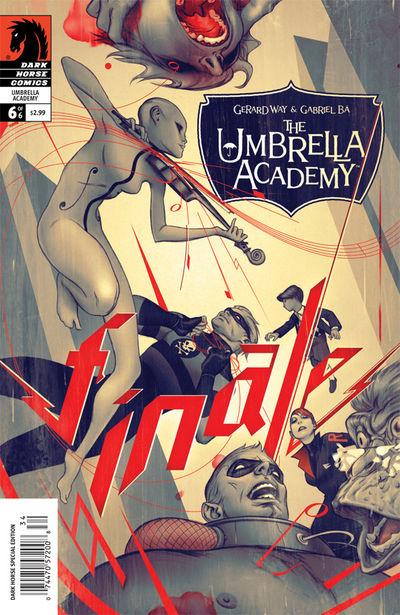 That was something I had to learn early on. But now, when I send stuff in, the dialog is the part with the least notes on it. There are lines in every issue of DALLAS that I’m really proud of, whereas in the last one, I’m not proud of the lines, I’m proud of the spectacle and freedom and fun you have while reading it. In DALLAS, I’m proud of the dialog.
BUG: Very cool. If you had to pick one, what would you rather do: write music or comics?
GW: That’s a tough question. There’s nothing that will ever beat writing a great song. But there’s something about writing a comic that really puts you in the pilot’s seat. It’s a very different collaboration because you get the material back to you as the artist does it and it’s different than collaborating on music because you’re seeing this back in your hands materialized and there are a lot of happy surprises that happen with it as it goes through that process of being created. There are not as many surprises in music. I mean, you plan it out and play it and its trial and error. I mean, Gabriel would send the comic book pages back and he’s changed a panel here and there to help the pacing and I’ll love it. That’s such a great surprise. In music, there are really no surprises like that. It’d be hard to pick though between the two. I guess the privacy of it and the control you have over your exterior bubble makes writing comics better for me. It’s less of a spotlight. To me, there’s as much payoff. You know, I get one of those UA comics in my hand every month for six months as opposed to a record where you do all of this work and it comes out every two years if you’re lucky.BUG: This really interests me, the relationship between the writer and the artist. What’s it like between you and Gabriel? Is he living near you? Do you guys collaborate through emails or phone?
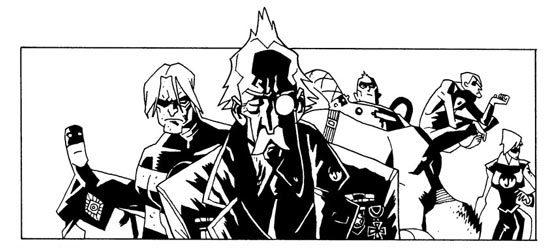 GW: Really, the only chances we’ve had to talk in person have been at the San Diego Comic Con. But this year it was especially cool that after San Diego, we had a signing in LA, so we spent about four days in LA. That was really awesome because we got to hang out there. But before that, when I was on tour, one of the places I got to go was Brazil. And that was my first time in South America. He invited me over and I spent an entire day and night with him and even though he’s someone I’ve worked with, I think it’s hard to spend more than three hours with someone you don’t know, but still we got along as if we had known each other all our lives. It was very comfortable. And we talked about favorite comics and collaborating with each other. So we really bonded as friends in that way. Now, we try to IChat or text each other. He’ll fill me in on what he’s doing and I’ll talk about the [in development UMBRELLA ACADEMY] movie with him and keep him abreast as to what’s happening with the film. But other than that, we don’t have much contact, so it forces me to write very complete scripts. I send Scott the script. Scott revises it. We send Gabriel a script. He will send back some thumbnails. We talk back and forth with more notes. And then Gabriel just does it. There’s no verbal, on the phone talking.
BUG: Some people might say that it makes the construction of these comics less personal, but in this day and age where we have phones, emails, faxes, and scanners, you can really put together a comic and never even meet your artist.
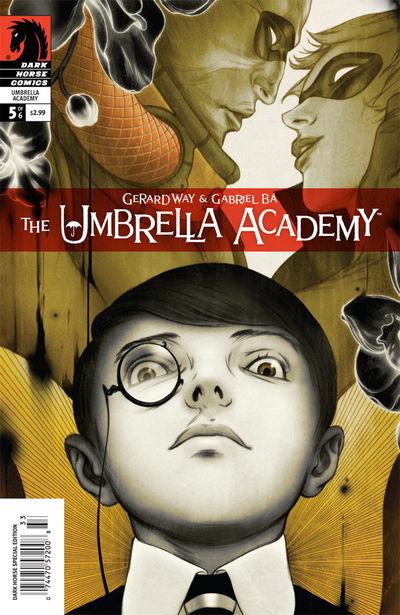 GW: Right, but there really was a strong desire for Gabriel and I to meet one another. Scott [Allie] included. Scott is one of my best friends now. And I’d like to think of Gabriel as one of my best friends now. I’d like to think that if Gabriel and I lived in the same town, we’d hang out every day. Scott is like family to me. And that’s what this project is like. This book is very family oriented; it’s not impersonal to us. When we lost James [Jean, who provided the covers for the first UA miniseries] because he wanted to pursue fine art, which I think is a very noble thing, that was hard for us because he was on the team. That’s why we didn’t try to find another cover artist. I felt that Gabriel was more than qualified for it and then it should completely be his book.
BUG: Do you have any other comic book projects outside of the UMBRELLA ACADEMY universe coming up?
GW: Yeah, I’ve been talking with DC for probably about a year and I’m kind of letting them announce when they want to announce it, which is just as well because I keep to a very crazy schedule and I haven’t submitted my end of it yet. I’m really exciting working with them. I’m doing something really fun with Jann Jones. Joey Cavalieri was an instructor of mine. He was the guy that got me an internship at DC and I have this really funny story that if they ever do another Bizarro, I would love to do it. If that’ll ever happen, I don’t know. Other than that, I’m working on a comic next year that, depending on scheduling, we’d love Gabriel to do it. I’d love him to take a break from UA for a series and it’s just a one shot miniseries about seven issues long that I’m writing with another writer. It’s completely different than UMBRELLA ACADEMY. It’s a totally different vibe. It’s set in 1990s era America and I’m very excited about that one.
BUG: Is this another one for Dark Horse?
GW: It’s for Dark Horse. Generally, I’m at Dark Horse. That’s been my family. I’ll move out to do other things, but I find the company to be very interesting. I was lucky enough to be an intern at DC, so I still keep ties with them and its fun to work there too. And the people at Marvel, back in the day when I was shopping for work, were always nice to me too, but I don’t know if I could add anything to what they are doing at the moment.BUG: Is there anything else about DALLAS that you want to tell people?
GW: I’m really interested to see what people are going to think about this new series. There are definitely things that are going to stir it up for die hard fans. Even if they are new to the series, it’ll probably also stir some things up. It does deal with a really, kinda taboo subject and politics at the same time, which has been really fun for me. I’ve never written about politics or assassination in my music and this is the first time I get into that. The book doesn’t take itself too seriously, so people kind of have to remember that when reading this one.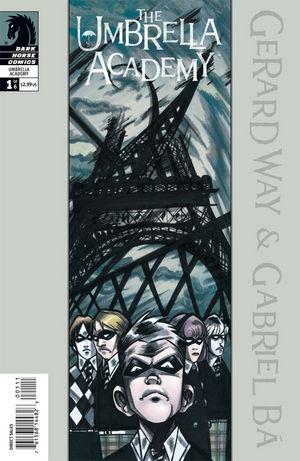 It believes its own shit, which it needs to. There’s never a point where I feel the book needs to explain why the Lincoln Memorial is shooting laser beams out of its eyes. It just believes it.
BUG: Yeah, the team fights whatever challenge comes before them without question and then go back to whatever was bothering them as a family, as if it wasn’t such a crazy thing.
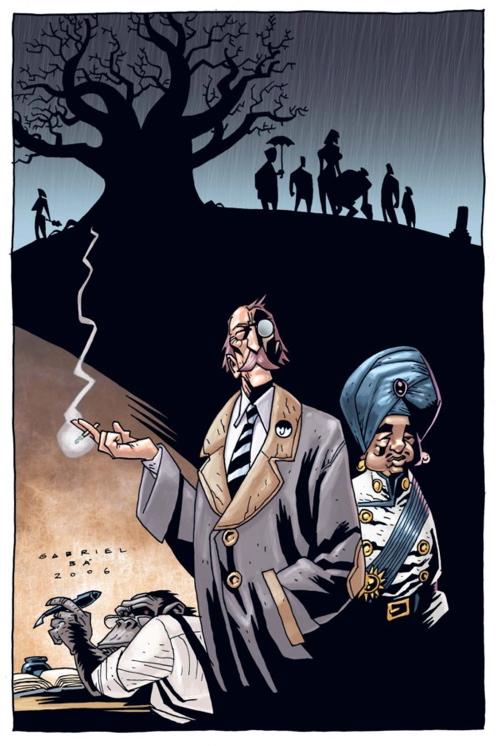
GW: Yeah, you never want to really find a formula because then it’ll get stale. But it’s ok to understand what your world is in your story and what can happen in it. There are things that Scott and I have discussed and we’ve said, “That’s a really UMBRELLA ACADEMY thing to do.” A great example is not explaining the Lincoln Memorial, just simply having it there. And why is Pogo dressed as George Washington? Stuff like that. And the reason why it’s not annoying is because no one is sitting around talking about it. No one in the comic is ever addressing it. They don’t even care and want you as the reader not to care about the explanation. I try to make it the really kind of arbitrary as opposed to “Look at how wacky we can be!”The prime example is the fact that the chimps talk in the UA universe. I think there’re too many talking monkeys in comics. So the way I got around that was to say, “OK, well Pogo is not unique.” And that kind of strips away the wacky aspect of it. If there is this whole civilization of chimps who walk around, having jobs that we have like teachers and politicians, and they’re integrated into our society, so it’s not weird seeing a chimpanzee driving a car down the street. Thinking about things that way kind of made me take out that zany kind of wackiness from the book.
BUG: Well, I’ve gone through all of my questions. Is there anything else you want to readers to know?
GW: Well, I’ve been working with some people at Universal on an UMBRELLA ACADEMY movie and the film has got some momentum to it. There’s no one attached to it yet, but it’s on the brink. I’m working with Scott Bernstein who made the HELLBOY movies happen. He worked with Mike Richardson and Mike Mignola and Mike adores him. So we’re very lucky to have him. Right now we’re lining up screenwriters and I’m getting ready to meet with them. I’m going to be closely working with them to give them guidance and answer questions. I don’t want to impede their craft, but I’ll be there when needed. Right now it doesn’t seem like they are going to add too much to the story, but you know, there’ll have to be changes here and there because a film is different than a comic.BUG: Will this movie be live action or animated?
GW: It’s going to be live action. But it’s a really, really big compliment to Gabriel because everyone immediately assumes it’s going to be animated. I think that has a lot to do with how distinct Gabriel’s style is. But it’s definitely going to be live action. But that’s moving along very fast. It’s really flattering and I’m excited to be involved in it, but it’s not taking up all my brain capacity. He comic is still most important to me. Right now, we’re looking for our own Guillermo Del Toro for this one like Mike did and I think once that person is found, the film will happen very quickly.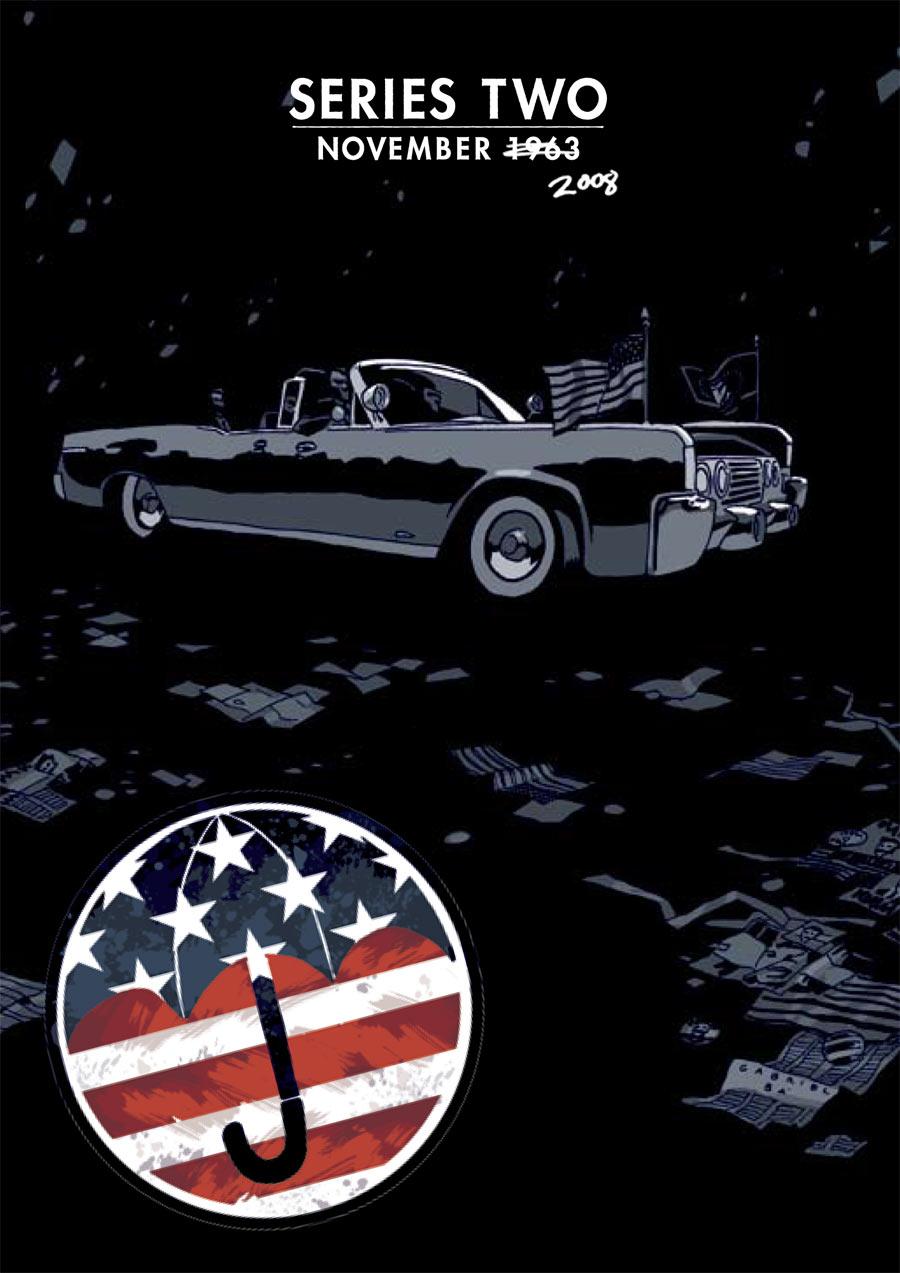
BUG: Very cool. Well, I look forward to that one. When does UMBRELLA ACADEMY: DALLAS #1 come out?
GW: I think it comes out the day before Thanksgiving.BUG: Can’t wait. Well, good luck with the book and the film. Thank you so much for taking the time out to talk with me. I know it went a little longer than what we had planned, so thank you for that.
GW: That’s ok. This was a really fun interview. When they’re fun to do, it’s ok to take up some extra time.BUG: Well, I look forward to reading the series. Good luck with it.
GW: No problem, man. Thank you.BUG: Look for THE UMBRELLA ACADEMY: DALLAS #1 in stores this Wednesday (November 26th) from Dark Horse.
Ambush Bug is Mark L. Miller, reviewer and co-editor of AICN Comics for over seven years. Check out a five page preview of his short story published in MUSCLES & FIGHTS 3 (AVAILABLE NOW at Muscles & Fights.com.) on his ComicSpace page. There you can also see a five page preview of his short story in MUSCLES & FRIGHTS! Bug was recently interviewed here and here at Cream City Comics.
The old Spinner Rack To the Future is working in high gear this week. First up we have a special preview of SUPER HUMAN RESOURCES #1 which can be ordered in December from Ape Entertainment. The book takes a look at the business end of superheroing. It’s got a fun cartoony tone provided by Ken Marcus supported with spectacular art by Justin Bleep. Check out this seven page preview and tell your retailer to order this book in December from Previews.
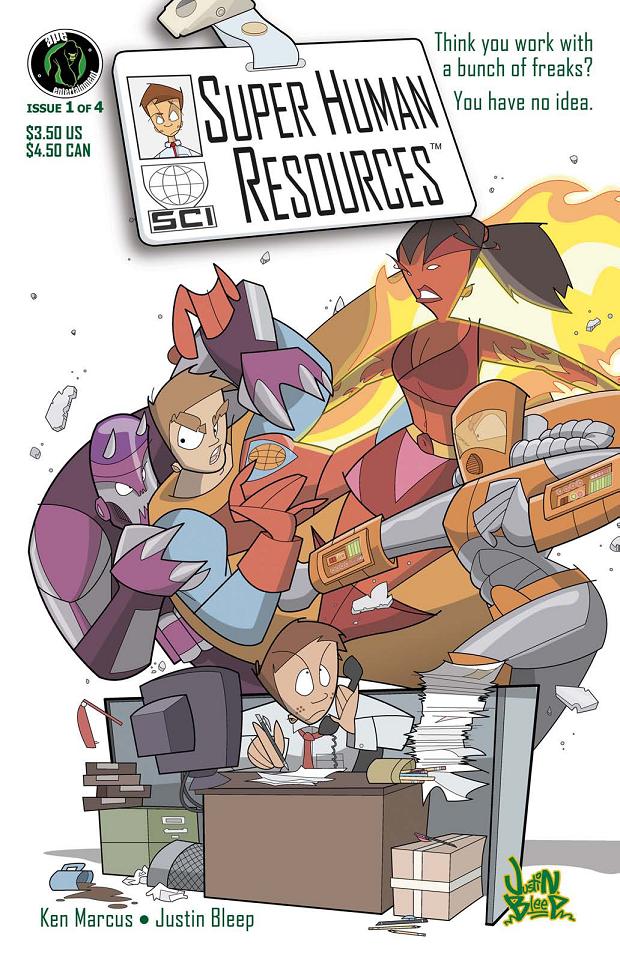
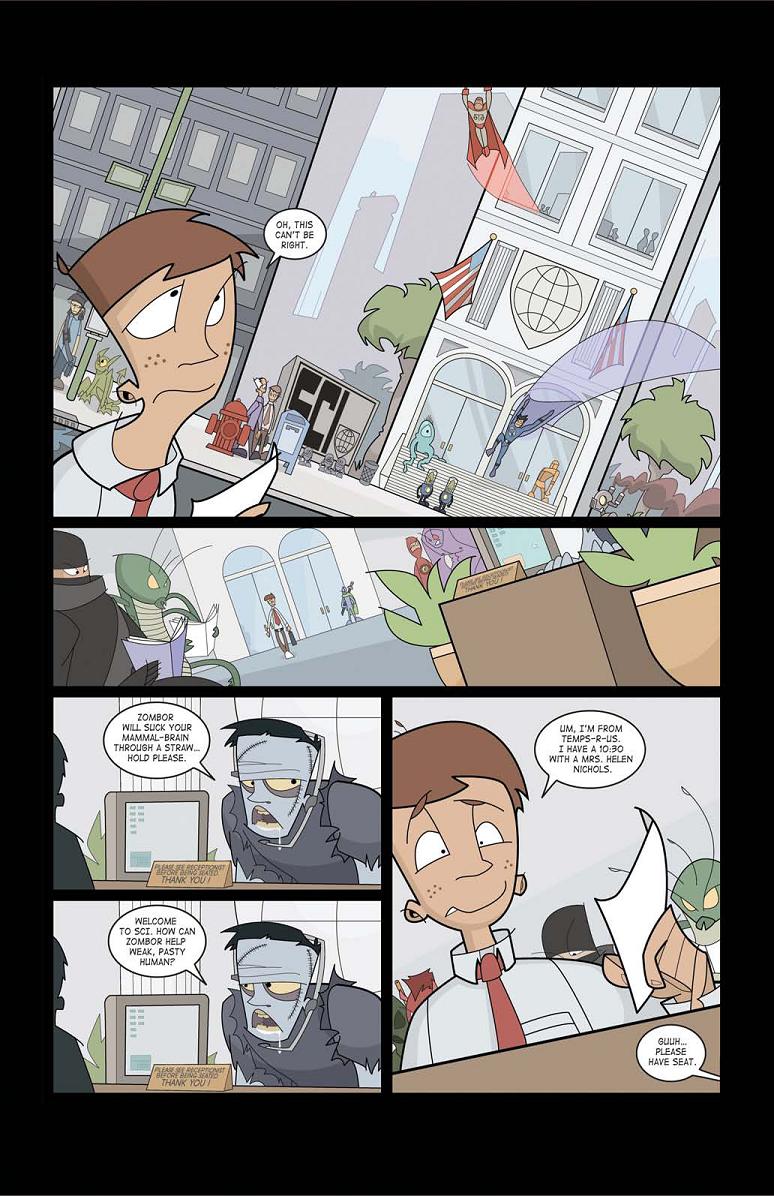
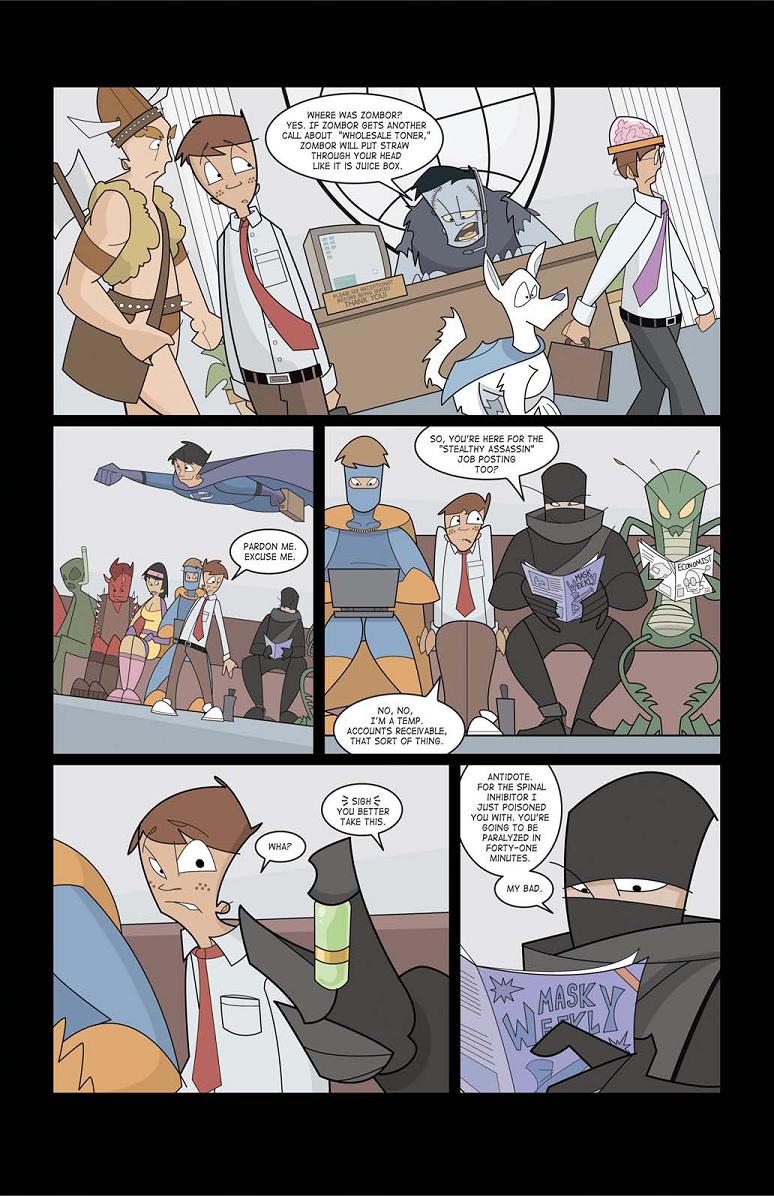
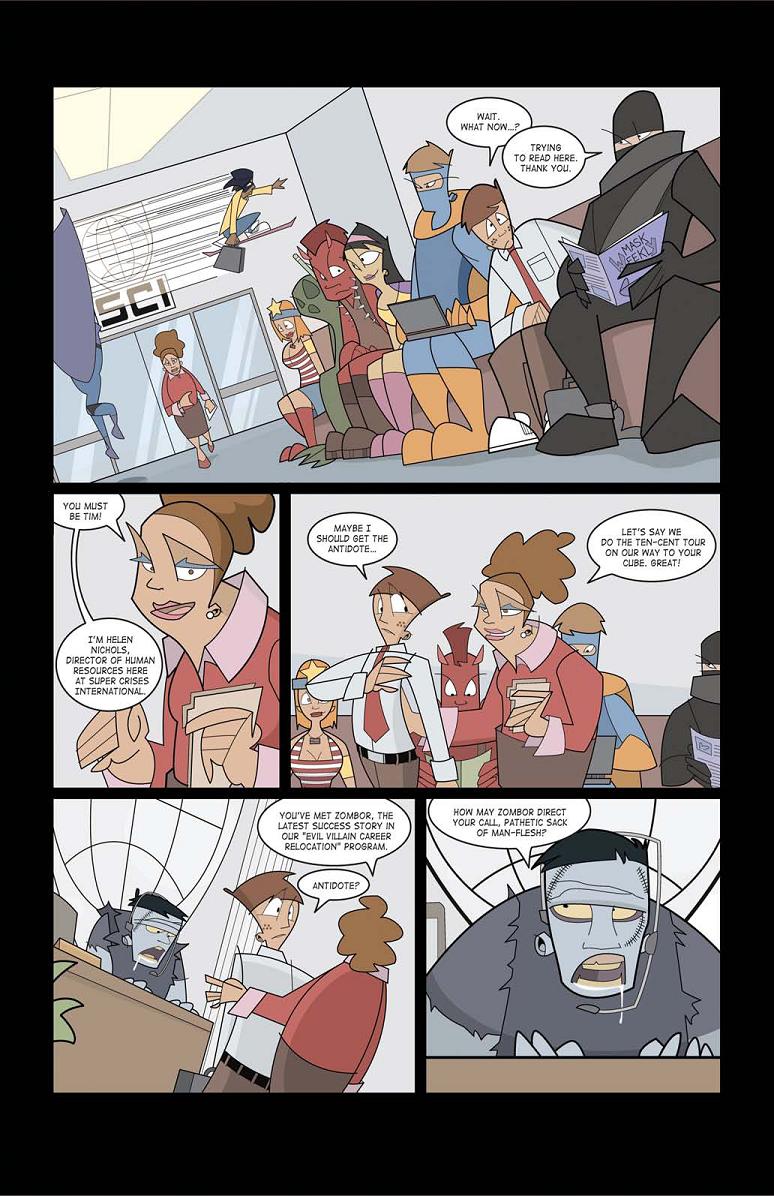
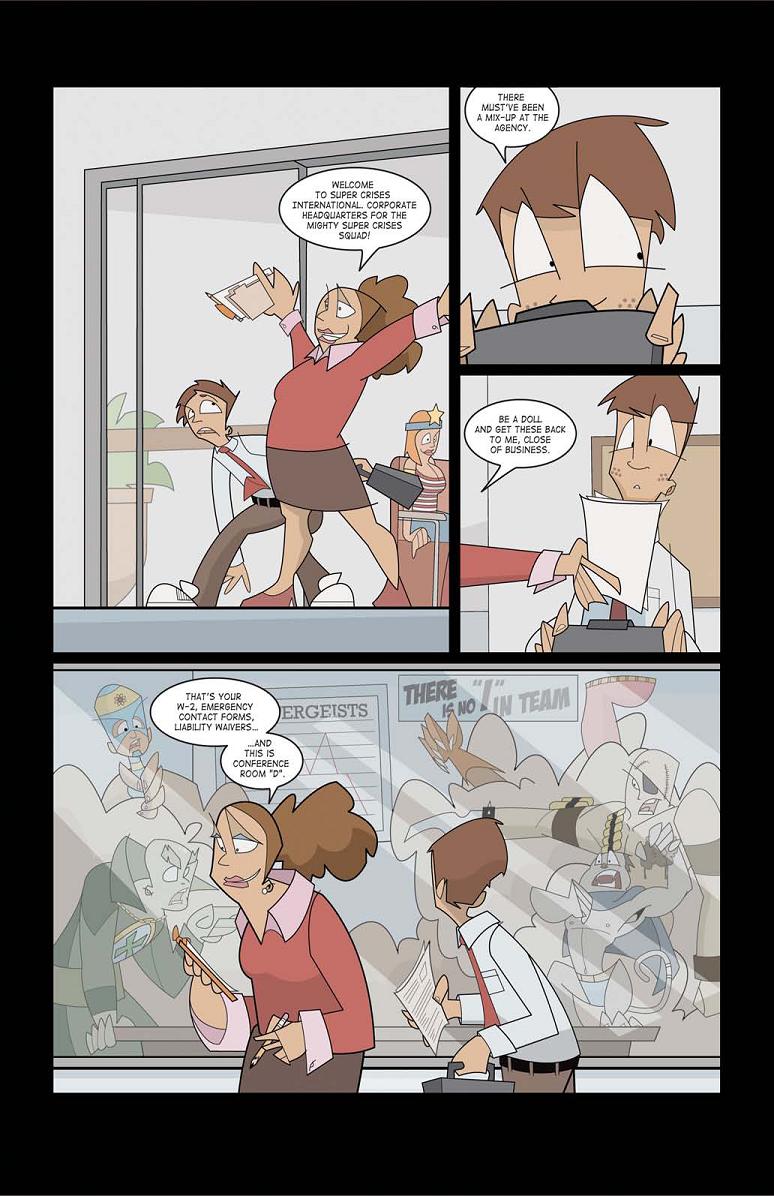
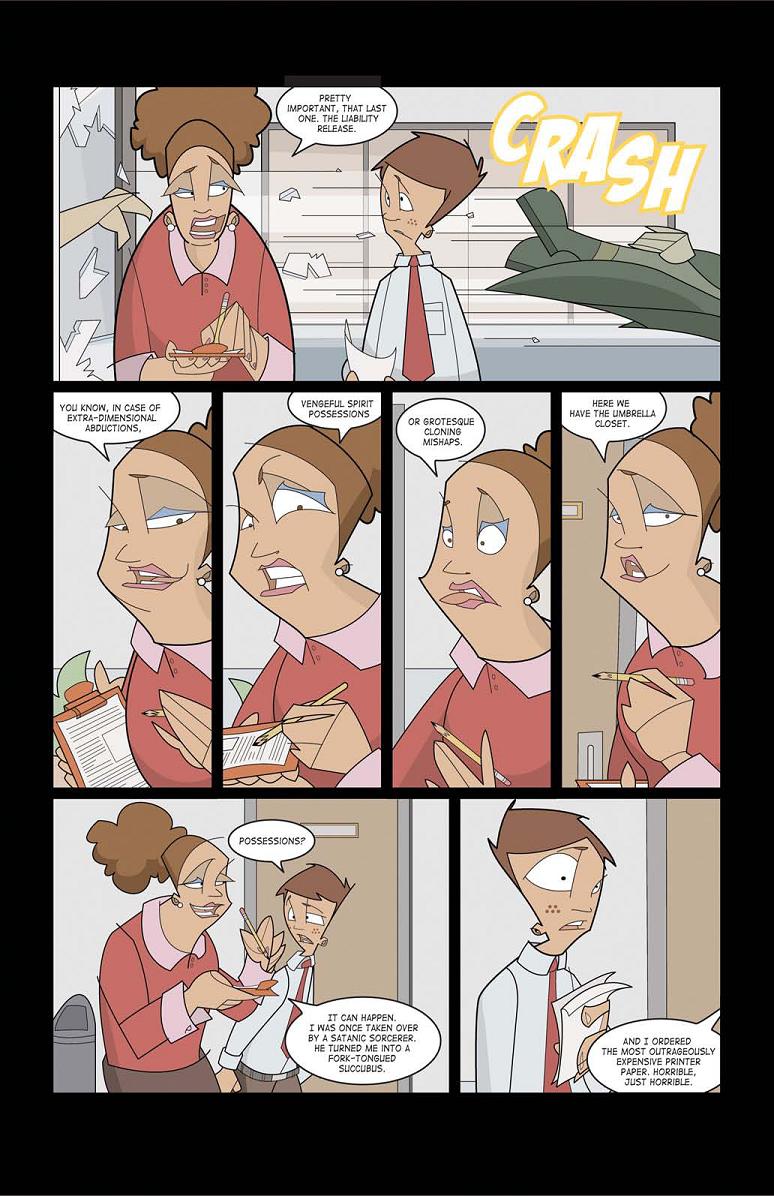
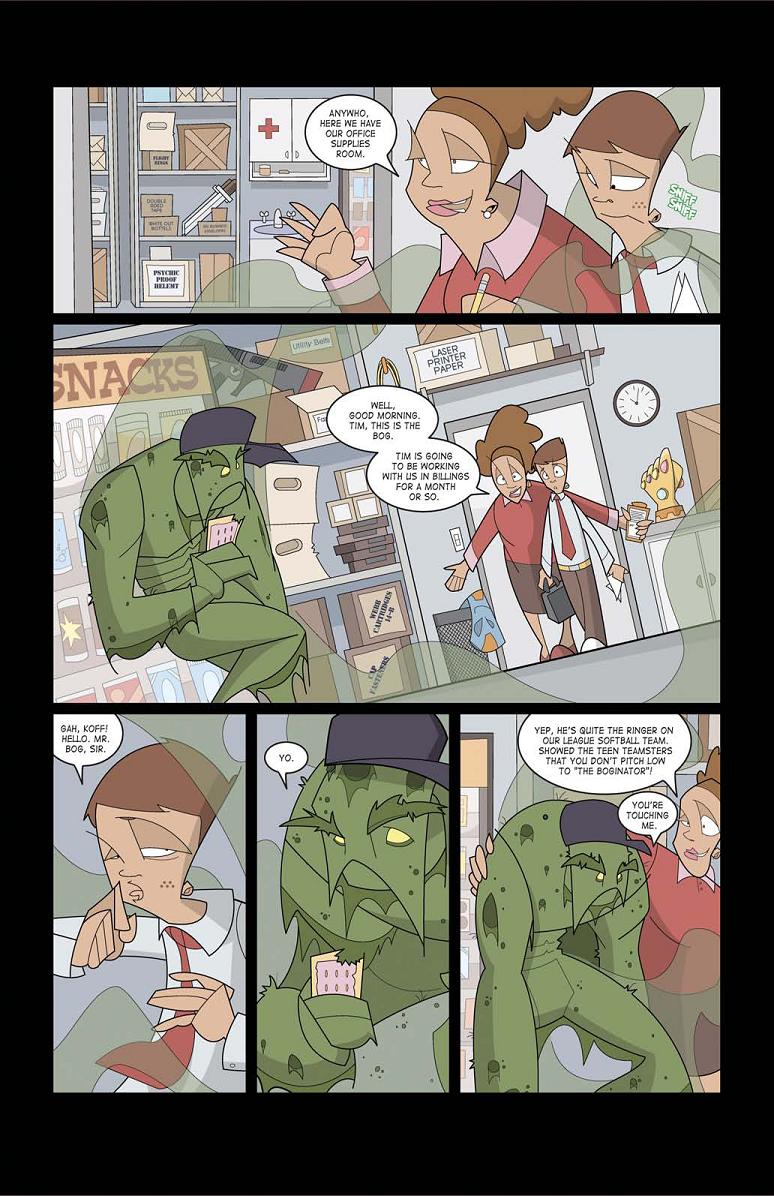
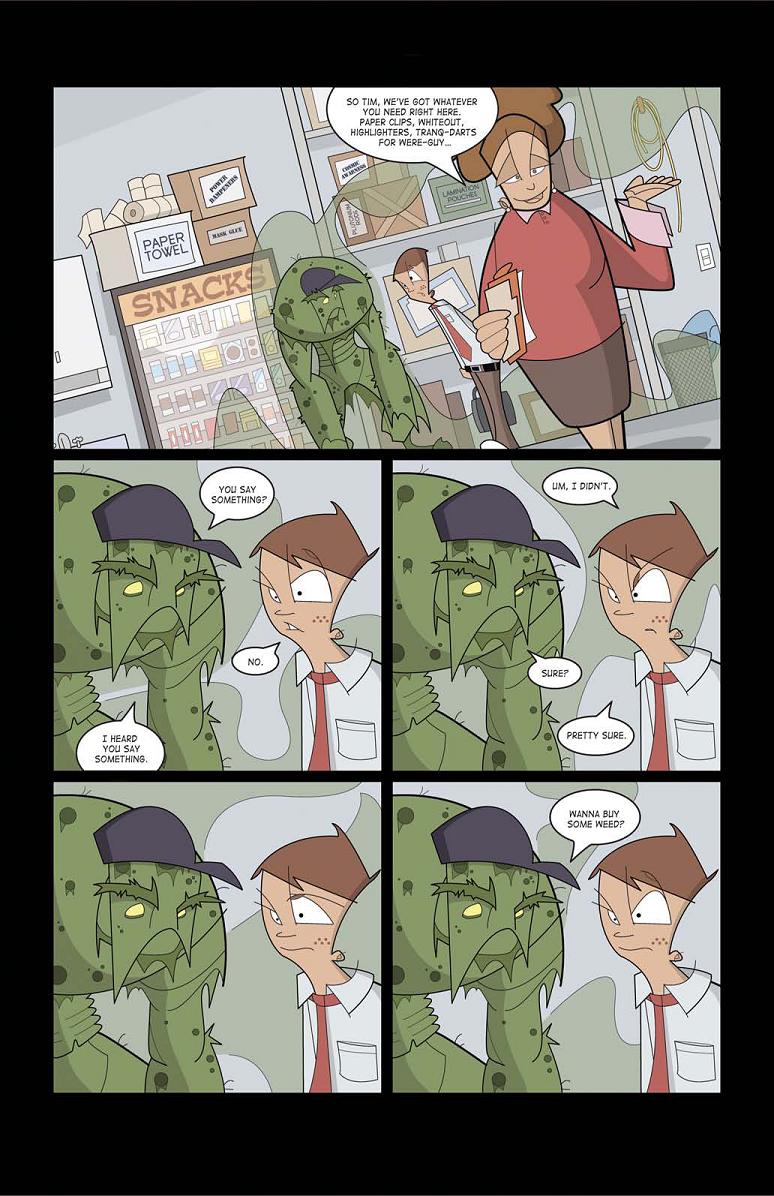
Read more about SUPER HUMAN RESOURCES at its website found here and look for the book on the shelves in February. It’s a fun look at super heroes in a way that hasn’t been done before, so seek this one out!
DC Vertigo’s new UNKNOWN SOLDIER miniseries is getting a lot of critical acclaim. Here’s a preview of the book from creators Joshua Dysart and Alberto Ponticelli. Check out five pages of this gritty war drama…
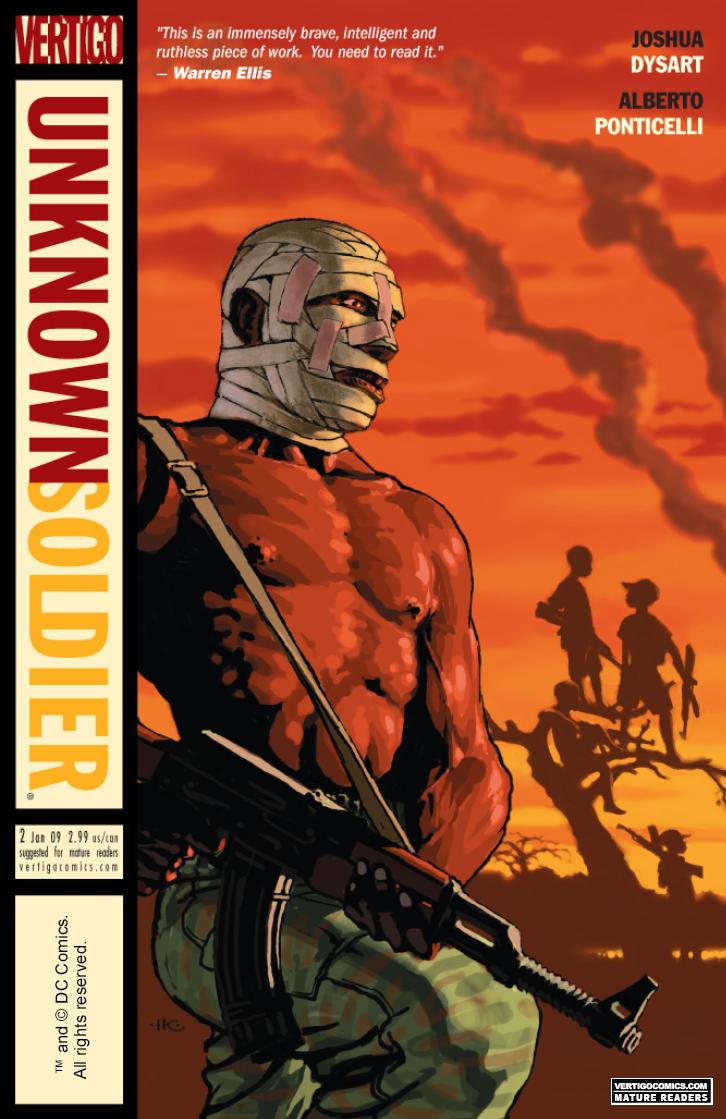
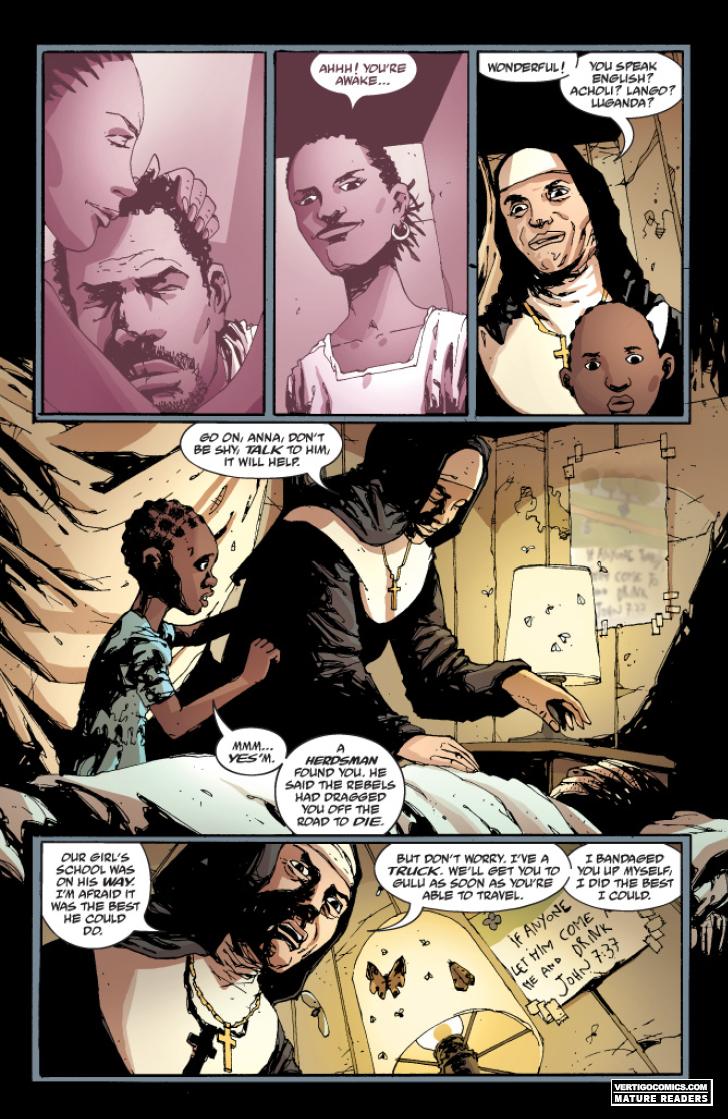
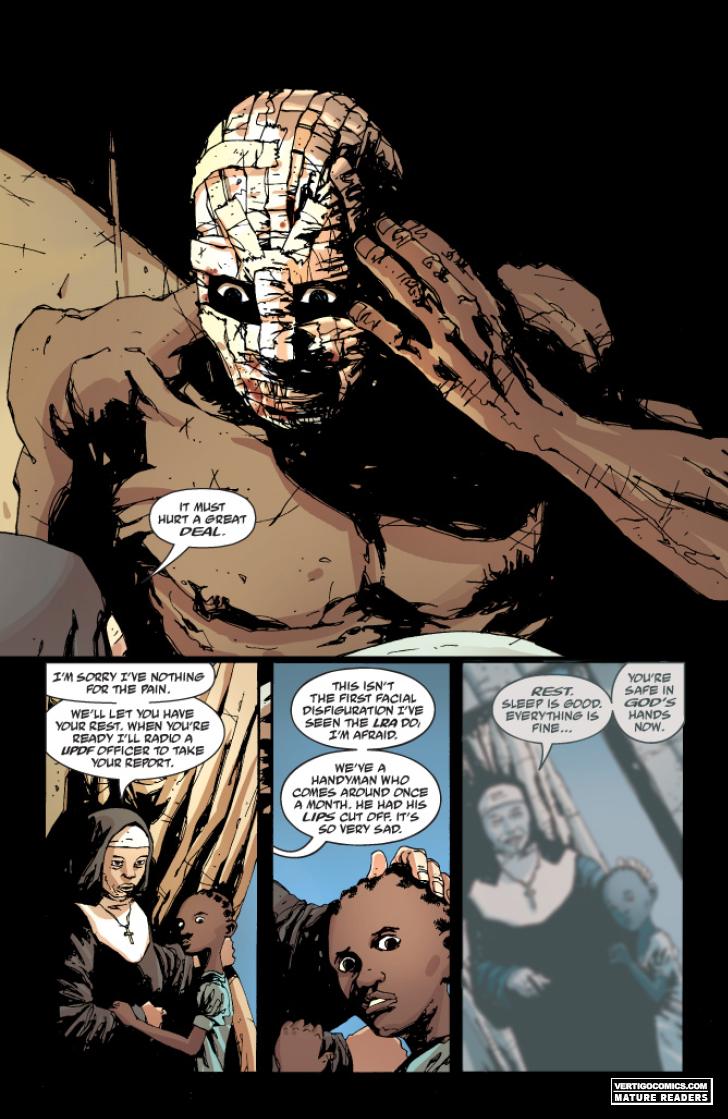
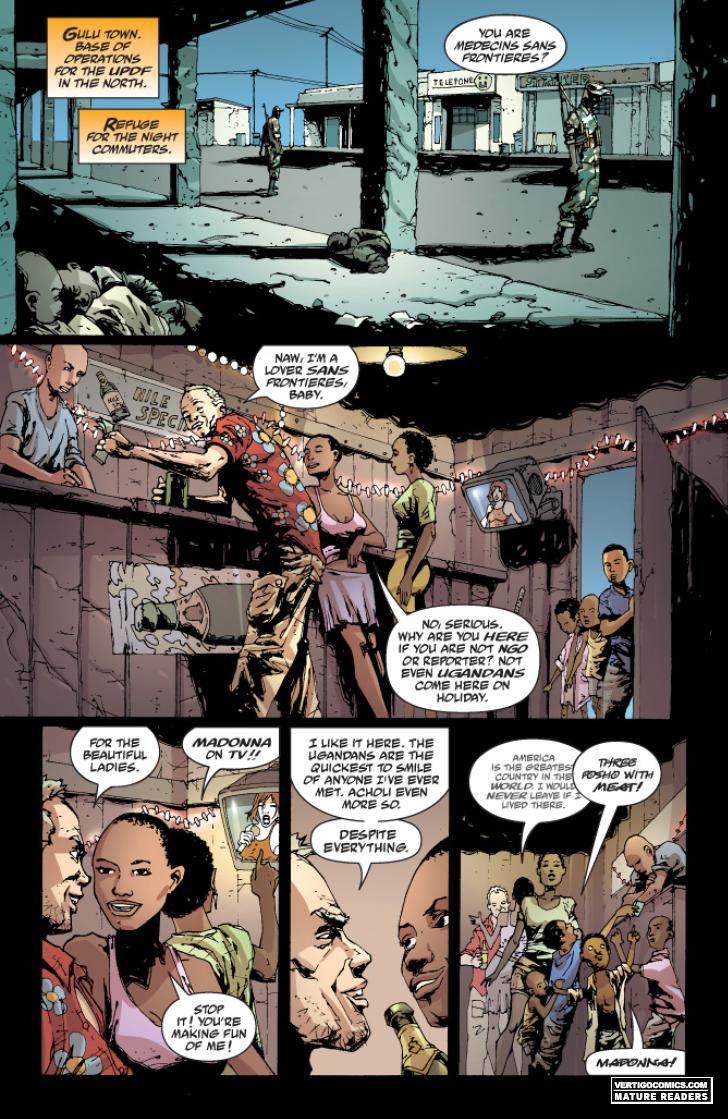
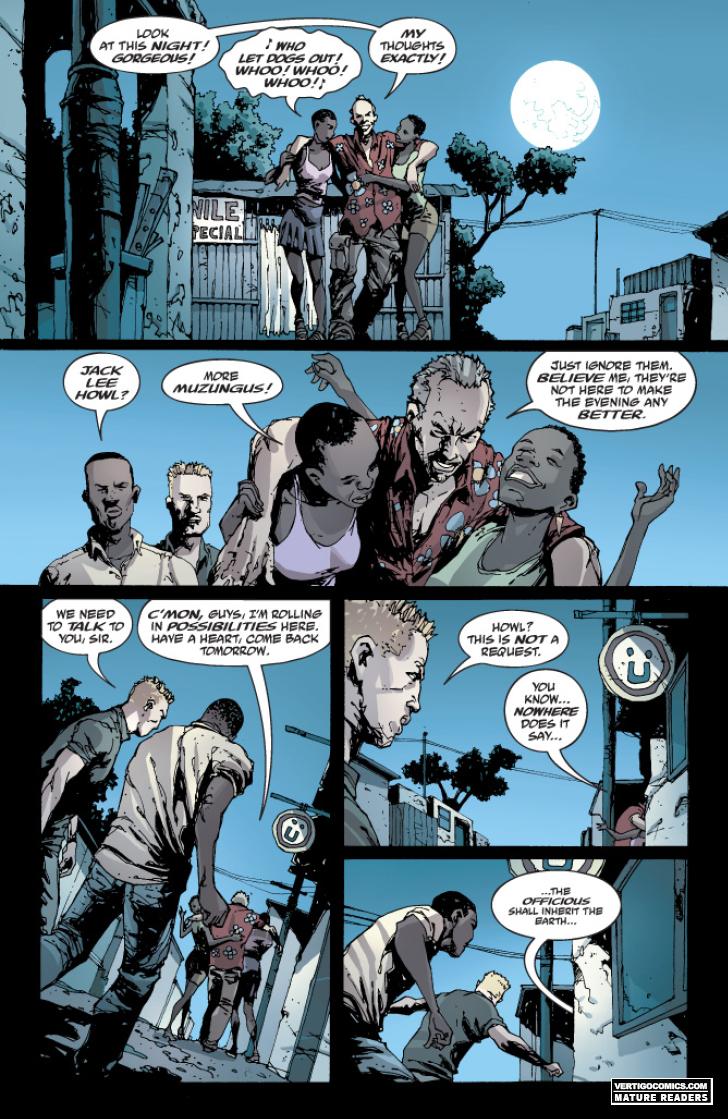
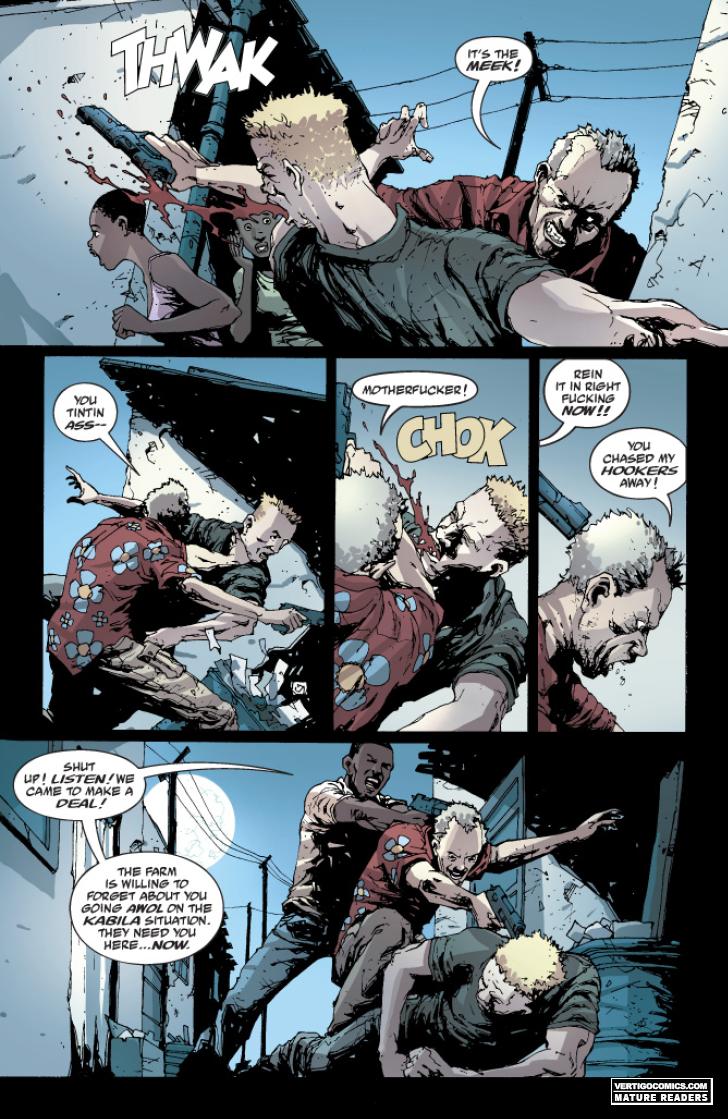
Wrap your head in gauze and check out UNKNOWN SOLDIER #2 this Wednesday!
There’s something about hot chicks in loincloths that makes my loins all…loiny. Devil’s Due’s SHEENA – QUEEN OF THE JUNGLE: DARK RISING #2 takes our jungle princess on a brand new adventure. Check out these eight pages of loiny goodness…
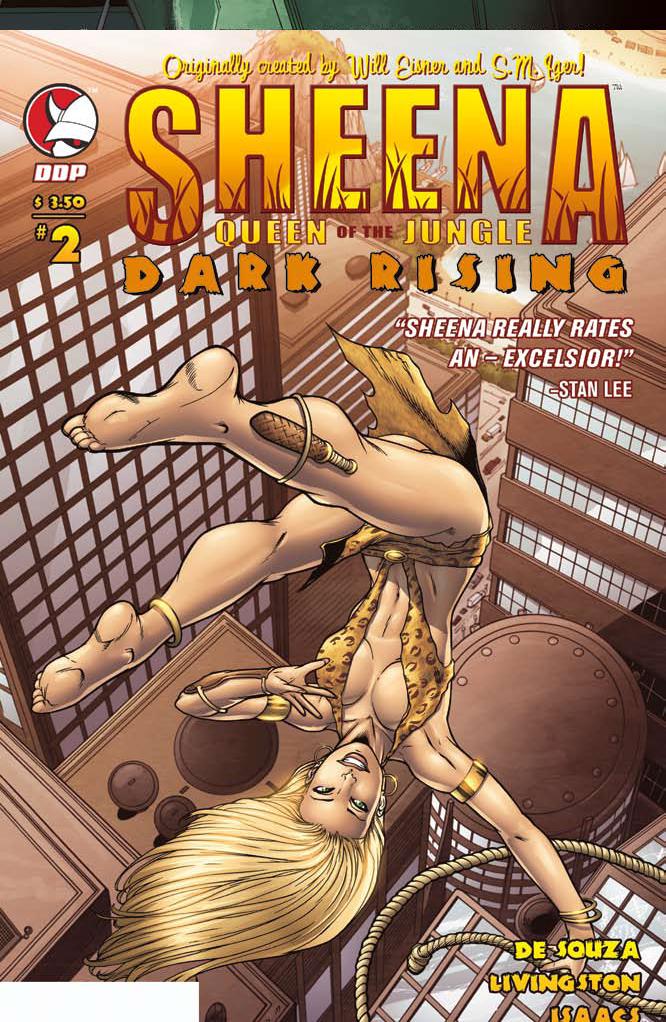

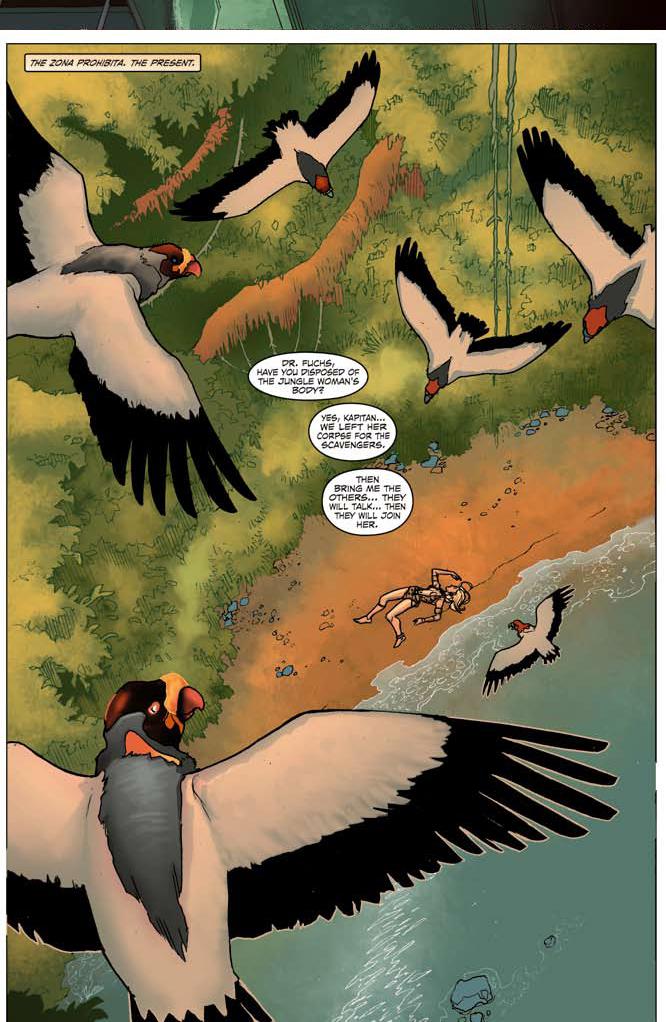
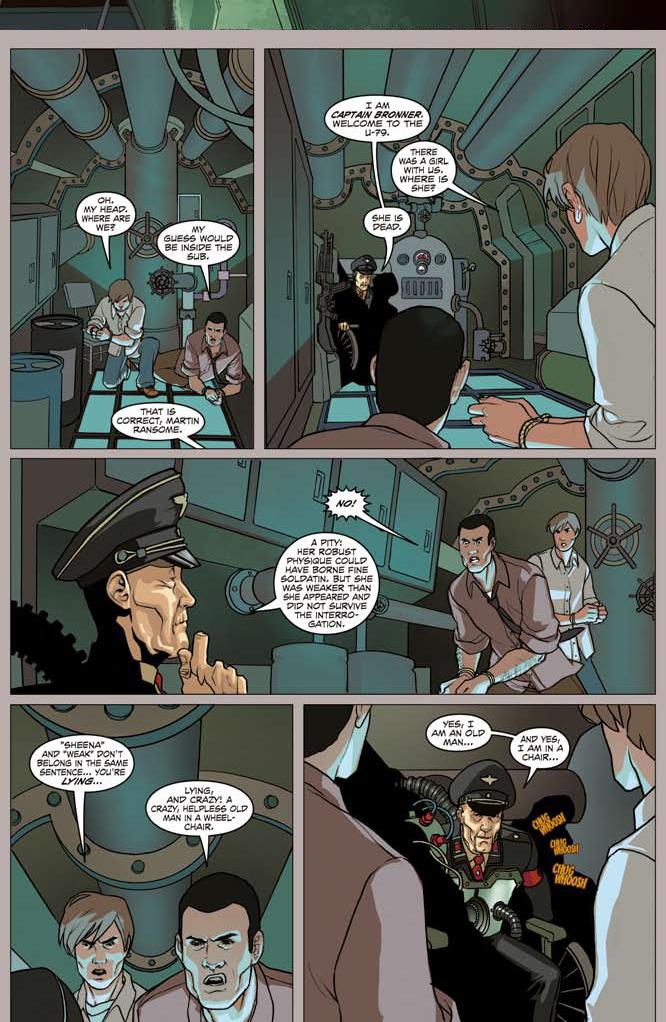
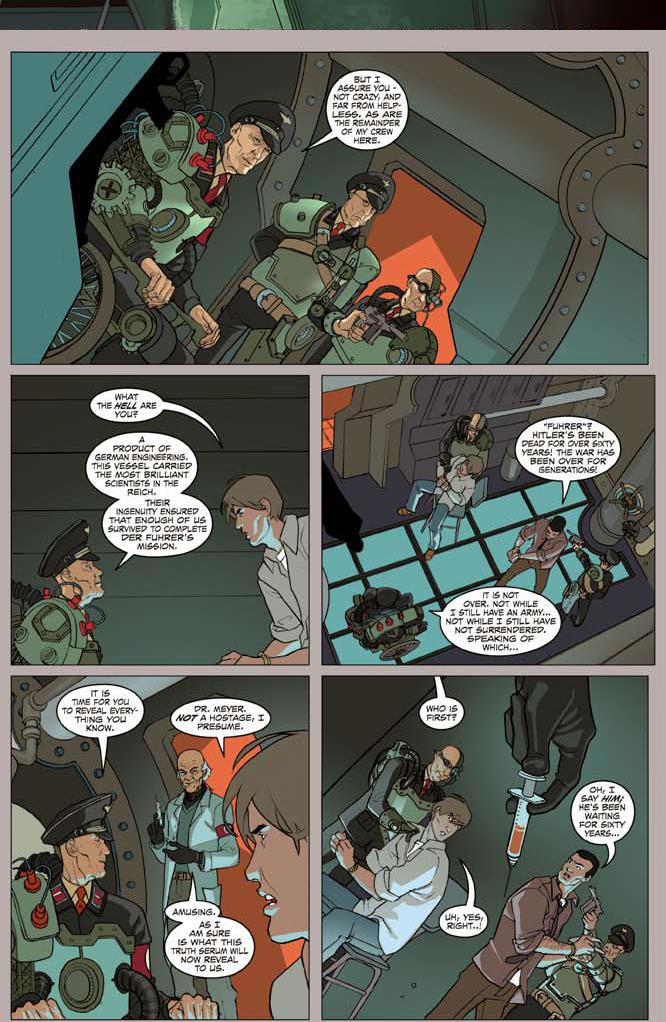
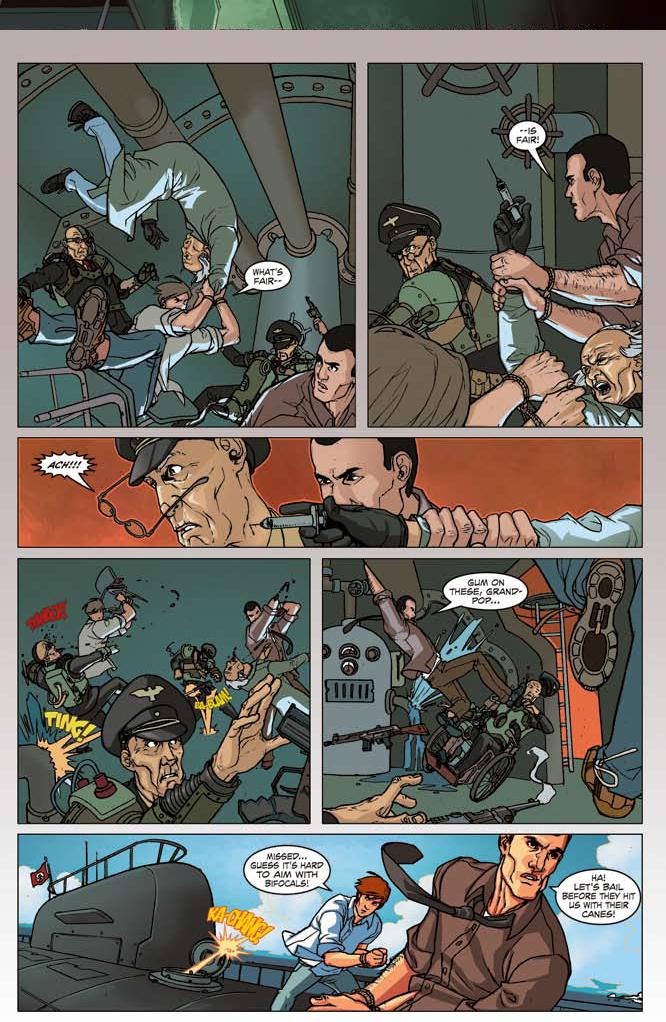
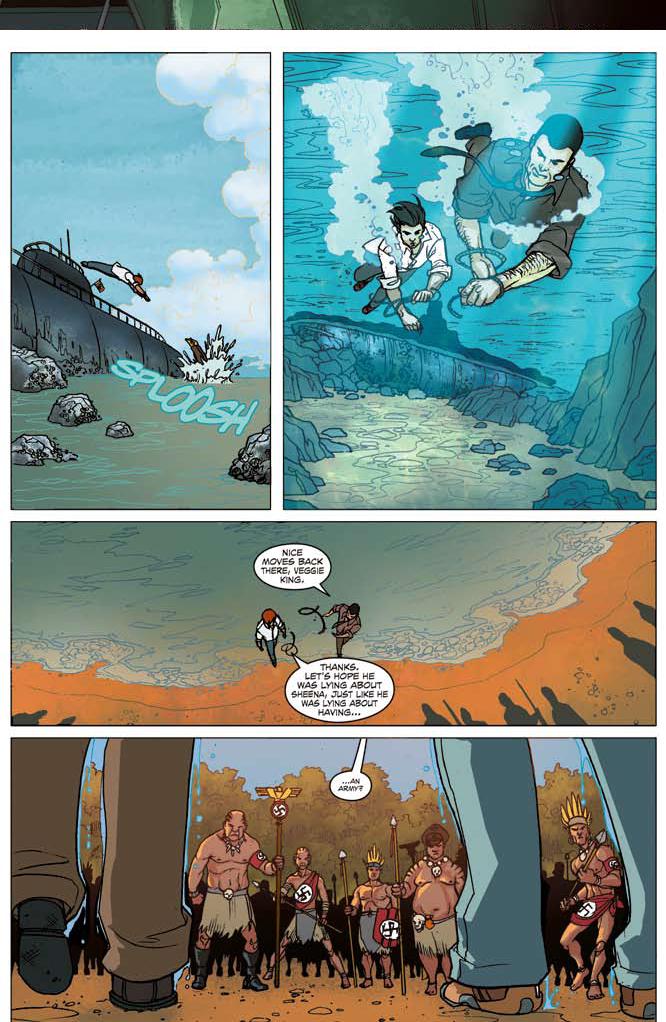
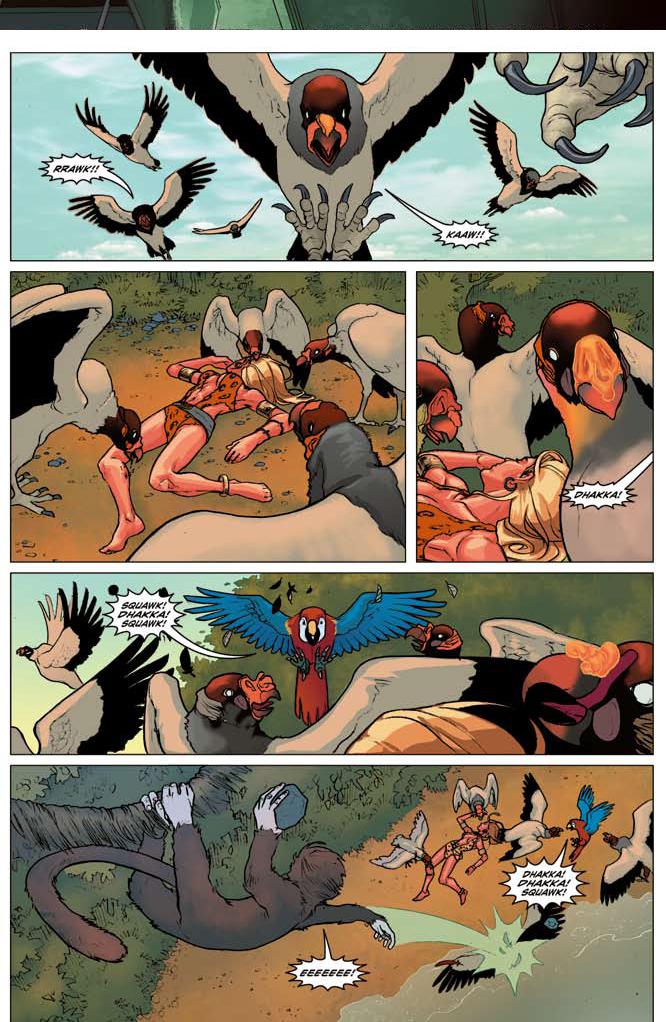
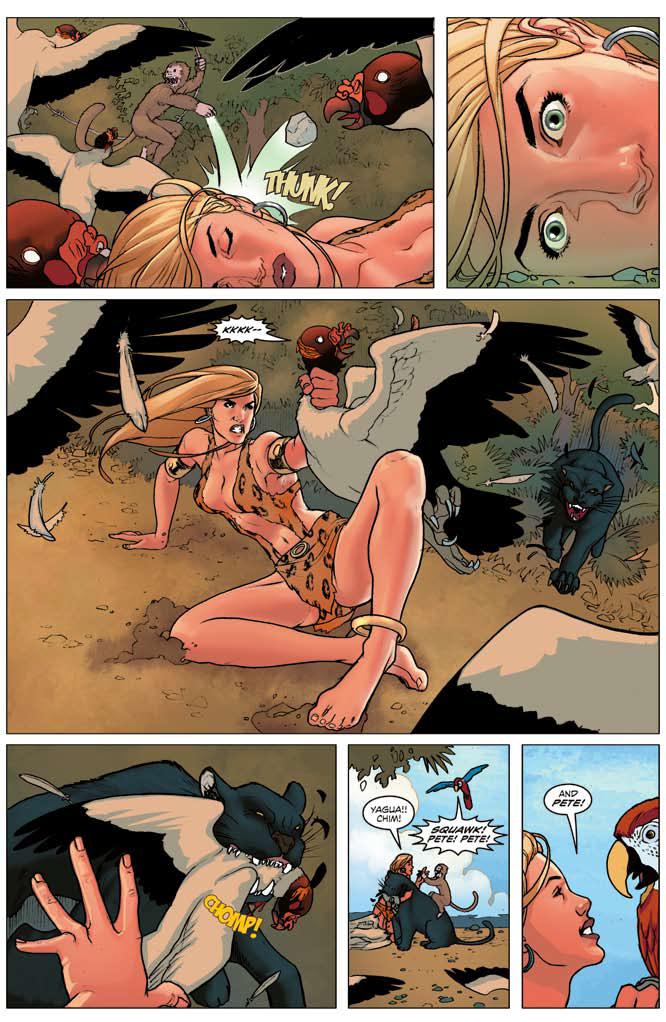
Can’t stop saying loins! Check this miniseries from Steven E. DeSouza & Todd Livingston with art by Rebekah Isaacs in stores this Wednesday! For the love of LOINS! Buy it!

